AI Agents for Food Industry: Quality & Traceability
Deploying AI agents for food industry operations ensures high-speed quality control, regulatory compliance, optimized scrap yields, and targeted recalls.
- AI Agents for Food Industry
- Traceability and Quality Control
- Large-Scale Manufacturing
- Food Safety Automation
- ANVISA MAPA Compliance
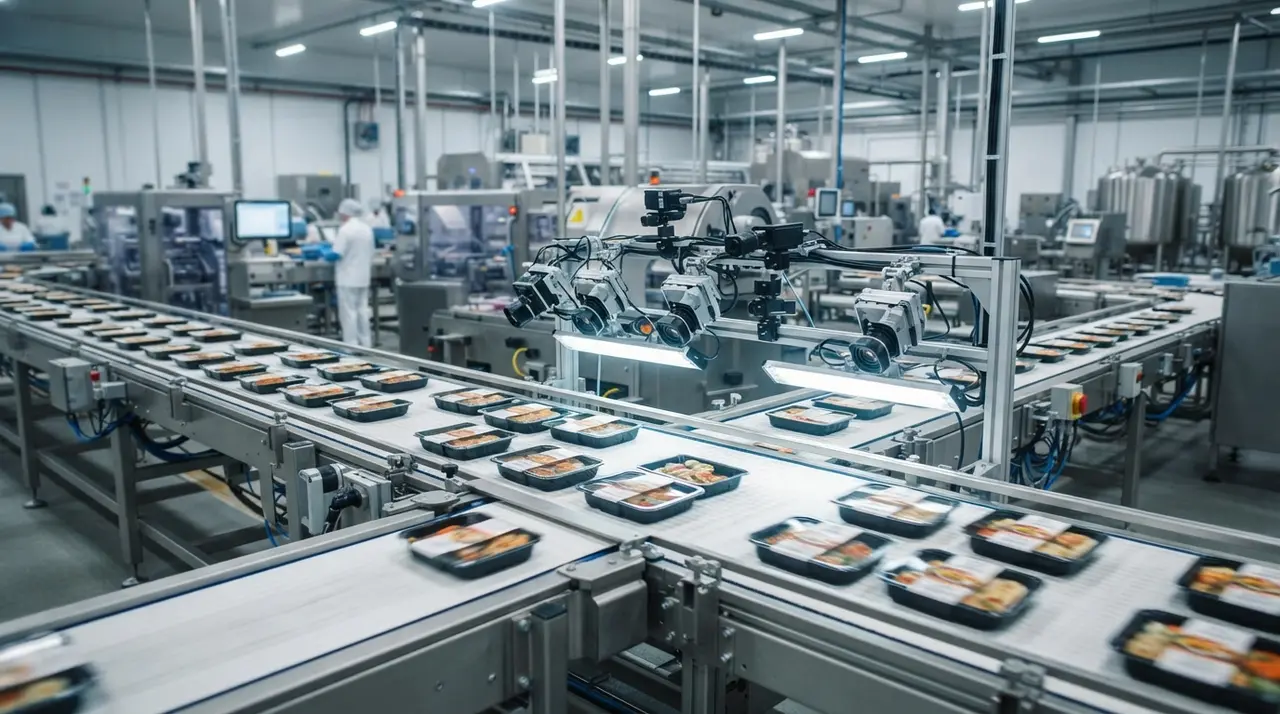
AI agents for the food industry automate real-time quality control, end-to-end lot traceability, and regulatory compliance across high-speed manufacturing lines. By integrating computer vision with existing ERP and MES platforms, these autonomous systems detect foreign objects, verify label integrity, and execute targeted product recalls without forcing plants to rebuild their legacy infrastructure.
Food processing plants operate under non-negotiable health regulations, tight margins, and extreme cadence requirements. Managing sanitary risks while maximizing line output requires a transition from manual sampling to continuous digital supervision.
Automated line-speed quality control via computer vision
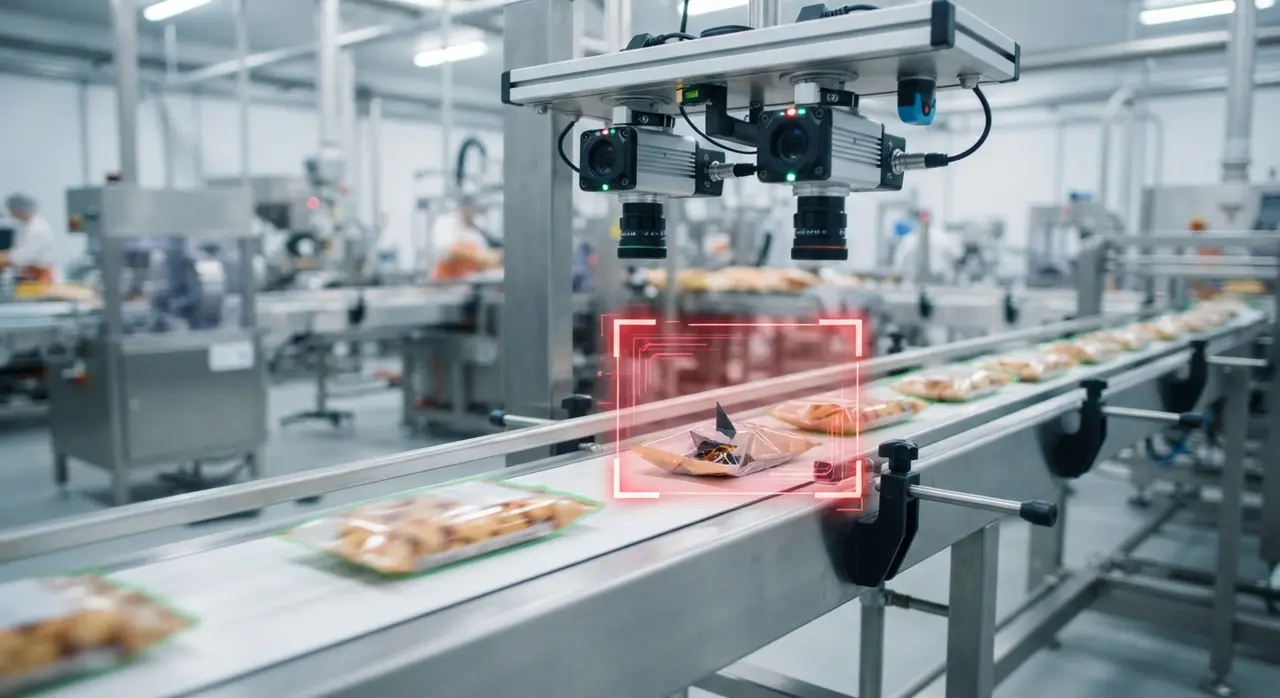
Computer vision powered by autonomous AI agents inspects 100% of products directly on the conveyor belt at full line speed. Unlike traditional manual spot-checks that inspect only small random samples, camera-equipped agents evaluate shape, color, seal integrity, and foreign object presence instantly.
When a defective package or physical contaminant is detected, the AI agent triggers immediate pneumatic rejection mechanisms while logging the exact batch anomaly. Plant managers gain total visibility over production lines without slowing down cadence or relying on operator micro-inspections.
- Foreign body detection: Identifies plastic fragments, metal slivers, or organic impurities prior to final sealing.
- Packaging and seal validation: Ensures micro-leaks, crumpled trays, or misaligned heat seals are purged instantly.
- Label and code verification: Validates barcode readability, expiration dates, and lot numbers against active production orders.
For organizations expanding automation across agricultural inputs and raw processing, implementing agribusiness quality control and traceability ensures raw material consistency long before batch mixing begins.
End-to-end traceability and instant targeted recalls
End-to-end lot traceability links raw material supplier receipts directly to final distributor shipments in a single queryable graph. When quality issues occur, AI agents map raw ingredient batches to specific production hours, packaging units, and customer delivery routes within seconds.
Traditional food recall protocols often force companies to quarantine entire production weeks due to fragmented paperwork and isolated ERP records. AI agents autonomously cross-reference warehouse management logs, temperature sensor metrics, and SAP/Oracle data to narrow recall scopes to exact batch ranges.
This granular precision protects brand reputation, minimizes unnecessary product destruction, and ensures full transparency for sanitary regulatory authorities.
Comparison: Manual QA vs. AI Agent-Driven Quality & Traceability
Upgrading from legacy visual inspections and spreadsheet logs to autonomous AI monitoring changes key operational metrics across the plant floor.
| Operational Metric | Manual Inspection & Paper Traceability | AI Agent-Driven Automated Architecture |
|---|---|---|
| Inspection Coverage | 2% to 5% sample testing per batch | 100% continuous line-speed inspection |
| Recall Precision | Multi-day batch isolation (broad scrap) | Pinpointed hour/minute lot isolation |
| Regulatory Audit Compliance | Manual logbooks and delayed reporting | Instant digital audit trail for ANVISA/MAPA/FDA |
| Foreign Body Detection | Human sight dependent (fatigue prone) | Sub-millimeter vision model detection |
| Shelf-Life Management | Static FIFO manual stock rotations | Dynamic FEFO integrated with real-time ERP |
Batch expiry management and yield optimization
First-Expired, First-Out (FEFO) strategies prevent costly ingredient spoilage across multi-site warehouse operations. Autonomous agents track expiration dates, humidity logs, and storage temperatures, automatically re-routing raw materials based on real-time degradation risk.
Additionally, AI agents monitor raw material yield during mass processing—such as meat portioning, dairy blending, or grain milling. By feeding target adjustments back into PLC systems, agents reduce giveaway weight and prevent costly overfill while maintaining strict legal minimums.
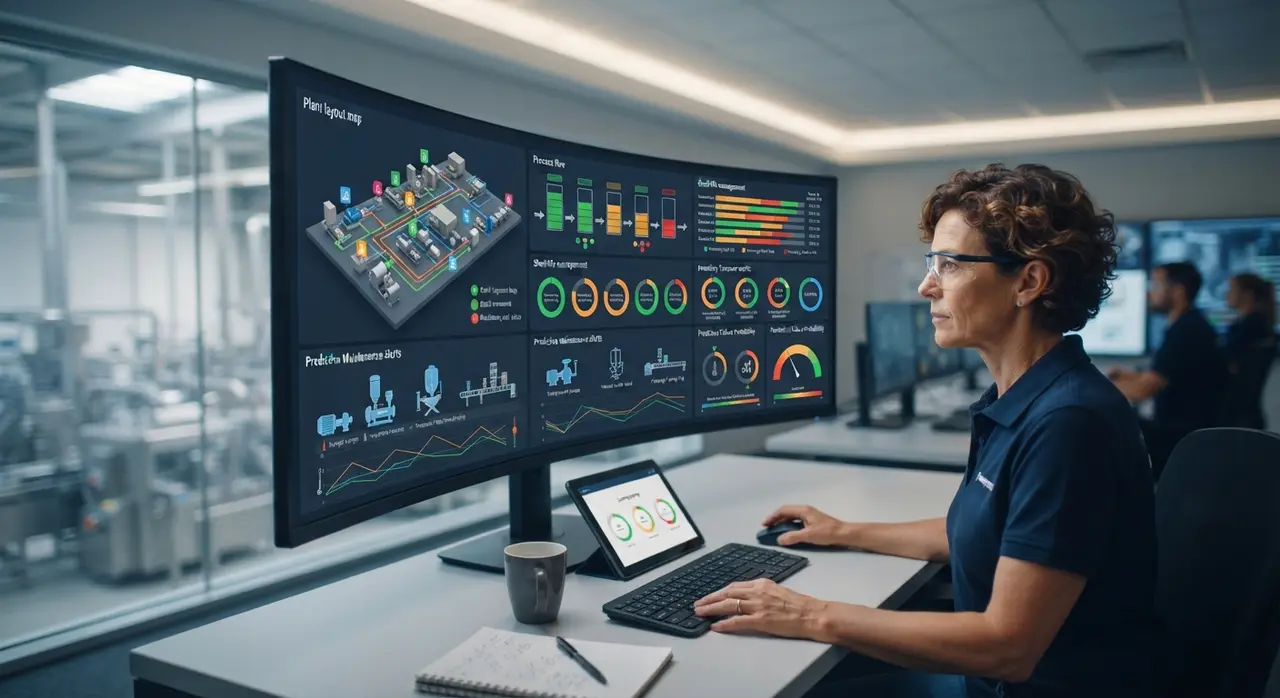
Operational teams review automated yield variance alerts on dashboard interfaces or mobile messaging tools like WhatsApp, allowing supervisors to intervene without leaving the floor.
Sanitary regulatory compliance and audit readiness
Regulatory compliance with food safety bodies like ANVISA, MAPA, USDA, and FDA demands unalterable operational logs and continuous Hazard Analysis Critical Control Point (HACCP) monitoring. Autonomous AI agents collect, standardize, and archive critical control point data automatically.
During compliance audits, plant directors can generate verified compliance dossiers spanning any time window instantly. If a sensor records a temperature deviation in a cold storage unit, the AI agent logs the incident, quarantines the affected inventory in the ERP, and assigns a human supervisor to perform root-cause verification.
This human-in-the-loop framework ensures strict safety governance while keeping routine digital recordkeeping fully automated across all shifts.
Practical Case Study: Automating Quality Governance with Agentes Autônomos
A multi-plant food processor producing packaged cold cuts experienced high scrap rates and compliance log overhead across three manufacturing plants. Manual quality inspections missed subtle vacuum-seal failures, resulting in localized product returns and lengthy retrospective auditing procedures.
Partnering with Agentes Autônomos, the manufacturer integrated autonomous computer vision and ERP workflow agents across four main slicing and packaging lines. The AI agents continuously scanned packaging seals at line speed and linked defective units directly to active work orders in their system.
Within 90 days, the company achieved qualitative operational milestones:
- Zero unisolated packaging defects: Package seal breaches were auto-rejected instantly prior to boxing.
- 90% audit preparation reduction: HACCP and regulatory compliance logs were generated automatically without supervisor paper shuffling.
- Pinpoint recall capability: Quarantines were limited to 15-minute production blocks rather than entire 8-hour shifts.
Integrating AI agents with existing ERP, MES, and hardware
Modern industrial AI agents operate as an intelligent orchestration layer over existing plant hardware, PLCs, and corporate software. Food manufacturers do not need to replace their legacy machinery, sensors, or enterprise databases to deploy intelligent workflows.
Agents connect seamlessly via standard APIs and industrial protocols (such as OPC UA or MQTT) to systems like SAP, TOTVS, Linx, and Oracle. By leveraging targeted AI agent integration with enterprise ERPs, manufacturing operations sync material usage, work orders, and quality holds across supply chain functions automatically.
Explore comprehensive AI agent solutions for enterprise operations to understand how modular agents interface with operational workflows across multi-unit enterprise facilities.
Frequently asked questions
How do AI agents detect food defects at high line speeds?
AI agents utilize high-frame-rate industrial vision cameras coupled with specialized deep learning models trained on product-specific defect datasets. They evaluate visual characteristics like color, dimensions, surface texture, and container seal geometry in milliseconds while products move on conveyor lines.
Do we need to replace our existing ERP or plant controllers to use AI agents?
No, AI agents operate alongside existing infrastructure by connecting directly through APIs, database interfaces, and industrial middleware protocols. They read sensor data and work orders from legacy systems, update batch statuses, and send control signals without requiring software replacement.
How do AI agents handle human oversight during quality incidents?
AI agents follow strict human-in-the-loop protocols whenever an anomaly exceeds predefined confidence thresholds or involves high-risk non-conformities. The agent automatically flags the item, pauses affected lot distribution in the ERP, and dispatches an instant notification to floor managers for mandatory manual sign-off.
What is the typical timeframe required to deploy quality and traceability AI agents in a food plant?
Initial line deployment, model calibration, and ERP integration typically take between four to eight weeks depending on plant connectivity and hardware setup. Once the baseline vision models and data pipelines are validated, additional production lines can be onboarded rapidly.