Real-Time AI Operational Failure Detection & Prevention
Learn how AI detects operational failures in real time, shifting enterprises from reactive fire-fighting to proactive operational disruption prevention.
- AI Operational Failure Detection
- Real-Time Process Monitoring
- Enterprise AI
- Workflow Automation
- Process Optimization
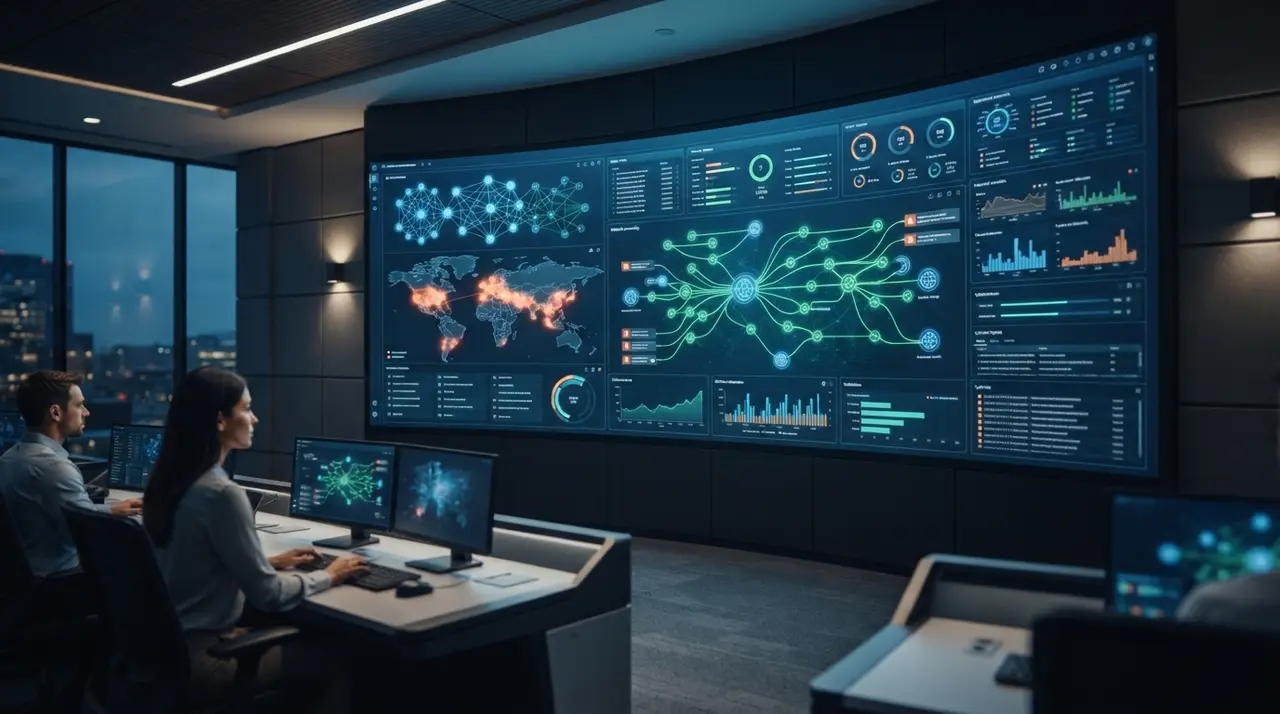
Real-time AI operational failure detection continuously monitors system logs, transaction feeds, and operational workflows to identify process anomalies before they cause costly business interruptions. This technology enables enterprise operations to transition from reactive troubleshooting to proactive prevention without requiring companies to replace their existing legacy ERP, CRM, or communication platforms.
When operational failures are discovered late, companies suffer from unexpected downtime, expensive rework, degraded customer trust, and lost revenue. Modern enterprise leaders are deploying specialized autonomous AI agent solutions to flag subtle system deviations early, ensuring uninterrupted execution across sales, customer service, supply chain, and back-office operations.
The High Financial and Operational Cost of Reactive Management
Reactive operations force business teams into a continuous cycle of firefighting that consumes valuable management overhead. Unresolved process bottlenecks often remain hidden until a critical deadline is missed or a customer escalates a complaint.
Discoveries made late in the operational cycle multiply the cost of resolution exponentially. When a data entry error or API synchronization failure cascades through an enterprise stack, fixing it requires manually auditing thousands of entries, reversing corrupted transaction records, and deploying emergency human support.
- Operational Friction: Unannounced downtime halts employee productivity and creates severe backlog delays across dependent departments.
- Escalated Costs: Emergency remediation costs up to five times more than automated preventative maintenance and continuous oversight.
- Brand Reputation Risk: System failures directly impact SLA commitments, leading to order cancellations and reduced customer retention rates.
How AI Detects Operational Anomalies in Real Time
Artificial intelligence detects operational failures in real time by establishing dynamic behavioral baselines across complex, multi-system enterprise workflows. Rather than relying on static, rigid threshold rules, AI algorithms continuously analyze thousands of operational data points simultaneously.
When live process telemetry deviates from historical baseline patterns, the system automatically flags the anomaly for immediate intervention. AI agents evaluate data speed, volume, error frequencies, and contextual metadata across disconnected systems to identify emerging problems long before humans notice them.
Pattern Recognition and Contextual Alerts
Traditional monitoring tools generate excessive false alarms because they rely on simplistic, fixed thresholds that ignore operational context. Artificial intelligence eliminates noise by correlating telemetry data with historical operational cycles, seasonal demand surges, and downstream dependencies.
When an actual anomaly occurs, the AI system delivers context-rich alerts directly to key operational decision-makers via platforms like WhatsApp or internal messaging tools. Each alert includes detailed root-cause diagnostics, recommended corrective actions, and automated options for immediate resolution.
| Monitoring Approach | Detection Method | Response Time | Business Impact |
|---|---|---|---|
| Reactive Manual Audits | End-of-month reconciliation or customer complaints | Days to weeks | High costs, severe backlog, damaged client trust |
| Legacy Threshold Rules | Static limits on single data parameters | Hours to days | High false positives, frequent alert fatigue |
| Real-Time AI Agents | Continuous multi-system pattern and anomaly detection | Seconds to minutes | Zero downtime, lower operational cost, preserved SLAs |
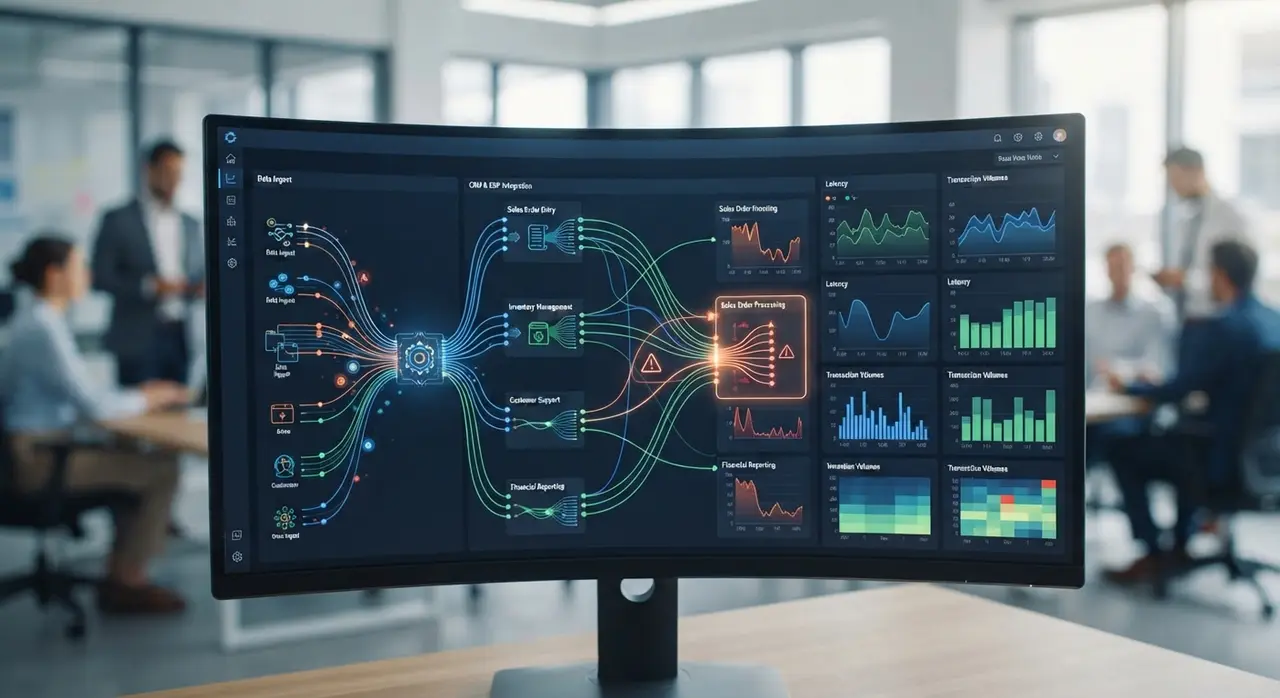
Core Applications of AI Failure Detection Across Enterprise Functions
Enterprise organizations deploy real-time failure detection across key operational departments to protect cash flow, maintain supply chain integrity, and preserve service quality. By embedding intelligence into daily workflows, companies establish resilience across all major business units.
1. Financial and ERP Transaction Verification
In billing, purchasing, and accounting departments, hidden payment gateway errors or mismatched line items cause massive reconciliation delays. Deploying AI agents integrated with SAP or Dynamics 365 allows teams to automatically validate incoming purchase orders, identify tax calculation anomalies, and block duplicate disbursements instantly.
2. Logistics and Supply Chain Bottleneck Prevention
Supply chain delays rarely happen without warning; they start as minor operational friction points at warehouse docks, customs clearances, or transit hubs. AI monitors freight tracking feeds, stock levels, and ERP fulfillment queues to alert logistics managers before minor delays turn into missed delivery windows.
3. Automated Customer Support and Omnichannel Governance
High message volumes on customer channels like WhatsApp can overwhelm support teams, leading to lost leads and abandoned service tickets. AI monitoring tracks queue response latency, message sentiment drop-offs, and webhook delivery errors in real time to re-route incoming conversations and notify supervisors immediately.
Distinguishing Normal Variance from True Operational Anomalies
Machine learning models reduce operational noise by analyzing historic contextual data to differentiate benign operational spikes from critical system disruptions. A transient surge in order processing during a planned promotional campaign is recognized as expected behavior, whereas a sudden drop in database write speeds is flagged instantly.
This intelligent filtering protects operations leadership from alert fatigue, ensuring that teams only focus on high-priority anomalies requiring human judgment. By combining machine precision with expert oversight, companies unlock significant enterprise automation benefits without sacrificing control or security governance.

Mini Case Study: Resolving Multi-Branch Operational Disconnects
A regional distribution network operating across 14 locations experienced recurring revenue leakage caused by inventory sync failures between their retail POS terminals and legacy ERP software. Stock discrepancies were previously discovered weeks later during manual monthly audits, causing unexpected stockouts and unfulfilled customer deliveries.
The company implemented customized operational AI agents engineered by Agentes Autônomos to continuously audit order queues, API payloads, and ERP inventory updates across all branch servers in real time. The proactive AI deployment achieved immediate qualitative results:
- Instant Incident Visibility: Data mismatches and API network timeouts were flagged and diagnosed within 30 seconds of occurrence.
- Human-in-the-Loop Safeguards: Autonomous agents corrected routine database mapping errors automatically, escalating complex edge cases to operational managers with step-by-step resolution steps.
- Zero Infrastructure Upgrades: The monitoring layer was deployed over existing legacy software without requiring expensive system replacements or downtime.
Implementation Roadmap: Moving from Firefighting to Prevention
Transitioning an organization from reactive management to proactive failure prevention requires a clear strategic framework focused on high-value business processes.
- Identify Critical Operational Vulnerabilities: Map out workflows where failure leads to direct revenue loss, compliance violations, or customer dissatisfaction.
- Audit Data Telemetry and System Logs: Ensure existing ERP, CRM, and database logs generate structured data streams for AI agent ingestion.
- Define Human-in-the-Loop Governance: Establish explicit rules defining which routine operational anomalies AI agents can fix automatically versus those requiring supervisor approval.
- Integrate Real-Time Alerting Channels: Connect AI anomaly alerts directly to communication tools like WhatsApp, Slack, or enterprise ticketing suites for rapid manager triage.
- Iterate and Refine Anomaly Thresholds: Continuously train baseline models using operational feedback to constantly refine precision and eliminate remaining noise.
Frequently asked questions
How quickly can AI detect an operational failure in an enterprise environment?
AI detects operational anomalies within milliseconds to seconds after a system deviation occurs. By analyzing live data feeds, transaction logs, and API metrics continuously, AI flags emerging failures before human supervisors or end customers experience an interruption.
Does deploying real-time AI failure detection require replacing our existing legacy ERP or CRM?
No, implementing real-time AI operational monitoring does not require replacing your current software infrastructure. AI agents connect to your existing SAP, Dynamics 365, Oracle, or custom databases via native APIs and log feeds, adding an intelligent monitoring layer on top of your existing tools.
How does AI prevent false alarms during high-volume sales events or seasonal spikes?
AI models analyze historical transaction data, seasonal trends, and promotional schedules to distinguish normal volume spikes from genuine technical failures. This contextual understanding prevents false positives and ensures operational teams are only alerted when real operational disruptions occur.
What happens when the AI detects an anomaly that requires human intervention?
When an complex anomaly occurs, the AI system compiles a detailed alert containing the incident context, root-cause analysis, and recommended corrective actions. The alert is routed immediately to the designated manager via WhatsApp or internal messaging, allowing human leaders to approve or adjust actions with one click.