AI Agents for Mining & Energy: Operational Cost Reduction
Discover how AI agents for mining and energy optimize heavy asset maintenance, reduce unplanned downtime, and enforce safety compliance across industrial operations.
- AI Agents for Mining
- Industrial Operations Optimization
- Cost Reduction
- Predictive Maintenance
- Energy Sector AI
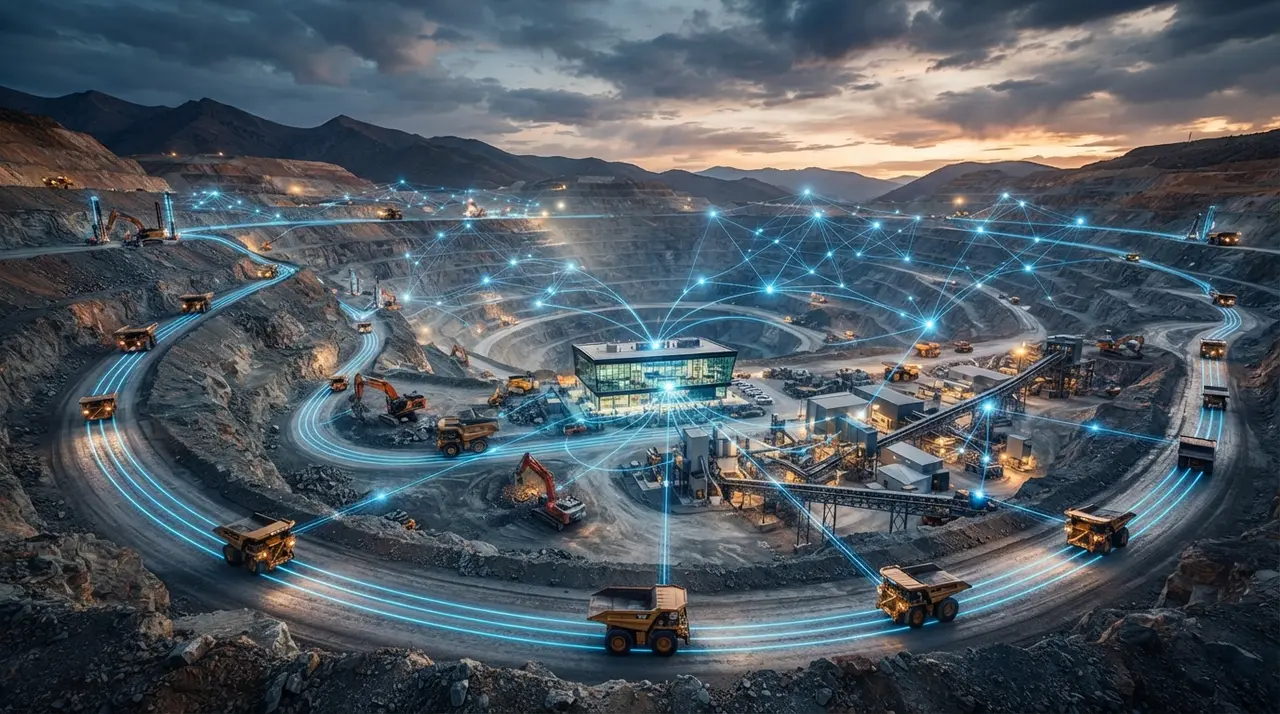
AI agents for mining and energy optimize heavy industrial operations by continuously monitoring sensor telematics and orchestrating predictive workflows across legacy SCADA and ERP systems. This autonomous intelligence enables capital-intensive enterprises to mitigate catastrophic machine failures, reduce energy consumption, and drive significant cost reduction without overhauling existing infrastructure.
For operations directors, plant managers, and enterprise executives, managing capital-intensive assets presents a relentless challenge. Facilities run continuous 24/7 schedules in harsh physical environments where even a minor mechanical failure can stall entire production lines. By deploying targeted autonomous agents, operations teams move beyond reactive firefighting into continuous, self-governing precision.
The High-Stakes Reality of Capital-Intensive Industrial Operations
Heavy industrial environments operate under extreme physical stresses where single equipment failures trigger multi-million dollar operational halts. Mining crushers, autonomous haul fleets, gas turbines, high-voltage transformers, and grinding mills represent massive capital investments that require constant operational vigilance.
When an unplanned outage strikes an ore processing plant or energy generation unit, the consequences extend far beyond immediate repair costs:
- Catastrophic downtime penalties: Every hour of stalled production directly reduces daily yield, driving revenue losses that can reach hundreds of thousands of dollars per hour.
- Unplanned secondary damage: A failed bearing in a primary crusher can warp shafts, ruin drive motors, and require weeks of structural overhaul.
- Escalating energy usage: Degrading machinery operates at sub-optimal thermodynamic and mechanical efficiencies, consuming excessive electrical or thermal power.
- Safety and environmental hazards: Equipment operating past safe operating margins elevates risks of fluid spills, toxic emissions, or structural failures.
Traditional static automation and manual inspection schedules are insufficient for these complex environments. Industrial leaders require intelligent agents capable of processing thousands of telemetry signals per second and making context-aware operational adjustments in real time.
Predictive Maintenance: Safeguarding Critical Assets Before Failure
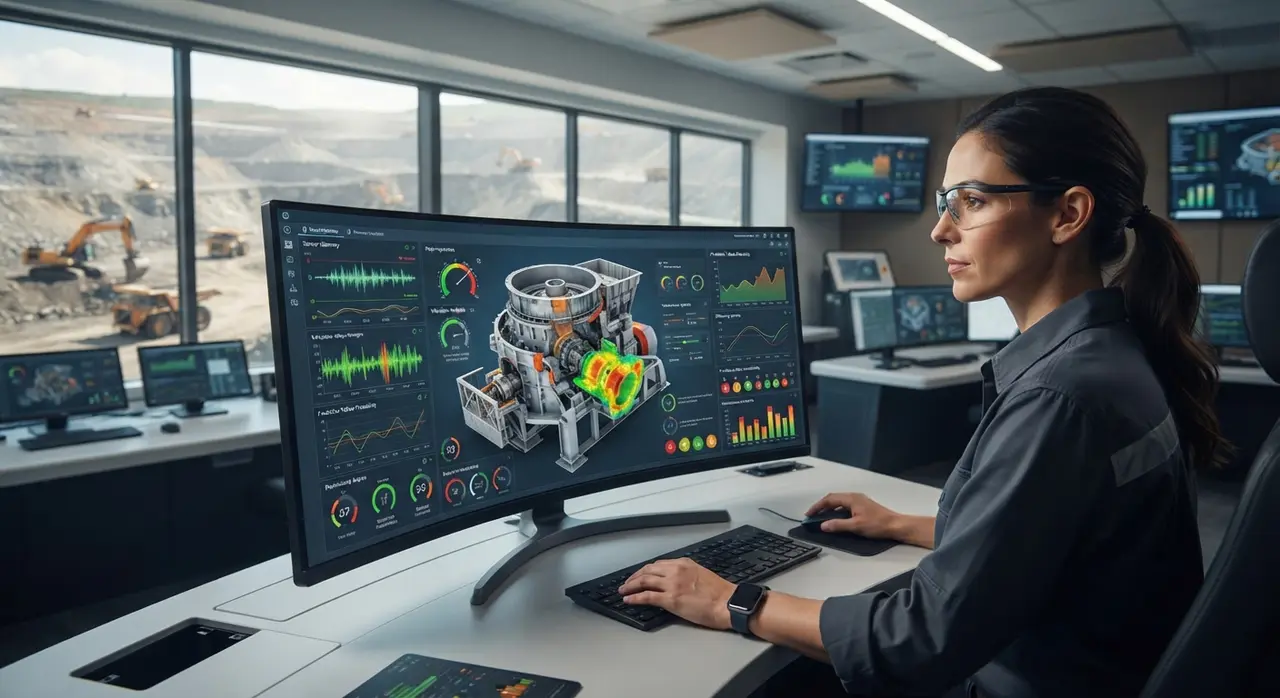
Autonomous AI agents prevent catastrophic asset breakdowns by continuously analyzing multi-modal data streams from historians and vibration sensors. Rather than relying on rigid schedule-based maintenance or simple threshold alerts, AI agents evaluate holistic health signatures across connected equipment.
For heavy machinery like haul trucks, SAG mills, and power transformers, autonomous agents detect micro-anomalies in temperature, oil fluid condition, acoustics, and power draw weeks before failure occurs. When an anomaly surfaces, the agent does not merely trigger a passive alert. It automatically cross-references inventory levels in your ERP, drafts a targeted work order with exact failure diagnostics, and submits it for engineering review.
This proactive orchestration ensures maintenance teams fix degrading components during planned service windows. For insights into how similar agent architectures operate in process environments, explore our detailed analysis on predictive maintenance and process monitoring frameworks.
Real-Time Process Optimization: Yield Recovery and Energy Efficiency
Autonomous process optimization dynamically adjusts operational setpoints to maximize mineral recovery and minimize power consumption. Industrial chemical processes, flotation circuits, and power plants operate within tight physical windows affected by changing raw material grade, ambient temperature, and equipment wear.
AI agents continuously evaluate live sensor data from plant instrumentation and test lab outputs. By running closed-loop optimization algorithms, the agent calculates optimal chemical dosing rates, mill slurry density, or turbine combustion ratios, keeping operations locked onto peak efficiency targets.
| Operational Dimension | Traditional Manual Control | Static Rule-Based Automation | Autonomous AI Agent Control |
|---|---|---|---|
| Response Time | Hours to days (shift-dependent) | Minutes (rigid thresholds) | Sub-second continuous adjustments |
| Data Processing | Sampled lab data & operator intuition | Isolated single-variable sensors | Multi-modal data streams & historical context |
| Downtime Prevention | Reactive post-failure response | Fixed calendar maintenance | Predictive health monitoring & pre-drafted work orders |
| ERP & Asset Integration | Manual data entry by personnel | Limited unidirectional log exports | Bi-directional automated workflows (SAP, Oracle, SCADA) |
| Safety Compliance | Manual audits & periodic checks | Basic emergency shutdown triggers | Continuous hazard detection & audit trail logging |
This systematic adjustment prevents energy waste during peak tariff periods and stabilizes processing output against unexpected variations in ore feed hardness or fuel BTU quality.
Seamless Integration with SCADA, Historians, and Enterprise ERPs
AI agents integrate natively with industrial control networks, data historians, and core ERP systems to bridge OT and IT environments seamlessly. Enterprise operations cannot afford to replace existing control hardware or core operational software to adopt artificial intelligence.
Autonomous agents operate as a non-invasive intelligence layer above your existing technology stack. They interface with legacy systems through secure industrial protocols and APIs:
- Operational Technology (OT): Direct integration with SCADA, DCS, and Industrial Data Historians (such as OSIsoft PI, Honeywell, and Schneider Electric).
- Enterprise Resource Planning (ERP): Automated synchronization with systems like SAP and Oracle to check spare parts availability and log maintenance costs. Discover how this works in practice through our guide on AI agent integration with SAP ERP platforms.
- Field Service & Asset Management: Instant routing of prioritized diagnostic work packages to field technicians' mobile interfaces via Microsoft Dynamics 365 or Maximo.
By connecting real-time floor physics directly with enterprise administrative software, autonomous agents eliminate human data re-entry, manual reporting lag, and administrative friction.
Safety Governance, Environmental Compliance, and Risk Detection
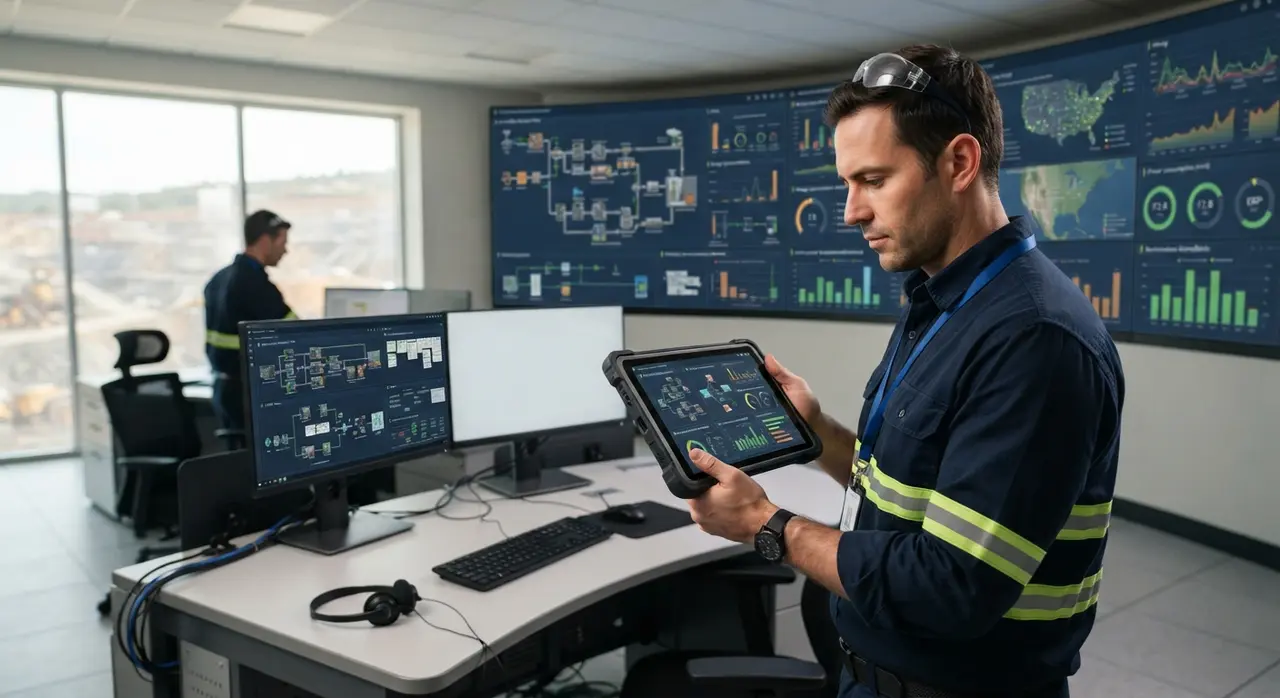
Real-time environmental and safety governance agents continuously scan work zones and emissions telemetry to prevent regulatory breaches and workplace hazards. Mining and energy operations face intense scrutiny regarding tailing dam stability, water discharge quality, atmospheric emissions, and site safety compliance.
AI agents monitor computer vision feeds and environmental sensors across remote facilities to flag critical hazards immediately:
- Geotechnical & Tailings Monitoring: Tracking pore pressure and ground movement sensors near tailing storage facilities to alert engineers to structural shifts.
- Emissions & Effluent Tracking: Continuously monitoring gas stack scrubbers and water treatment outflow to prevent exceedances before regulatory fines occur.
- PPE & Restricted Zone Enforcement: Identifying unauthorized personnel entry into hazardous blast zones or high-voltage switchyards in real time.
- Automated Audit Trails: Automatically logging compliance evidence, calibration records, and sensor verifications to satisfy stringent regulatory audits.
Mini-Case Study: Mining & Energy Transformation in Action
A multinational copper mining operation faced recurring unplanned downtime across its primary crushing circuits and heavy haul fleet, incurring over $4 million annually in lost throughput and emergency repairs. Manual inspection schedules failed to catch bearing degradation early, while operators struggled to balance grinding mill speed against fluctuating ore hardness.
To solve this, the company partnered with Agentes Autônomos to deploy specialized AI agents across their plant historians, SCADA systems, and SAP maintenance modules. The agents executed three distinct operational functions:
- Vibration and Thermal Diagnostics: Continuously monitored drive motor acoustics on crushers, detecting micro-fractures three weeks before physical failure.
- Closed-Loop Setpoint Adjustment: Automatically adjusted mill feed rates based on real-time power draw and ore hardness data, optimizing throughput without overloading motors.
- Automated ERP Workflow Orchestration: When asset health scores dropped below safe thresholds, the agent automatically placed a spare part reservation in SAP and drafted a maintenance work order for supervisor sign-off.
The Result: The facility achieved a 38% reduction in unplanned equipment downtime within six months. Furthermore, optimized grinding setpoints yielded a 9% reduction in electrical power consumption per ton of processed ore, delivering complete payback on investment in less than four months while keeping full engineering control intact.
Human-in-the-Loop Governance: Maintaining Operational Control
Operational AI agents execute actions under strict human-in-the-loop protocols to ensure safety compliance and engineering oversight. In high-risk environments like mines, refineries, and power grids, autonomous execution must be balanced with absolute human control.
The system operates on defined governance tiers tailored to operational risk:
- Low-Risk Autonomous Execution: Autonomous logging of operational telemetry, generating shift reports, and scheduling routine sensor calibration reminders.
- Supervised Setpoint Optimization: Real-time process setpoint recommendations automatically pushed to operator consoles, requiring a single-click confirmation from shift supervisors.
- High-Impact Maintenance Actions: Automatic generation of detailed SAP work orders and procurement requisitions, which remain pending until an asset engineer validates the diagnostic report.
This structured governance architecture eliminates administrative friction while ensuring certified engineers retain full veto power over critical physical assets.
Empower Your Industrial Operations with Agentes Autônomos
Capital-intensive industries no longer need to choose between asset risk and operational speed. By integrating specialized AI agents into your existing SCADA, historian, and enterprise ERP infrastructure, your business can reduce operational expenditure, eliminate unexpected outages, and enforce strict safety standards.
At Agentes Autônomos, we design, deploy, and govern tailor-made AI agents built specifically for complex industrial workflows. Explore our complete range of enterprise solutions by reviewing our autonomous software solutions or schedule an architectural review with our engineering team today.
Frequently Asked Questions
How do AI agents for mining connect to legacy SCADA and historian systems?
AI agents connect to legacy SCADA systems and data historians using standard industrial communication protocols such as OPC UA, Modbus, REST APIs, and native database connectors. They read real-time telemetry from systems like OSIsoft PI or GE Digital without requiring costly hardware replacements or disruption to active control loops.
Can AI agents prevent catastrophic failures in heavy mining trucks and crushers?
Yes, AI agents continuously analyze multi-channel sensor data including vibration frequency, oil pressure, fluid temperature, and electrical load to detect micro-faults weeks before physical breakdown occurs. When abnormal signatures appear, the agent alerts engineering teams and automatically drafts preventative maintenance work orders in your ERP.
How does human-in-the-loop control work during automated process adjustments?
Human-in-the-loop control enforces strict governance boundaries where the AI agent calculates optimal process setpoints but requires human authorization for high-impact changes. Operators receive clear diagnostic recommendations on their control screens and can approve, adjust, or override the proposed action with a single click.
What is the expected ROI timeline for implementing AI agents in industrial facilities?
Most industrial enterprises realize positive return on investment within 3 to 6 months of deployment. The rapid payback is driven by preventing a single unplanned downtime event or achieving immediate energy efficiency gains across heavy grinding and generation circuits.