
Automated Sales Funnel with CRM: Lead to Close
Discover how an automated sales funnel with CRM and AI reshapes daily commercial routines, boosts conversion rates, and optimizes sales productivity.
- Sales Automation
- CRM AI Integration
- Commercial Routine
- Lead Qualification
- Sales Forecasting
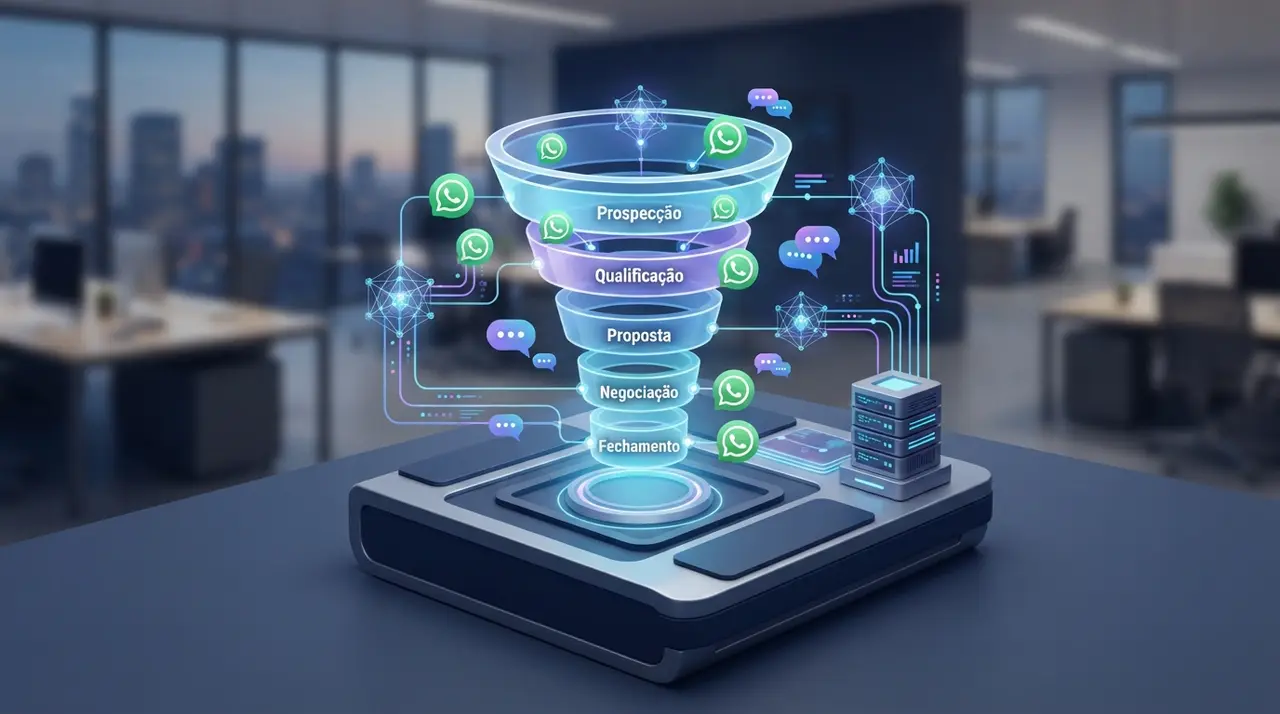
An automated sales funnel with CRM and AI integrates autonomous software agents directly into commercial workflows to handle lead qualification, follow-ups, and pipeline management. This systemic transformation changes the commercial routine by eliminating repetitive administrative tasks and allowing sales representatives to focus on strategic, high-value buyer interactions from lead generation to closing.
Manual Sales Processes Create Operational Friction and Revenue Leakage
Manual commercial routines consistently fail due to delayed follow-ups, subjective lead qualification, and excessive administrative workloads. When sales representatives spend hours manually keying interaction notes into legacy software, prospective clients wait hours—or days—for simple quotes or discovery scheduling.
This operational lag leads directly to lost business opportunities. Industry metrics show that response time directly dictates conversion velocity; yet, unassisted human reps struggle to maintain consistent contact cadence across WhatsApp, email, and web forms simultaneously.
- Speed-to-lead failures: Inbound leads cool down when initial response times exceed five minutes.
- Administrative overload: Reps lose up to 65% of their working hours on data entry instead of selling.
- Inconsistent data: Incomplete CRM records hinder sales forecasting and executive visibility.
By implementing agentic AI systems integrated into existing infrastructure, companies eliminate administrative bottlenecks without tearing down their core technology stack.
Automated Capture and Instant Qualification at Stage One
Automated lead capture transforms inbound customer inquiries into structured, enriched records within seconds. When an prospect initiates contact through WhatsApp, a website form, or email, AI agents immediately engage, gather context, and validate business criteria against predefined parameters.
Instead of relying on basic web forms with high drop-off rates, natural language processing enables interactive, conversational qualification. The AI agent asks targeted questions to determine decision-making authority, budget fit, timeline, and urgency.
Once qualified, the agent automatically enriches the contact record inside your enterprise system with corporate data, job titles, and firmographic insights before a human sales executive ever opens the file.

Middle-of-Funnel Nurturing: Dynamic Scoring and Automated Scheduling
Middle-of-funnel management requires consistent nurture sequences and intelligent prioritization to prevent high-value leads from stalling. AI agents evaluate prospect interaction behavior—such as email opens, WhatsApp responses, and asset downloads—to calculate a real-time lead priority score.
High-scoring prospects trigger automated calendar coordination, eliminating back-and-forth scheduling conflicts. The system proposes optimal meeting slots synced directly with the representative's availability and confirms the appointment directly on the buyer's preferred channel.
For prospects not yet ready to buy, automated agents initiate context-aware nurturing workflows tailored to specific pain points. Learn more about how tailored workflows drive efficiency across our enterprise automation solutions.
Bottom-of-Funnel Execution: Risk Alerts and Next Best Actions
Bottom-of-funnel deal closing demands precise timing, contract accuracy, and proactive risk detection. AI agents monitor active deal stages to identify stagnant accounts, contract review delays, or sudden drops in prospect communication.
When a deal strays from normal velocity parameters, the system alerts management and provides the sales executive with a specific "next best action." This recommendation might include sending a tailored case study, suggesting a revised commercial terms structure, or requesting executive sponsorship.
Comparing Manual and Automated Commercial Routines
Integrating AI into the sales pipeline fundamentally shifts daily activities across every phase of the commercial cycle. The following table highlights what changes in commercial routine when moving from manual management to AI automation.
| Funnel Stage | Traditional Manual Routine | AI-Automated Funnel Routine |
|---|---|---|
| Lead Capture | Manual form monitoring, delayed email responses, manual CRM entry. | Instant conversational engagement, real-time lead enrichment, instant CRM logging. |
| Qualification | Subjective rep criteria, inconsistent questioning, missed follow-ups. | Automated ICP verification, dynamic lead scoring, automated assignment. |
| Scheduling & Follow-up | Manual back-and-forth emails, forgotten follow-up reminders. | Autonomous calendar integration, multi-channel dynamic follow-up cadence. |
| Pipeline Management | Weekly manual pipeline updates, inaccurate close dates. | Predictive deal velocity tracking, automated stagnant deal risk alerts. |
| Rep Focus | 60%+ time spent on administrative software tasks. | 80%+ time spent on high-touch negotiation and closing conversations. |

Case Study: Scaling B2B Distribution Sales Velocity
A multi-regional industrial distributor with over 40 account executives faced severe sales friction: incoming inquiries via WhatsApp and email were taking over 12 hours to receive an initial human response, resulting in a 35% drop in qualified opportunities.
By implementing autonomous commercial agents developed by Agentes Autônomos, the distributor integrated intelligent lead capture directly into their existing CRM and WhatsApp Business API. The AI agent immediately handled initial inquiries, verified buyer credit eligibility, and scheduled discovery calls for enterprise reps within minutes.
Within 90 days of deployment, the enterprise achieved quantifiable operational improvements across their entire commercial structure:
- Speed-to-Lead: Reduced average initial lead response time from 12 hours down to 45 seconds.
- Sales Capacity: Increased reps' direct client conversation time by 40% without hiring additional staff.
- Conversion Rate: Boosted overall pipeline conversion from lead generation to closing by 22%.
The New Role of Sales Representatives: From Data Entry to Strategic Advisors
Automating repetitive tasks does not displace commercial representatives; it elevates their operational role. When AI agents take over routine follow-ups, meeting logistics, and database updates, sales reps evolve into strategic consultants.
Executives focus their energy where human emotional intelligence, negotiation nuance, and relationship building matter most. Sales managers gain transparent pipeline visibility and reliable predictive revenue insights grounded in real-time operational data rather than anecdotal updates.
Discover how autonomous workflows unlock enterprise growth by exploring key AI automation benefits for modern sales organizations.
Frequently asked questions
What is an automated sales funnel with CRM and AI?
An automated sales funnel integrates AI agents with enterprise CRM platforms to manage lead qualification, task assignment, multi-channel follow-ups, and pipeline tracking. It automates repetitive operational steps, allowing human sales teams to focus on high-value client interactions and closing deals.
How does AI automation change the daily commercial routine for sales reps?
AI automation shifts sales reps away from manual data entry, lead logging, and back-and-forth email scheduling. Instead of managing administrative tasks, representatives spend their daily routine engaging qualified prospects, conducting product demos, and negotiating commercial terms.
Do we need to replace our current CRM system to implement AI agents?
No, enterprise AI agents connect directly into your existing CRM, ERP, and communication channels like WhatsApp and email via APIs. The implementation overlays your existing technological infrastructure, preserving current investments and workflows while enhancing overall capabilities.
How do AI agents handle human handoffs during the sales process?
AI agents qualify prospects using predefined business criteria and contextual conversations. Once a lead meets specific threshold scores or requests human consultation, the system automatically routes the full interaction history to the appropriate account manager for a seamless transition.