AI Automation in TOTVS Protheus: Integration Guide
Learn how AI automation in TOTVS Protheus streamlines financial, tax, and sales workflows for growing companies while preserving legacy ERP data integrity.
- Automação com IA no TOTVS Protheus
- Guia Prático de Integração
- Empresas em Crescimento
- ERP Automation
- Enterprise AI

Automação com IA no TOTVS Protheus enables growing companies to eliminate repetitive back-office work by orchestrating autonomous software agents over core ERP modules. This Guia Prático de Integração explains how Empresas em Crescimento connect AI agents to TOTVS Protheus to accelerate workflows, enforce governance, and scale operations without replacing existing legacy infrastructure.
Why Growing Companies Need AI Automation in TOTVS Protheus
Enterprise operations frequently encounter severe bottlenecks when legacy ERP processes depend heavily on manual data entry and cross-departmental handoffs. As transaction volume scales in manufacturing, retail, and services, reliance on manual data processing inside TOTVS Protheus creates operational friction, human error, and delayed decision-making.
Growing organizations cannot solve operational bottlenecks simply by hiring more administrative staff. Instead, modern companies integrate agentic AI workflows directly into their ERP ecosystem to handle repetitive back-office tasks execution autonomously.
- Elimination of operational latency: AI agents process invoices, orders, and bank reconciliations continuously without waiting for business hours.
- Reduction in rework: Automated data validation prevents incomplete or erroneous data from entering core Protheus tables.
- Scalability without headcount inflation: Operations handle 5x transaction volumes while keeping administrative back-office teams lean.
Core Use Cases for AI Agents in TOTVS Protheus
Integrating autonomous AI agents into TOTVS Protheus unlocks high-impact operational efficiency across finance, tax, sales, and supply chain management. By acting as intelligent digital workers, AI agents interact with Protheus modules, web services, and communication channels like WhatsApp or email seamlessly.
1. Financial Operations & Bank Reconciliation
Financial teams spend countless hours matching bank statements against Protheus accounts payable and receivable records (SE1 and SE2 tables). AI agents automatically read incoming bank files, extract invoice data, reconcile unmatched line items, and highlight discrepancies for human approval.
2. Fiscal Compliance & SPED Validation
Brazilian tax compliance requires precision across electronic invoices (NFe/NFSe) and ancillary obligations. AI agents pre-validate fiscal codes (CFOP, NCM, CST) against tax rules before writing entries into Protheus, dramatically cutting fiscal review cycles and tax penalty risks.
3. Commercial Order Processing
Sales teams often receive purchase orders via PDF, email, or WhatsApp. AI agents parse unstructured order details, cross-reference customer pricing rules in Protheus (SC5/SC6 tables), check inventory balances (SB2 table), and draft sales orders automatically for commercial approval.
For more real-world operational scenarios, explore our practical automation examples designed for modern enterprise workflows.
Technical Architecture for Integrating AI Agents with Protheus
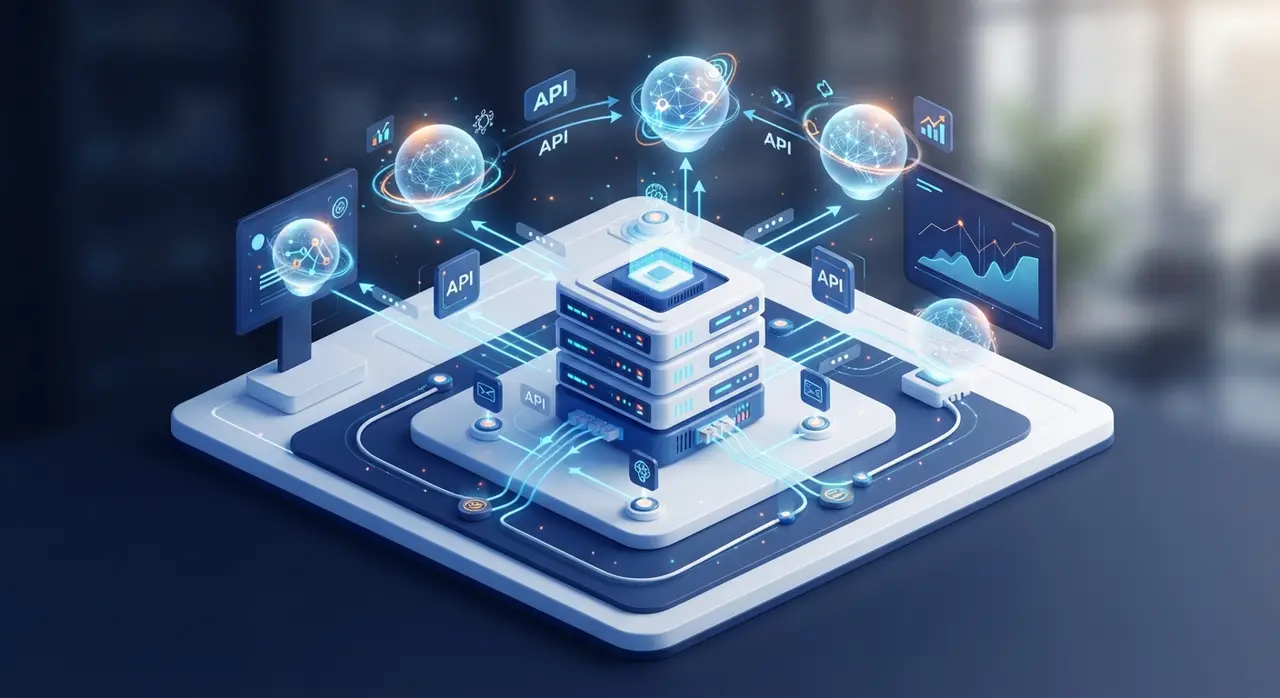
Integrating AI agents into TOTVS Protheus requires robust API patterns to guarantee absolute data integrity and transactional safety. Direct manipulation of underlying database tables (such as SQL Server or Oracle) bypasses standard ERP business rules and must strictly be avoided.

A resilient integration architecture combines standard AdvPL/TLPP web services with intelligent orchestration layers:
- REST APIs & Web Services: AI agents communicate through native or custom Protheus REST endpoints, triggering business logic securely.
- Executive Routines (MsExecAuto): Automated actions execute native AdvPL functions (such as MATA410 for sales orders or MATA103 for supplier invoices), enforcing standard ERP validation logic.
- Event-Driven Queues: Integration platforms process asynchronous queues (via Webhooks or messaging brokers) to prevent server overload during peak business hours.
Security, Governance, and Fiscal Compliance
Deploying AI inside enterprise ERP environments demands strict data governance, granular access control, and full compliance with LGPD (General Data Protection Law). Autonomous agents must adhere to the exact same authority matrix and security protocols established for human users.
Key governance layers include:
- Role-Based Access Control (RBAC): AI agents operate under dedicated Protheus service accounts equipped with minimal required execution permissions.
- Human-in-the-Loop Safeguards: Transactions exceeding defined financial thresholds or containing low confidence scores automatically pause for supervisor review.
- Immutable Audit Logs: Every action, API payload, and user confirmation is logged to maintain auditability for compliance officers.
Phase-by-Phase Implementation Framework for ERP Automation
A structured implementation framework mitigates operational risk while accelerating time-to-value for enterprise AI initiatives. Organizations adopting AI agent integration solutions should follow a pragmatic four-phase deployment plan.
Practical Case: Manufacturing Operations Optimization
A mid-sized manufacturing client operating TOTVS Protheus struggled with manual entry of over 1,500 supplier invoices monthly. By deploying Agentes Autônomos intelligent AI agents connected via REST APIs and MsExecAuto, the company automated supplier invoice intake, purchase order matching, and tax validation. The result was a 75% reduction in manual processing time, zero tax penalties, and complete operational visibility without modifying their existing ERP codebase.
| Integration Approach | Data Safety | Implementation Speed | Maintenance Effort |
|---|---|---|---|
| Direct SQL Write | High Risk (Bypasses ERP Rules) | Fast | Very High (Risk of Corruption) |
| Custom RPA (UI Scraping) | Medium Risk (Brittle to UI changes) | Medium | High (Frequent Breakage) |
| AI Agent + Protheus REST APIs | Very High (Enforces MsExecAuto) | Fast | Low (Standard API Contracts) |
Step 1: Process Diagnostic & Data Mapping
Identify high-volume, repetitive processes in Protheus. Document data inputs, standard operating procedures, exception rules, and relevant ERP tables (SE1, SE2, SC5, SD1).
Step 2: API Sandbox & Agent Configuration
Configure AI agents to read incoming unstructured data (PDFs, spreadsheets, chats) and map outputs to standard TOTVS Protheus REST API contracts inside a sandbox environment.
Step 3: Human-in-the-Loop Pilot
Deploy the agent in production with a strict human validation gate. Department managers review and approve 100% of generated transactions until performance metrics hit target precision.
Step 4: Full Scale & Autonomous Governance
Lower human oversight thresholds for routine tasks while maintaining automated alerting for anomalies. Monitor performance dashboards to track ROI and operational throughput.
Frequently asked questions
How does AI integrate with TOTVS Protheus without corrupting ERP database tables?
AI agents connect exclusively through official TOTVS REST APIs and AdvPL standard executive routines (MsExecAuto). This technical architecture guarantees that all native Protheus business rules, field validations, and table relationships remain fully enforced during every read or write operation.
What is the typical timeline to deploy an AI agent on TOTVS Protheus?
Initial pilot deployments typically require two to four weeks for a single high-volume process like supplier invoice matching or sales order processing. Scaling across multiple operational departments usually takes eight to twelve weeks depending on API readiness and enterprise customization levels.
Does AI automation require replacing existing TOTVS Protheus customizations?
No, AI agents operate on top of existing Protheus customizations and user-defined tables (such as SZ or Z-tables). The integration layer calls existing AdvPL endpoints or custom web services, fully preserving all customized business logic developed over years.
How does human oversight work when AI processes transactions in Protheus?
AI agents utilize configurable human-in-the-loop validation thresholds based on confidence scores and business rules. If a financial transaction or customer order falls outside defined tolerance limits, the agent automatically flags the task and routes it to a human supervisor for approval before committing data to Protheus.