AI Automation for Industry: Production Lines, MES & ERP
Discover how AI automation for industry bridges MES and ERP systems to transform production lines, quality control, predictive maintenance, and batch tracking.
- Industrial AI Automation
- MES ERP Integration
- Smart Manufacturing
- Quality Control
- Predictive Maintenance
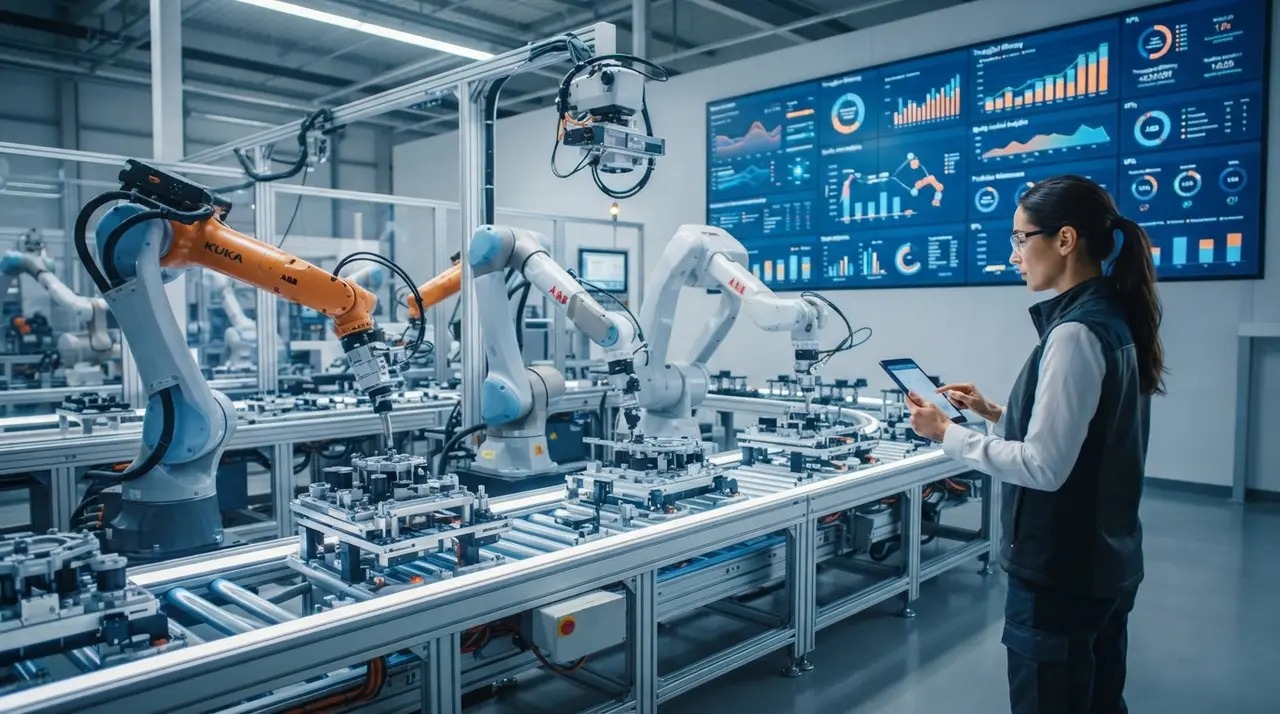
Automação com IA para Indústria (AI automation for industry) transforms shop floor operations by bridging physical manufacturing execution systems (MES) with enterprise resource planning (ERP) software. Autonomous AI agents ingest continuous telemetry from computer vision cameras, IoT vibration sensors, and programmable logic controllers (PLCs) to automate defect detection, dynamic production scheduling, and inventory reconciliation in real time.
For plant managers, operations directors, and industrial executives, scaling smart manufacturing requires moving beyond isolated automation pilots. Legacy industrial setups often suffer from a disconnect between shop-floor execution and executive decision-making. When equipment anomalies occur or quality drift starts on high-speed assembly lines, standard systems record raw data but fail to take immediate operational action. Integrating autonomous AI agents into your existing MES and ERP infrastructure closes this gap without requiring complete hardware replacements.
Smart Manufacturing Unifies Physical Operations with Strategic ERP Governance
Smart manufacturing bridges physical plant execution with high-level corporate governance by orchestrating data across disparate industrial software layers. Modern industrial facilities rely on MES to manage work orders, machine states, and shift logs, while ERP platforms manage financial accounting, raw material procurement, and customer fulfillment. Without intelligent orchestration, data exchange between these layers relies on batch updates or manual entry, leading to delayed decision-making and inventory inaccuracies.
Autonomous AI agents act as intelligent middleware that continuous monitors telemetry streams from shop-floor devices. When an AI vision sensor detects a dimensional defect on a high-speed packaging line, it does not just flag the item; the agent automatically logs the anomaly in the MES, assesses historical machine parameters, and adjusts the work-order schedule inside the ERP. This real-time alignment prevents scrap buildup, keeps financial ledgers accurate, and ensures compliance across multiple production units.
In-Line Quality Control Using AI-Powered Computer Vision
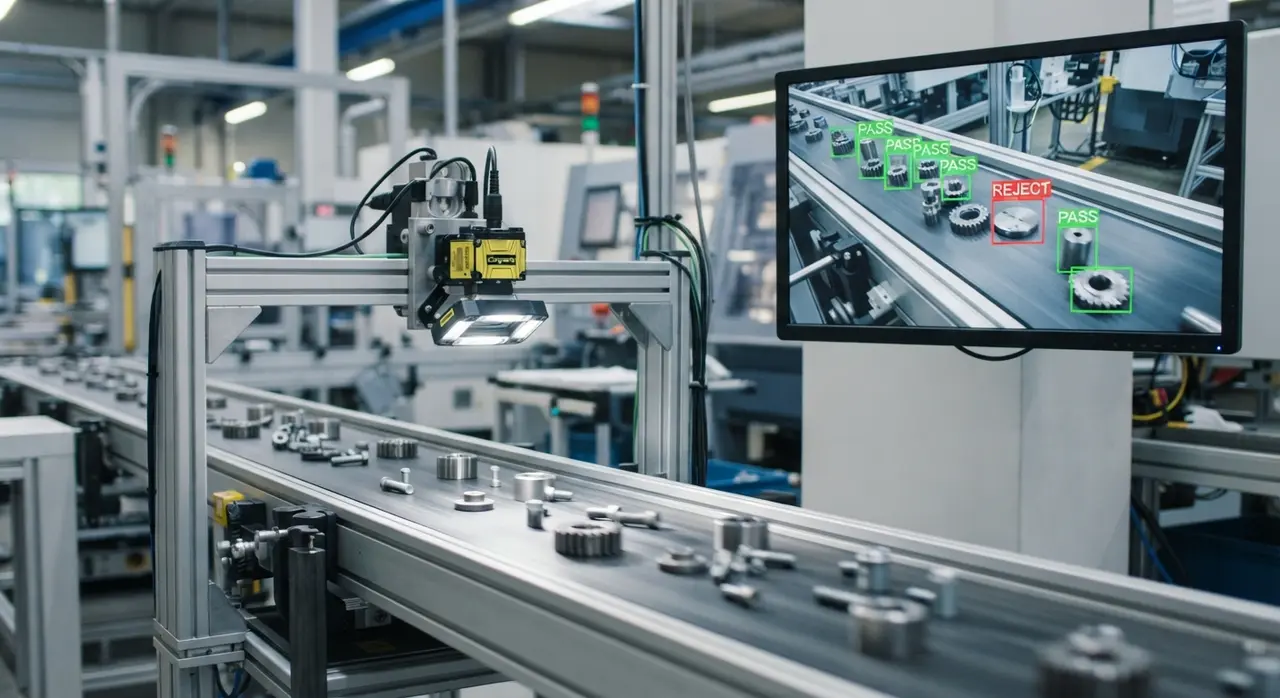
Computer vision powered by deep learning models delivers continuous quality inspection directly on active production lines. Traditional manual quality checks depend on sample testing after batch completion, which allows defective items to pass unnoticed until hundreds of units are produced. Standard photoelectric sensors can detect presence or absence, but they lack the sophistication needed to inspect complex surface textures, weld integrity, or dimensional tolerances.
Deploying AI agents connected to high-resolution camera feeds allows factories to perform 100% inline quality verification at full line speed. The AI agent analyzes surface defects, paint scratches, seal integrity, or assembly misalignments in milliseconds. If quality parameters drift beyond allowed thresholds, the system automatically triggers line adjustments or alerts maintenance crews before whole batches are ruined. Learn more about specialized implementations like AI agents for automotive quality control to see how vision models handle strict zero-defect mandates.
Predictive Maintenance Keeps Critical Equipment Operating at Peak Efficiency
Predictive maintenance uses machine learning models to analyze vibration, thermal, and electrical metrics from industrial assets to stop failures before they occur. Unplanned downtime is one of the highest cost drivers in heavy manufacturing, resulting in lost throughput, wasted operator hours, and emergency repair expenses. Traditional preventive maintenance relies on fixed time schedules, often replacing operational parts prematurely or failing to catch sudden component wear.
AI agents constantly analyze sensor telemetry against baseline performance curves to detect micro-anomalies indicative of bearing wear, gear friction, or motor overheating. Upon identifying abnormal patterns, the AI agent automatically calculates remaining useful life (RUL), schedules a targeted maintenance work order in the MES, and reserves the required spare parts within the ERP system. Discover how predictive maintenance in chemical processes prevents critical valve and pump failures in continuous processing plants.
Dynamic Production Optimization and OEE Improvement
Dynamic production optimization adjusts line sequencing and job scheduling autonomously based on live plant constraints and material availability. Overall Equipment Effectiveness (OEE)—which measures availability, performance, and quality—suffers when machine bottlenecks, changeover delays, or raw material shortages occur unexpected on the factory floor.
Rather than relying on static master production schedules (MPS), AI agents evaluate live shop floor conditions continuously. If a key stamping press experiences a temporary slowdown, the AI agent dynamically re-routes work orders to alternate lines, recalculates target completion times, and updates delivery commitments in the ERP. This constant balancing maximizes asset utilization, minimizes changeover setup times, and optimizes total throughput.
Comparing Traditional Manufacturing vs. AI-Driven Smart Manufacturing
Transitioning from traditional automated lines to fully integrated AI smart manufacturing shifts your operations from reactive problem-solving to proactive execution. The table below outlines how key operational areas evolve when AI agents connect production lines, MES, and ERP systems.
| Operational Area | Traditional Manufacturing Setup | AI-Driven Smart Manufacturing |
|---|---|---|
| Quality Control | Manual end-of-line sampling; delayed feedback leading to higher scrap volume. | 100% inline vision inspection; real-time defect isolation and instant line adjustment. |
| Maintenance | Time-based preventive schedules or reactive repairs after equipment breakdown. | Predictive health monitoring; automated spare part reservation and work order creation. |
| MES & ERP Sync | Manual shift logging or scheduled batch data transfers leading to inventory lag. | Bi-directional real-time data sync powered by autonomous AI orchestration. |
| Production Scheduling | Static daily schedules updated manually when bottlenecks or breakdowns happen. | Dynamic, real-time rescheduling based on machine load, scrap rates, and stock availability. |
| Batch Traceability | Paper logs or disconnected databases requiring days to compile compliance audits. | Automated end-to-end digital genealogy linking raw lots directly to finished SKUs. |
Real-Time MES-ERP Integration Delivers Complete Operational-to-Financial Visibility
Bi-directional integration between MES and enterprise ERP platforms bridges the operational gap between factory floor events and financial performance. Plant operators need immediate visibility into line availability and scrap metrics, while executive leaders require accurate inventory valuation, cost-of-goods-sold (COGS) tracking, and supply chain forecasting. When these systems operate in silos, financial data lags behind physical reality by days or weeks.
Autonomous AI agents interface seamlessly with enterprise systems via standard APIs or direct database hooks. For example, executing an enterprise SAP ERP integration allows real-time material consumption on the shop floor to immediately decrement raw inventory balances, recalculate unit margins, and generate automatic purchase requisitions when safety stock levels are breached. This operational-to-financial synchronization gives executives clear visibility into total manufacturing costs at any moment.
End-to-End Batch Traceability and Demand-Driven Production Planning
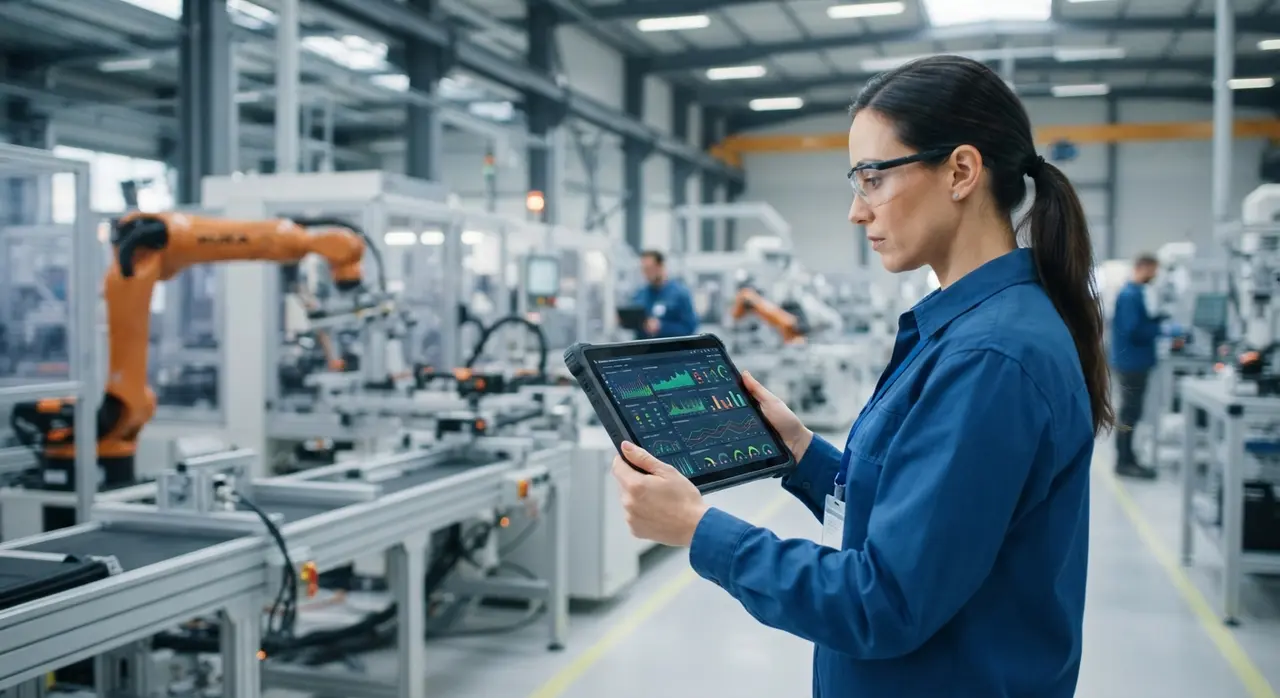
AI-driven batch traceability creates an immutable digital record of every product from raw material intake to final dispatch. In highly regulated sectors such as pharmaceuticals, food and beverage, and automotive assembly, tracking lot origin is vital for regulatory compliance, quality audits, and targeted recall management. Manually tracing components across disparate databases takes valuable time and introduces human error.
AI agents consolidate data from supplier shipping notices, barcode scans, sensor logs, and MES execution records to construct a complete digital product genealogy. When coupled with AI-powered demand forecasting, the plant can automatically align its production schedule with downstream customer orders, warehouse inventory levels, and seasonal demand variations. This demand-driven approach reduces finished-goods inventory holding costs while eliminating stockouts.
Mini Case Study: AI Automation in Action at Agentes Autônomos
Industry: High-Volume Industrial Packaging Component Manufacturer
Challenge: A multi-site packaging enterprise suffered high scrap rates (over 4.5%) and frequent ERP inventory mismatches. Quality inspectors were unable to spot micro-cracks on high-speed extrusion lines fast enough, resulting in entire batch rejections during final warehouse audits. Additionally, manual shift reporting delayed inventory updates in their central ERP system by up to 24 hours.
Solution: The company partnered with Agentes Autônomos to deploy custom autonomous AI agents on their main extrusion lines. The team integrated high-speed vision sensors with the existing MES and SAP ERP infrastructure. AI agents were trained to identify extrusion defects in under 15 milliseconds while continuously cross-referencing machine vibration metrics.
Results: Within 90 days of implementation, the AI agent platform identified surface defects instantly, automatically signaling PLCs to adjust extruder pressure and temperature. Scrap rates dropped by 62%, saving over 120 tons of raw polymer annually. Furthermore, automated real-time synchronization between the MES and SAP ERP eliminated inventory discrepancies completely, cutting shift handoff times from 45 minutes to zero.
Implementing Industry 4.0 in Enterprise Manufacturing Environments
Scaling industrial AI solutions successfully requires a structured, phased methodology that balances rapid operational gains with strict enterprise governance. Industrial leaders must evaluate vendor capabilities, network security protocols, and human-in-the-loop oversight before deploying autonomous agents across multiple plants.
- Identify High-Impact Use Cases: Audit your plant operations to pinpoint areas with the highest cost of downtime, scrap generation, or manual reporting delays.
- Establish Data Infrastructure: Ensure your PLCs, SCADA systems, and MES platforms support accessible data streaming interfaces (e.g., MQTT, OPC UA, REST APIs).
- Deploy Autonomous AI Middleware: Integrate specialized AI agents that interface with existing shop floor sensors and your enterprise ERP without requiring expensive core software replacements.
- Implement Human-in-the-Loop Governance: Define strict operating thresholds where AI agents can execute automated actions independently, and set exception alerts for supervisor sign-off when deviations exceed parameters.
- Scale Across Production Units: Standardize validated AI models across secondary manufacturing lines and multi-site facilities to maximize enterprise-wide ROI.
Frequently asked questions
What is AI automation for industry and how does it work with existing MES and ERP systems?
AI automation for industry uses autonomous software agents and machine learning models to connect physical shop floor execution with high-level enterprise planning. The AI agent ingests data continuously from IoT sensors, vision systems, and PLCs, translates that data into operational actions within the MES, and synchronizes financial and inventory records instantly inside the ERP.
Do we need to replace our current legacy PLCs or ERP software to implement AI agents?
No, modern industrial AI agents act as intelligent integration layers that connect to your existing hardware and legacy enterprise software via APIs, industrial protocols (OPC UA, MQTT), or direct database connectors. This allows plants to add advanced predictive quality and automated scheduling capabilities without costly infrastructure overhauls.
How does computer vision improve inline quality control compared to manual inspections?
Computer vision inspects 100% of manufactured items in real time at full production line speed, whereas manual checks rely on small periodic samples. AI vision models identify micro-defects, dimensional deviations, and surface flaws in milliseconds, enabling instant line corrections before large amounts of scrap are produced.
What role do human operators play when autonomous AI agents run production lines?
Human operators remain central to shop floor governance through a human-in-the-loop framework. AI agents handle repetitive data analysis, defect detection, and automated reporting, but escalate complex operational decisions, major maintenance alerts, or out-of-spec parameters to human supervisors for final approval.
Unlocking Enterprise Value through Industrial AI Automation
Integrating AI agents into production lines, MES, and ERP systems provides manufacturers with unprecedented operational control, scrap reduction, and financial clarity. By automating quality checks, predicting equipment maintenance needs, and streamlining batch traceability, enterprises can achieve true Industry 4.0 efficiency without replacing their core legacy infrastructure. Partnering with experienced specialists allows industrial decision-makers to scale AI safely, ensuring robust governance, rapid ROI, and seamless cross-functional alignment.