AI Agents for Renewable Energy: Predictive Asset Care
Deploy AI agents for renewable energy to automate predictive maintenance, streamline SCADA monitoring, reduce O&M costs, and ensure regulatory compliance.
- AI Agents for Renewable Energy
- Predictive Maintenance and Monitoring
- Real-Time Asset Monitoring
- Energy Operations
- SCADA Integration
The Challenge of Managing Geographically Dispersed Renewable Assets
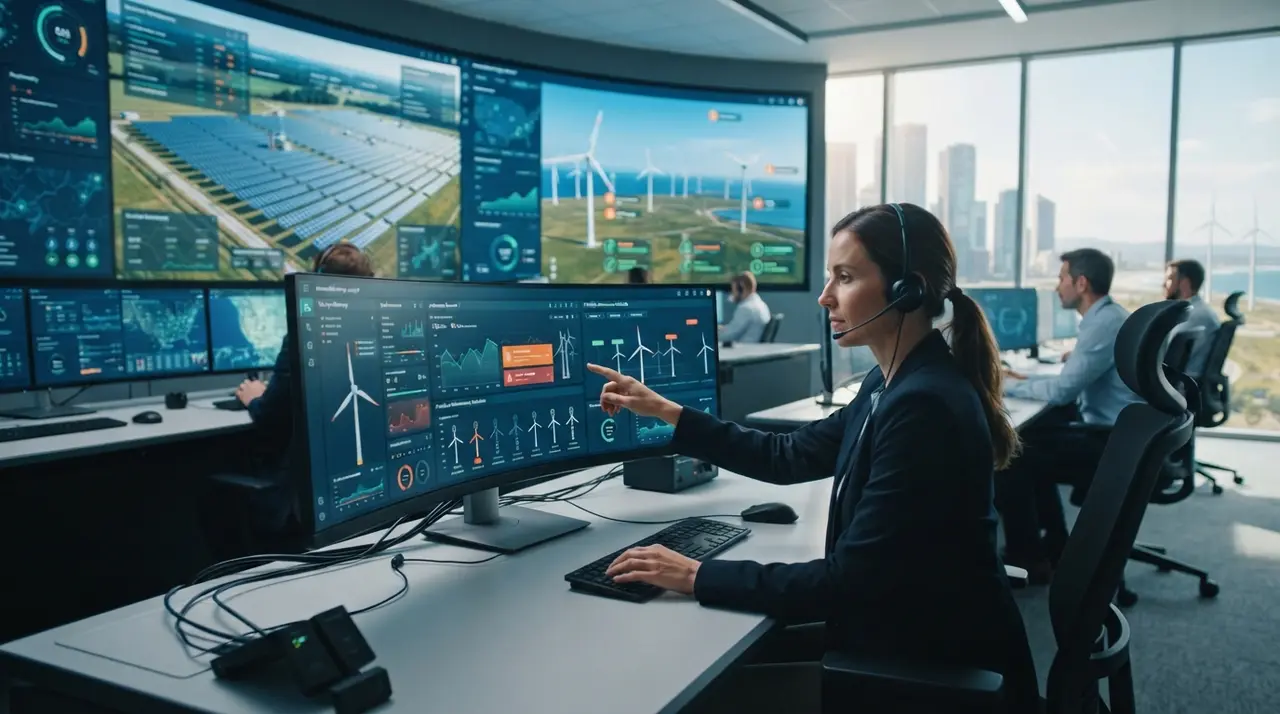
AI Agents for Renewable Energy automate real-time asset monitoring, failure prediction, and operational dispatch across geographically dispersed solar and wind plants. By processing sensor streams and regulatory constraints simultaneously, these autonomous systems eliminate unplanned downtime and optimize power generation without forcing companies to overhaul their existing IT infrastructure.
Managing remote solar plants and wind parks presents severe operational bottlenecks. Operations and maintenance (O&M) teams face vast geographic distances, volatile weather shifts, and strict reporting deadlines set by regulatory bodies like ANEEL. When a central inverter trips or a wind turbine gearbox overheats in a remote facility, traditional monitoring systems merely sound an alarm—leaving engineers to manually diagnose the root cause and dispatch technicians.
This reactive model drives up O&M expenditures and leads to costly power curtailment. Understanding how modern differentiates AI agents from traditional RPA is critical: standard automation follows rigid scripts, whereas autonomous agents dynamically analyze sensor context, evaluate operational trade-offs, and execute multi-step workflows.
How Predictive Maintenance and Monitoring Keeps Turbines and Inverters Running
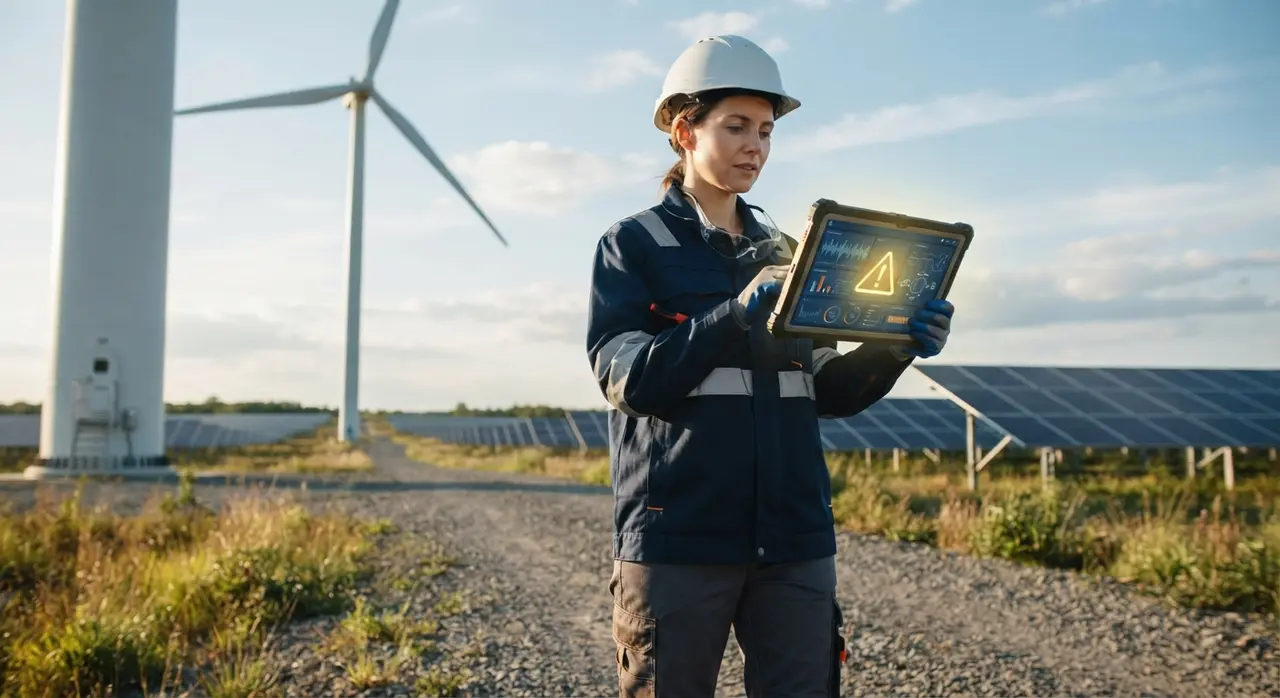
Predictive maintenance and monitoring powered by AI agents detects equipment anomalies weeks before critical component failure occurs. Rather than relying on fixed calendar schedules or simple threshold alerts, intelligent agents continuously analyze high-frequency telemetry streams—including vibration, temperature, oil pressure, voltage stability, and output harmonics.
When an agent identifies subtle micro-anomalies in a wind turbine main bearing or solar string inverter, it instantly cross-references thermal logs, weather conditions, and component wear history. The agent then calculates the optimal maintenance window—balancing the risk of component degradation against forecasted generation yield and grid spot prices.
| Maintenance Approach | Detection Capability | Work Order Trigger | Operational Impact |
|---|---|---|---|
| Calendar-Based | None (Fixed intervals) | Manual schedule | High risk of unexpected failures between cycles |
| Standard SCADA Thresholds | Reactive (Triggers after breach) | Manual alarm review | Causes sudden emergency shutdowns and dispatch delays |
| AI Agent Predictive Care | Proactive (Detects micro-anomalies early) | Automated ERP & WhatsApp dispatch | Prevents catastrophic breakdowns and maximizes generation yield |
Real-Time Asset Monitoring and SCADA System Integration
Integrating AI agents directly into existing SCADA systems enables automated performance drop detection and instant dispatch routing across all facilities. AI agents operate as intelligent orchestrators sitting on top of your legacy SCADA, SAP, TOTVS ERP, and field communication channels like WhatsApp.
By continuously analyzing predictive maintenance and monitoring feeds, the agent performs real-time diagnostics the moment generation dips below baseline expectations. Leveraging advanced agentic AI capabilities, the system can independently verify weather data, query spare parts inventory in your ERP, generate a prioritized work ticket, and message the nearest qualified field technician with a complete diagnostic brief.
- Instant Defect Categorization: Distinguishes immediately between cloud shading, panel soiling, and severe hardware degradation.
- Automated Work Order Creation: Opens maintenance tickets in SAP/TOTVS with pre-populated spare part requirements.
- Human-in-the-Loop Oversight: Requires supervisor approval via messaging apps only for high-cost interventions, maintaining strict operational control.
Weather-Based Generation Forecasting and Regulatory Compliance
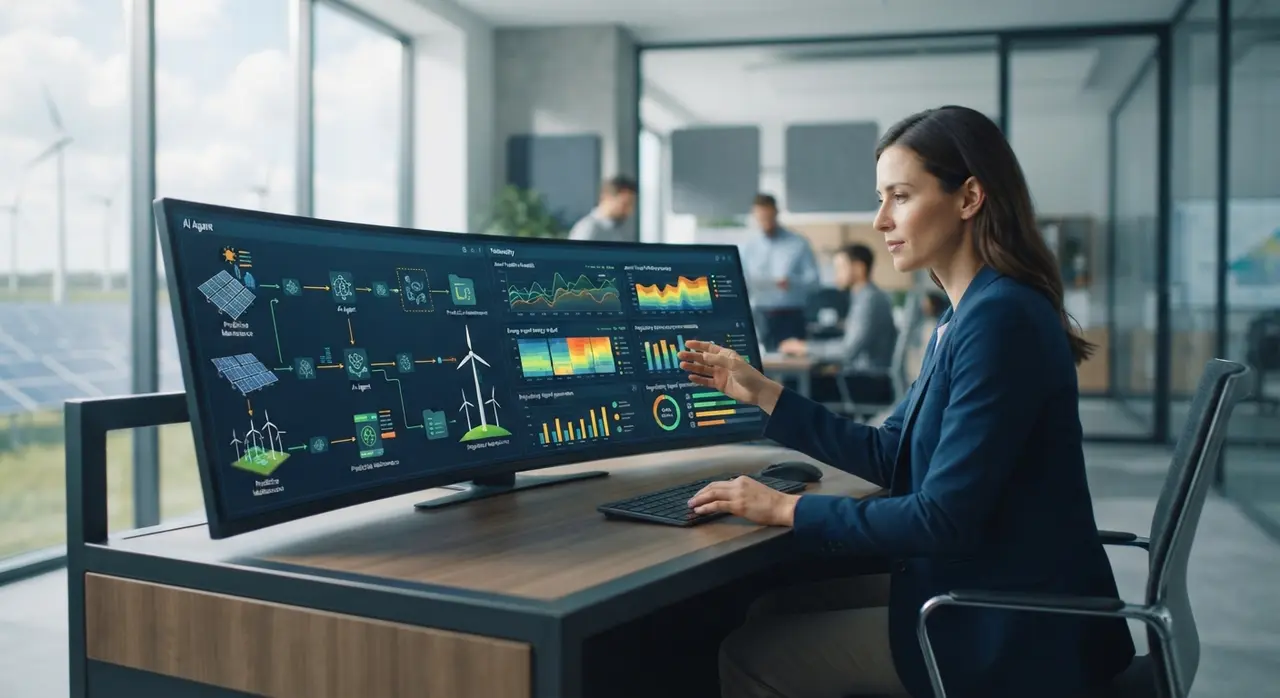
Autonomous agents continuously cross-reference meteorological forecasts with grid demand and ANEEL reporting standards to maximize asset profitability. Generation variability in solar and wind assets requires constant re-balancing and precise forecasting to meet power purchase agreements (PPAs) and avoid grid penalization.
AI agents aggregate live weather radar, satellite solar irradiance, and atmospheric pressure models to predict plant output with high granular accuracy. Furthermore, managing regulatory compliance becomes effortless: agents automatically record event logs, compile forced-outage metrics, and generate compliant compliance reports for ANEEL and grid operators.
Mini Case Study: A multi-site solar energy enterprise integrated Agentes Autônomos AI agents into their existing SCADA and SAP environments. Within four months, automated anomaly triage reduced unscheduled inverter downtime by 38%, while autonomous event logging completely eliminated manual ANEEL compliance filing delays, saving hundreds of engineering hours per quarter.
Key Operational Gains for Energy Enterprise Decision-Makers
Deploying AI agents for real-time asset monitoring maximizes generation availability while slashing O&M expenditures across multi-unit operations. Energy executives can scale their portfolio capacity without linearly increasing headcount or operational oversight overhead.
- Higher Asset Availability: Early failure detection keeps generation availability consistently above target SLAs.
- Reduced O&M Overhead: Eliminates unnecessary truck rolls by confirming root causes before technicians step onto the site.
- Maximized Generation Yield: Matches maintenance windows to low-irradiance or low-wind periods to preserve revenue generation during peak hours.
To explore tailored enterprise deployment options for your power generation portfolio, review our tailored enterprise AI solutions designed for seamless operational integration.
Frequently asked questions
How do AI agents integrate with existing SCADA and ERP software?
AI agents connect through secure APIs and data pipelines to existing SCADA systems, SAP, or TOTVS ERPs without requiring infrastructure replacement. They process incoming telemetry and trigger workflows directly in your current software suite.
What specific sensors do AI agents monitor in solar and wind plants?
Agents evaluate vibration, temperature, voltage, harmonic distortion, gearbox oil pressure, and string-level solar current. By continuously analyzing real-time assets telemetry, the agents flag micro-deviations before severe hardware degradation happens.
How do AI agents help with regulatory compliance like ANEEL requirements?
AI agents automatically log operational events, outage durations, and performance indices required by energy regulators like ANEEL. They compile and format compliant regulatory reports, eliminating human reporting errors and delay penalties.
Can AI agents automatically schedule field maintenance teams?
Yes, AI agents generate work orders in your ERP and notify field technicians through messaging channels like WhatsApp or enterprise mobile apps. Human managers retain oversight to approve or adjust dispatch priorities when needed.