AI Agent Integration with Linx ERP for Retail
Discover how AI Agent Integration with Linx ERP drives POS stock automation, demand forecasting, and back-office efficiency across multi-unit retail chains.
- Integration of AI Agents
- POS Stock Automation
- Retail Chains
- Linx ERP
- Enterprise Automation
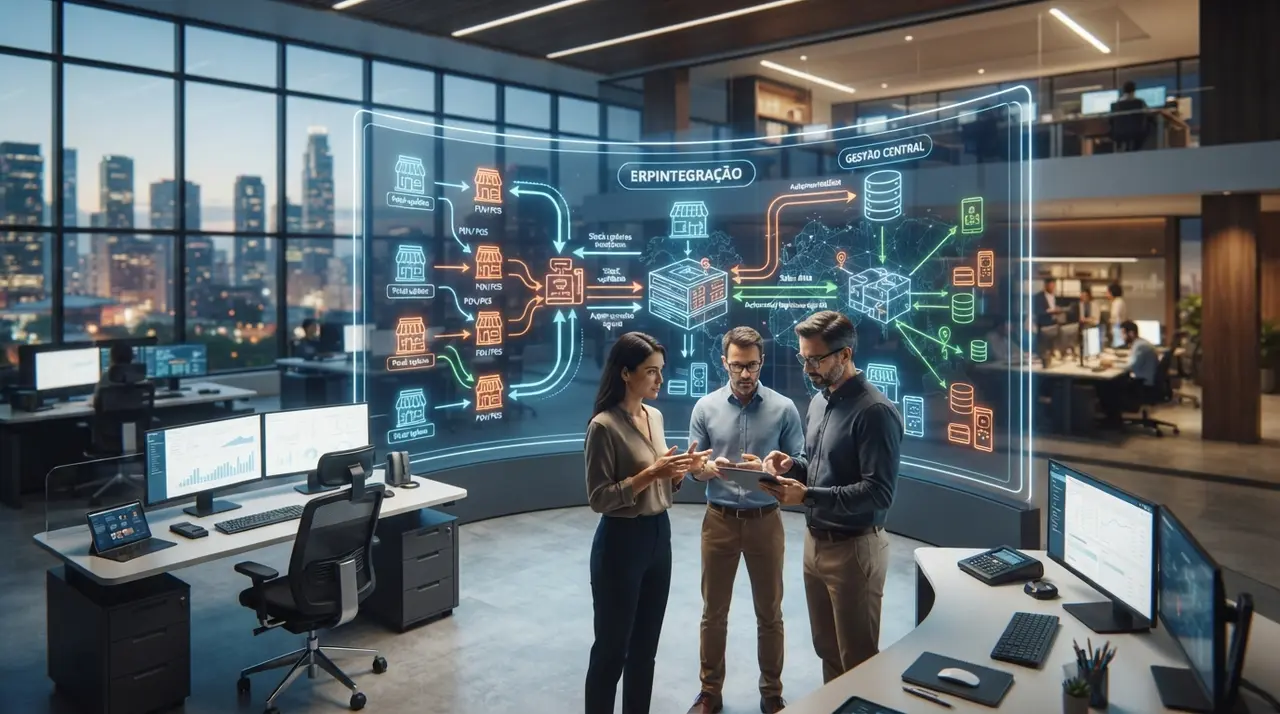
Integration of AI Agents with Linx ERP enables retail chains to automate real-time inventory management, POS reconciliation, and multi-unit operational decisions. This direct connectivity bridges core enterprise resource planning with autonomous decision-making without requiring retail networks to replace their underlying technology stack.
Managing multi-unit retail networks demands high transactional speed and immediate visibility across regional stores. When inventory data, point-of-sale (POS) systems, and back-office financial tasks operate in silos, retail operations suffer from frequent stockouts, excess inventory, and manual reconciliation delays.
Deploying autonomous agents on top of Linx ERP transforms passive retail data into proactive operational execution. By placing intelligent agents between store terminals and enterprise systems, retail leaders eliminate repetitive tasks while maintaining total operational oversight.
Real-Time Stock Synchronization Across Multi-Unit Retail Chains
Real-time stock synchronization across multi-unit retail stores prevents inventory mismatch between physical shelves and digital channels. When point-of-sale data instantly triggers cross-unit inventory evaluations, autonomous agents calculate regional sales velocity and automatically propose store-to-store balancing transfers.
In traditional retail operations, branch managers spend hours evaluating balance sheets to spot missing inventory. Intelligent agents continuously analyze Linx stock tables, identifying fast-moving items before regional stockouts impact daily revenue.
By connecting store inventory modules with distribution center smart picking workflows, AI agents orchestrate automated replenishment cycles based on real consumption rather than rigid weekly schedules.
- Prevent Stockouts: AI agents detect low stock thresholds based on localized sales velocity.
- Reduce Surplus: Automated inter-store balance orders shift excess items to high-demand locations.
- Omnichannel Accuracy: Real-time inventory sync prevents online orders for items already sold in physical POS terminals.
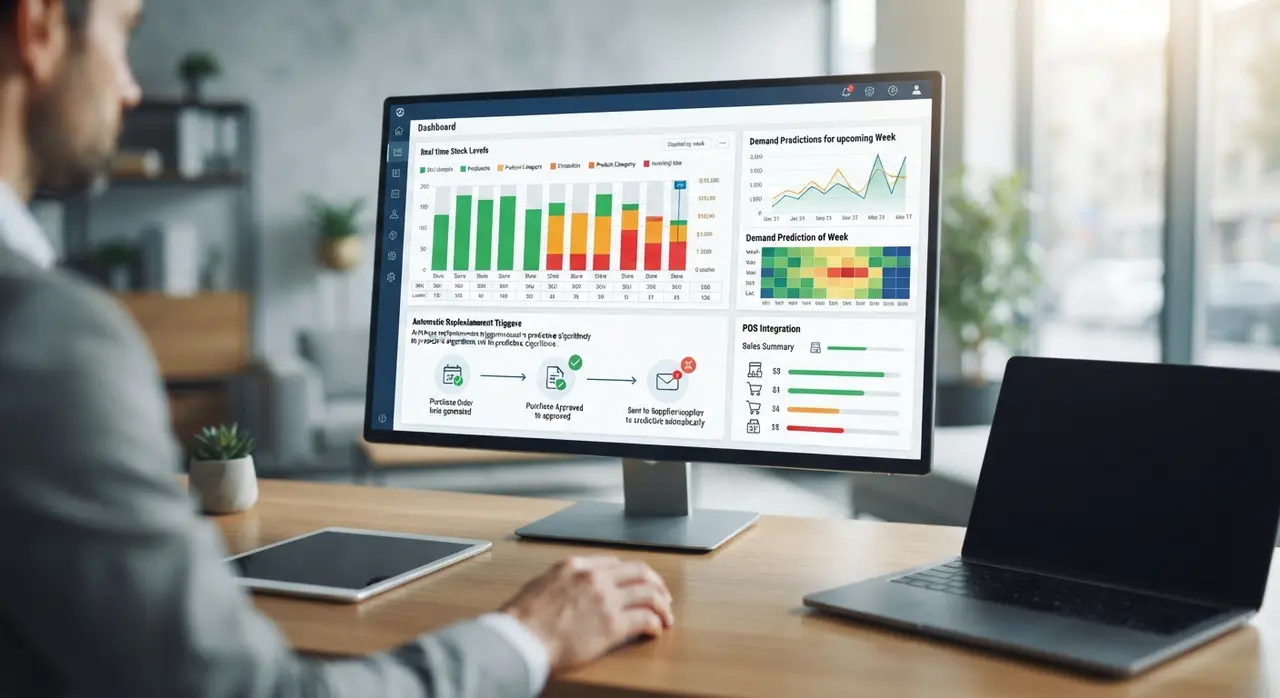
How AI Agents Consume Linx Data and Orchestrate Workflows
AI agents execute retail workflows by consuming Linx API endpoints, webhook events, and relational databases in real time. Rather than overriding core system rules, agents act as virtual operators that query sales records, process logic, and draft transactional entries into Linx ERP modules.
Architecturally, autonomous agents sit alongside existing software layers. They process continuous data feeds from Linx Microvix or Linx OMNIX, executing routine tasks according to strict operational parameters defined by executive management.
When an action exceeds predefined safety parameters—such as an unusually large purchase order or an unprecedented inventory write-off—the agent pauses execution and routes a human-in-the-loop review request to store supervisors via messaging interfaces like WhatsApp or Microsoft Teams.
Automated Back-Office: Financial, Fiscal, and POS Reconciliation
Automating retail back-office functions eliminates manual discrepancies between POS daily totals, bank settlement files, and tax documentation. AI agents continuously validate cash drawer balances and card processor reports directly against Linx financial ledgers.
Cashier closing errors and delayed invoice entries consume hundreds of hours monthly across large store networks. Intelligent agents ingest tax XML files, cross-reference item codes with Linx master data, and flag fiscal discrepancies instantly.
This continuous oversight drastically reduces monthly audit stress and eliminates rework during tax filing windows, guaranteeing compliance across regional tax jurisdictions without expanding administrative headcount.
Comparison: Traditional ERP Management vs. AI-Agent Augmented Linx ERP
Evaluating the operational differences between manual ERP operations and AI-driven automation reveals significant efficiency gains for retail chains.
| Operational Parameter | Traditional Linx ERP Management | Linx ERP + Autonomous AI Agents |
|---|---|---|
| Stock Replenishment | Manual weekly orders by store managers | Continuous automated reordering based on dynamic demand |
| POS Reconciliation | Manual daily closing audit taking 1-2 hours per store | Automated real-time reconciliation with anomaly alerts |
| Inter-Store Transfers | Delayed rebalancing based on monthly sales reviews | Autonomous balance requests generated dynamically |
| Customer Availability Queries | Phone calls or static store lookups | Instant real-time inventory checks via conversational agents |
| Exception Handling | Discovered post-closing during monthly audits | Flagged instantly with human-in-the-loop alerts |
Case Study: Multi-Unit Fashion Retailer Optimizes Inventory with Agentes Autônomos
A multi-unit fashion retail group operating 40 physical locations across Brazil experienced recurring inventory stockouts in high-tier shopping centers while surplus inventory accumulated in suburban stores. Manual inventory transfers logged through Linx Microvix suffered from a three-day processing lag, causing missed sales opportunities.
The company implemented customized solutions from Agentes Autônomos to bridge their Linx ERP system with autonomous operational agents. The intelligent system was configured to monitor hourly POS sales velocity across all 40 stores, instantly calculating local product turnover.
Within 60 days of deployment, the AI agents automatically generated balanced inter-store transfer orders, sending 1-click authorization prompts to regional managers. Stockout rates dropped by 38%, while tied-up capital in excess inventory decreased by 24% without replacing their legacy Linx setup.

Data Security and Fiscal Governance in Automated Retail Operations
Maintaining strict data security and fiscal compliance is essential when connecting AI agents to enterprise software like Linx ERP. Autonomous workflows must respect established operational permissions, auditing standards, and fiscal regulations.
Using robust enterprise frameworks, agents access ERP databases via restricted API tokens and encrypted connections. Every execution—from stock adjustments to invoice entries—is logged in audit trails detailing the rationale behind every action.
Adhering to comprehensive enterprise AI governance checklists ensures that agentic AI capabilities operate strictly within corporate policies, protecting customer personal data and financial records at all times.
Scaling Retail Operations Without Increasing Overhead
Scaling a multi-unit retail business requires expanding revenue and store count without multiplying administrative costs. Integrating autonomous intelligence directly into your existing ERP allows operations to grow seamlessly, providing store managers with clear actionable data while taking over time-consuming operational tasks.
Retail leadership can focus on expansion, marketing, and customer experience while autonomous agents monitor inventory accuracy, manage supplier purchase orders, and reconcile point-of-sale data continuously in the background.
Frequently asked questions
Does integrating AI Agents require replacing our existing Linx ERP infrastructure?
No, integrating AI agents does not require replacing your existing Linx ERP infrastructure. Agents connect via existing APIs, database connectors, or interface layers, acting as an intelligent operational layer above Linx to automate processes without disturbing core database structures.
How do AI agents prevent incorrect inventory updates or order errors in Linx POS?
AI agents rely on strict validation rules and human-in-the-loop protocols. If an action exceeds defined thresholds—such as an unusually high stock adjustment—the agent pauses execution and submits a approval request to human supervisors before writing to Linx ERP.
Can AI agents handle WhatsApp customer service connected directly to Linx real-time inventory?
Yes, AI agents can connect customer-facing channels like WhatsApp directly to real-time Linx inventory data. Customers can inquire about product availability, reserve items, or check order status across specific store branches instantly.
What is the typical deployment timeline for connecting AI agents to Linx?
Typical deployment timelines range from 3 to 6 weeks, depending on the complexity of the specific retail processes being automated. Initial pilot workflows—such as POS reconciliation or stock threshold alerts—often go live within the first two weeks.