AI Agents for Pharmacy Chains: Multi-Unit Inventory & Service
Discover how AI agents for pharmacy chains optimize multi-unit inventory management, automate ANVISA regulatory compliance, and unify customer service via WhatsApp.
- AI Agents for Pharmacy Chains
- Inventory Management
- Multi-Unit Integration
- Pharmacy Automation
- Enterprise AI

AI agents for pharmacy chains provide an autonomous operational layer that synchronizes multi-unit inventory management with real-time customer service across digital channels. By bridging existing Point of Sale (POS) and Enterprise Resource Planning (ERP) systems, these intelligent agents automate stock rebalancing, regulatory compliance tracking, and patient engagement without requiring a complete overhaul of legacy infrastructure.
Solving the Multi-Unit Pharmacy Inventory Challenge
Multi-unit inventory control in retail pharmacy fails when branches rely on static ERP replenishment rules rather than dynamic local demand signals. Each store operates in a distinct micro-environment influenced by neighborhood demographics, local prescribing trends, and regional illness outbreaks.
When individual branch managers manually adjust purchase orders, systemic inefficiencies emerge rapidly. Overstocking slow-moving prescription drugs leads to expired inventory and write-offs, while stockouts of critical chronic medications drive frustrated customers directly to competitors.
Traditional management systems lack the intelligence to orchestrate proactive stock transfers between nearby stores. Integrating inventory control capabilities with multi-unit AI agents allows pharmacy networks to continuously balance stock levels across all branches, keeping high-demand items available where they are needed most.
Demand Forecasting and Autonomous Store-to-Store Transfers
Autonomous demand forecasting reduces stockouts and product expiration by dynamically predicting branch-level consumption based on local weather, seasonality, and regional health trends. Rather than treating each store as an isolated island, AI agents evaluate the inventory profile of the entire network in real time.
When store A experiences a sudden surge in demand for an antibiotic while store B holds an excess surplus nearing its 90-day expiration threshold, the AI agent calculates the optimal logistical action. It automatically flags the imbalance, creates a inter-store transfer request, and notifies logistics handlers to execute the move before product expiration occurs.
| Operational Metric | Traditional ERP System | Autonomous AI Agent Network |
|---|---|---|
| Demand Forecasting | Static historical averages per store | Predictive models factoring weather, epidemiology, and regional demand |
| Stock Transfers | Manual request by branch manager | Autonomous trigger based on multi-unit expiration risks and stockouts |
| Controlled Drug Auditing | Manual batch logging and reconciliation | Automated cross-check with prescription records and regulatory logs |
| Customer Availability Queries | Staff answers phone calls manually | Instant WhatsApp query connected to live POS inventory across all units |

By automating stock redistribution, pharmacy chains achieve a higher fill rate with lower overall working capital. This automated balancing prevents stockouts without forcing headquarters to purchase additional safety stock from distributors.
Regulatory Compliance: Automating Controlled Drugs and Tracing
Automated regulatory reporting eliminates human logging errors and ensures strict compliance for controlled medication dispensing and batch traceability. In regulated markets, compliance mandates such as ANVISA and SNGPC in Brazil demand meticulous record-keeping for controlled substances.
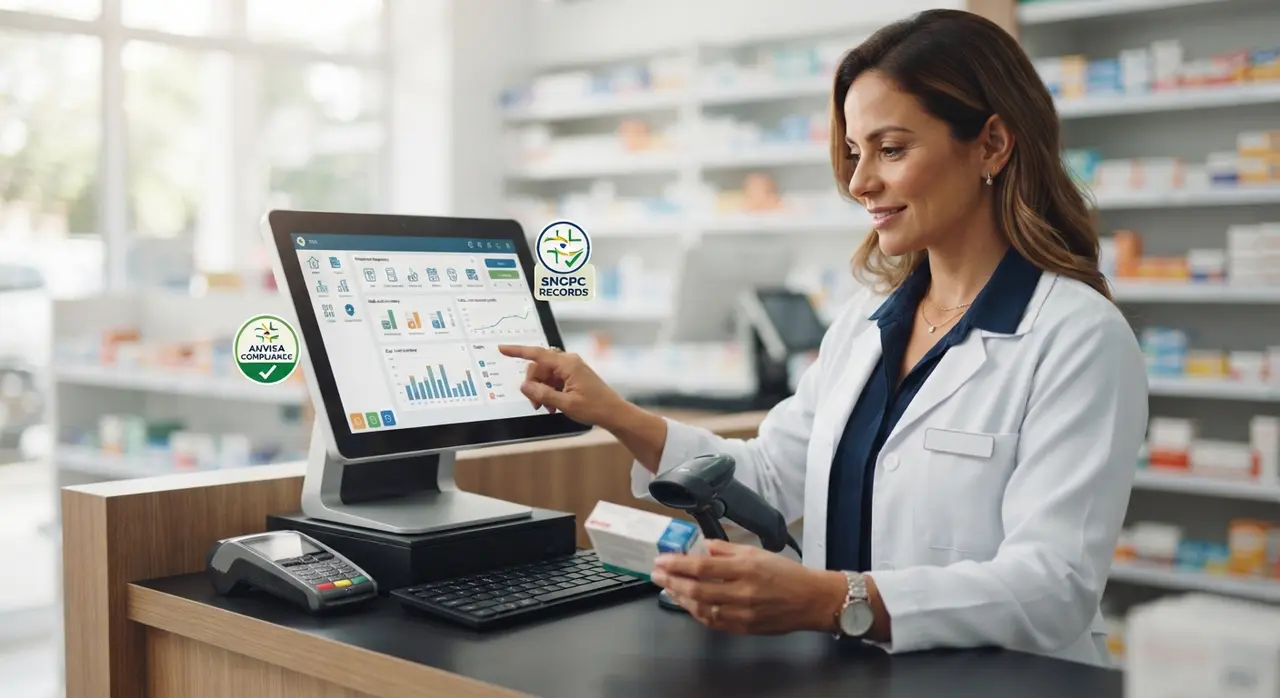
AI agents act as tireless compliance monitors operating in the background of everyday POS transactions. When a controlled medication is dispensed, the agent cross-references the doctor's registration number, batch serial number, and patient record against central database requirements, flagging discrepancies before the sale is finalized.
For high-risk operations or complex prescription overrides, AI agents enforce a structured human-in-the-loop workflow. The agent prepares the full audit trail and submits a clear approval task to the technical director or pharmacist on duty, guaranteeing compliance without slowing down the customer line.
Omnichannel Customer Service: WhatsApp, POS, and Continuous Medication
Integrating WhatsApp with real-time POS data enables intelligent agents to instantly verify product availability and manage continuous medication refill reminders across multi-unit retail footprints. Modern pharmacy customers expect immediate answers regarding medicine availability before stepping foot inside a physical store.
When a patient messages the pharmacy chain's official WhatsApp account asking for a specific medication, the AI agent checks real-time inventory across the entire store network. If the user's preferred local branch is out of stock, the agent offers immediate solutions: reservation at a branch 5 minutes away, local dispatch delivery, or auto-notification when stock arrives.
Furthermore, AI agents automate continuous care programs for chronic patients. By monitoring transaction logs, the agent identifies when a patient's monthly hypertension or diabetes prescription is due for renewal. It proactively sends a friendly WhatsApp message asking if they would like to confirm their repeat order for pickup or delivery.
Mini-Case Example: A regional retail pharmacy chain operating 40 stores faced frequent stockouts of high-demand continuous-use medications alongside high customer service call volumes. By implementing custom autonomous agent solutions from Agentes Autônomos, the chain integrated its legacy POS systems with WhatsApp. The agents autonomously handled 78% of stock availability queries, auto-reserved medications across neighbor stores, and proactively scheduled monthly prescription refills. Within 90 days, the brand reduced customer phone wait times to zero and captured significant incremental sales previously lost to branch stockouts.
Integrating AI Agents Without Replacing Legacy Software
Deploying AI agents does not require an overhaul of core ERP or POS hardware because autonomous layers interact directly via secure APIs and existing database interfaces. Retail pharmacy operations cannot afford months of operational downtime to replace core management software.
Unlike rigid traditional software migrations, enterprise AI agents sit on top of legacy infrastructure. They read data from existing ERP software, update POS stock records, and interface with messaging apps using robust background automation. Understanding the fundamental differences between AI agents and traditional RPA highlights why AI can handle contextual decisions—like substituting equivalent generic medications or adjusting transfer priority based on batch expiration dates—that legacy scripts cannot accomplish.
This architectural advantage allows pharmacy board members and operational directors to roll out automation incrementally. You can start with a pilot program for multi-unit inventory balancing, validate the return on investment and compliance safety, and subsequently expand to omnichannel WhatsApp sales and automated reordering.
Conclusion
Scaling a multi-unit pharmacy chain requires a tight operational balance between inventory precision, regulatory compliance, and seamless customer service. AI agents for pharmacy chains bridge the gap between static legacy systems and modern consumer expectations. By automating stock transfers, tracking controlled drug batches, and managing continuous prescription refills on WhatsApp, executive teams eliminate stockouts and protect margins while keeping human professionals focused on patient care.
Frequently asked questions
How do AI agents for pharmacy chains integrate with existing ERP and POS systems?
AI agents connect to legacy ERP and POS systems using custom APIs, direct database connectors, or secure administrative user interfaces. They pull live stock and sales data without requiring software overhauls or disrupting daily retail operations.
Can AI agents handle regulatory requirements for controlled medications?
Yes, AI agents automate regulatory logging for controlled substances by validating doctor registrations, batch numbers, and patient details against required standards. When exceptions occur, the agent routes the task to a licensed pharmacist for human-in-the-loop verification.
How does WhatsApp integration prevent lost sales across multi-unit branches?
When a customer checks product availability on WhatsApp, the AI agent queries real-time inventory across all nearby store locations. If the closest branch is out of stock, the agent offers store-to-store transfers, reservations at nearby branches, or direct home delivery options.
What is the role of human review in AI-driven pharmacy operations?
Human professionals oversee strategic choices, regulatory exceptions, and clinical validations while AI handles repetitive inventory checks and automated tracking. The AI agent flags anomalies and prepares complete context so pharmacists can make fast, informed decisions.