AI Agents for Electronics: Quality & Supply Chain
Deploy AI agents in electronics manufacturing for high-precision optical quality control and resilient multi-country supply chain management with Agentes Autônomos.
- AI Agents for Manufacturing
- Quality Control
- Supply Chain Management
- Electronics Manufacturing
- Enterprise AI
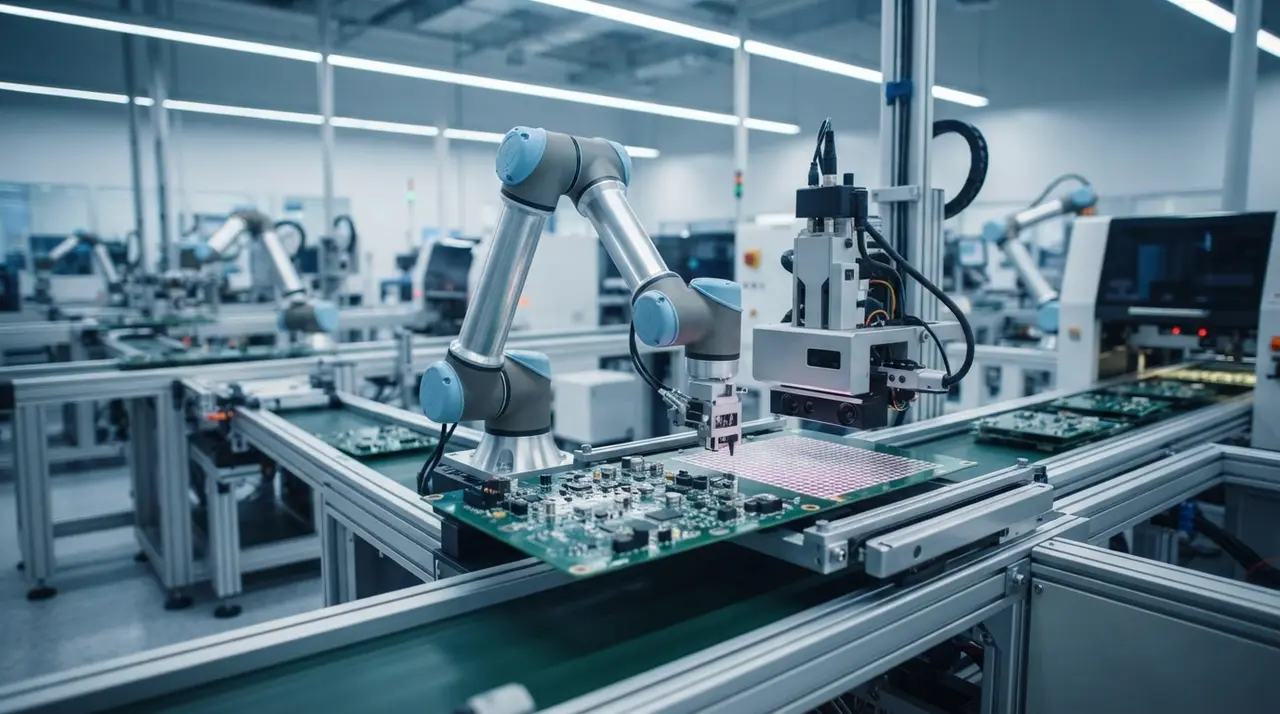
Autonomous AI agents for the electronics industry integrate computer vision and predictive orchestration to automate micro-defect detection in printed circuit boards and manage volatile multi-tiered supply chains. By connecting directly into existing ERP, MES, and PLM platforms, these agents reduce rework and buffer inventory without requiring an overhaul of underlying enterprise infrastructure.
High-tech electronics manufacturing operates under tight margins, strict regulatory constraints, and sub-millimeter engineering tolerances. A single microscopic solder bridging defect or a delayed microcontroller shipment from an overseas supplier can halt an entire production line, costing thousands of dollars per hour. As production lines speed up and products become more complex, traditional manual quality checks and static spreadsheet-based inventory tracking can no longer keep pace.
Implementing autonomous software and vision agents allows operations leaders to scale production while keeping scrap rates low and supply chains resilient. Instead of replacing legacy systems, these intelligent agents sit on top of your current stack to process complex data streams, automate repetitive decision-making, and alert human managers only when intervention is required.
High-precision quality control via computer vision and AI agents
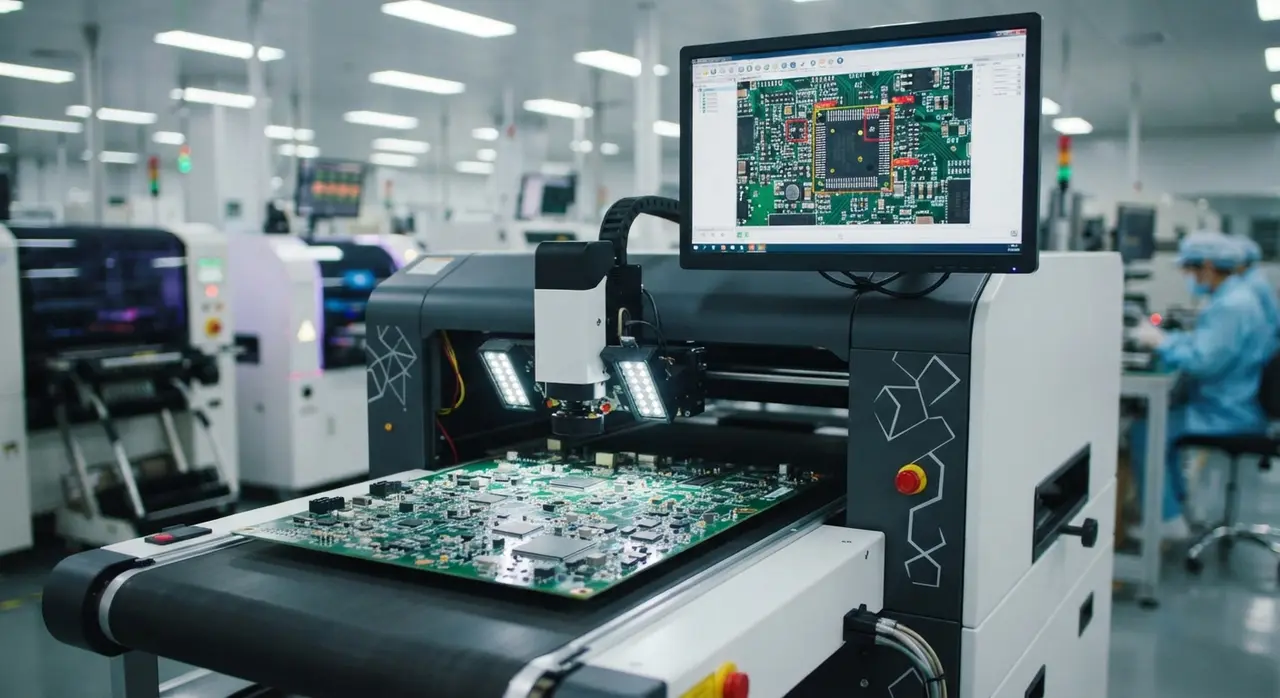
High-precision optical quality control in electronics manufacturing requires real-time detection of microscopic flaws that human inspectors routinely miss during high-volume production. AI agents equipped with high-resolution computer vision models analyze surface-mount technology (SMT) assemblies, solder joints, micro-passives, and integrated circuit alignments in milliseconds on the assembly line.
Traditional Automated Optical Inspection (AOI) systems rely on rigid, rule-based algorithms that generate high false-positive rates, forcing human operators to spend hours re-inspecting good boards. Modern AI agents leverage deep learning models trained on vast datasets of component variations. They distinguish between acceptable process variations—such as minor surface reflections—and critical structural defects like cold solder joints, tombstoning, pin bridging, or missing micro-components.
- Sub-millimeter defect detection: Identifies solder bridges, component misalignments, and cracked substrate layers invisible to the unassisted eye.
- Drastic reduction in false calls: Filters out non-defect variations, allowing quality assurance teams to focus exclusively on true anomalies.
- In-line closed-loop correction: Feeds operational metrics back to SMT pick-and-place machinery to automatically adjust component positioning before systematic errors occur.
When an agent flags a complex defect, it automatically tags the board's serial number, logs the component coordinates, and route the item to a rework station with specific repair instructions. By linking this data directly into your manufacturing execution system, teams maintain complete visibility over quality trends across every shift. For a broader look at how visual inspection models scale across packaging lines, explore our analysis on computer vision inspection for manufacturing.
Predictive supply chain management in a volatile global market
Managing complex electronics supply chains requires dynamic lead-time prediction and proactive component buffering across multi-country supplier networks. Electronics manufacturing depends on thousands of discrete components—from microcontrollers to specialized passives— sourced from suppliers worldwide. A disruption at a single semiconductor fabrication plant or freight port can disrupt entire assembly schedules if not identified weeks in advance.
AI agents continuously monitor global supply chain parameters, including supplier delivery performance, customs delay trends, raw material price fluctuations, and transit times. By integrating directly with enterprise resource planning (ERP) platforms, these agents continuously cross-reference bill of materials (BOM) requirements against real-time supplier schedules.
Instead of relying on reactive quarterly reviews, supply chain managers receive predictive alerts before shortages impact the shop floor. When an incoming shipment of critical microcontrollers is delayed, the AI agent calculates the impact on current work-in-progress (WIP) schedules, identifies alternative qualified component part numbers from approved vendor lists (AVL), and drafts purchase orders or re-scheduling requests for human approval.
- Dynamic buffer optimization: Adjusts safety stock targets dynamically based on volatile lead times rather than static historic averages.
- Early risk detection: Scans port congestion indices, weather patterns, and vendor lead-time variances to predict material shortages weeks before line stoppage.
- Automated lot and serial traceability: Traces components from raw material receiving through end-assembly, ensuring compliance with strict automotive, medical, and aerospace industry standards.
Seamless integration with MES, PLM, and ERP systems
Integrating autonomous AI agents into existing enterprise architectures preserves legacy software investments while enabling real-time orchestration across siloed manufacturing departments. Enterprise electronics manufacturers often rely on legacy systems—such as SAP or Oracle for ERP, Siemens Opcenter or Critical Manufacturing for MES, and PTC Windchill or Arena for PLM. Replacing these systems is costly and risky.
AI agents act as an intelligent coordination layer between these isolated systems. They extract engineering change orders (ECOs) from your PLM, match them against active production runs in your MES, and verify component availability in your ERP. This cross-system workflow prevents old board revisions from being populated with updated components, avoiding costly scrap.
| Operational Metric | Traditional Manufacturing Control | Autonomous AI Agent Operations |
|---|---|---|
| Quality Inspection | Manual spot-checks & rigid AOI with high false positives | 100% automated visual inspection with deep-learning accuracy |
| Supply Shortage Response | Reactive manual re-ordering after line stoppages occur | Predictive risk modeling with automated alternative sourcing drafts |
| System Integration | Manual data re-entry across ERP, MES, and PLM platforms | Automated cross-platform workflow orchestration via enterprise APIs |
| Traceability & Audit | Time-consuming manual batch log compilation | Real-time serial-number-level component logging and audit trails |
Because agents operate via secure APIs and automated database connections, your underlying IT infrastructure remains intact. Decision-makers maintain full control over permission levels, ensuring that autonomous actions—such as placing purchase orders or altering shop floor schedules—stay within predefined financial and operational parameters.
Case Study: High-tech contract manufacturer streamlines quality and sourcing with Agentes Autônomos
A multi-unit high-tech electronics contract manufacturer producing IoT modules experienced high false-call rates on its SMT inspection lines and frequent production delays due to component lead-time volatility. Manual re-inspection of false positives consumed hundreds of engineering hours per month, while delayed component deliveries routinely stalled assembly lines.
By partnering with Agentes Autônomos, the manufacturer implemented two specialized agentic workflows across its facilities. First, an optical inspection agent was integrated with existing visual sensors on the line to analyze complex solder joints. Second, a predictive supply chain agent was connected to the company's ERP and vendor portals to monitor lead times and component availability.
Within four months of deployment, the company achieved measurable operational improvements:
- False-positive reduction: Decreased inspection false calls by over 70%, freeing QA engineers to focus on root-cause process improvements.
- Scrap rate reduction: Reduced end-of-line board scrap by catching micro-defects at the early printing stage.
- Unplanned downtime: Cut material-related line stoppages by identifying component lead-time variances 3 weeks in advance.
- Zero infrastructure replacement: Seamlessly integrated both agents into existing Siemens MES and SAP ERP environments without system downtime.

Governance, human review, and risk management in AI deployment
Maintaining strict governance and human-in-the-loop validation ensures that autonomous agents operate within enterprise risk boundaries and compliance guidelines. AI agents are designed to automate structured, highly repetitive analysis and routine tasks, but critical operational decisions always remain under human supervision.
To prevent operational risk, multi-unit manufacturers implement strict policy guardrails. For example, an AI agent can automatically identify an alternative component supplier and update local buffer calculations, but actual purchase orders exceeding a specified monetary threshold require explicit approval from a procurement manager via email or WhatsApp notification.
Understanding the fundamental differences between AI agents and traditional RPA helps enterprise leaders design appropriate oversight structures. While static RPA scripts break when system interfaces or board layouts change, autonomous agents adapt to new component configurations and flag unhandled edge cases directly to human subject matter experts. For deeper insights into autonomous governance and continuous agent performance, review our guide on understanding how agentic AI operates.
Transforming electronics production with enterprise AI
Modern electronics manufacturing requires speed, extreme precision, and operational resilience. Autonomous AI agents provide high-tech manufacturers with the tools to master sub-millimeter quality control and navigate unpredictable global supply chains. By acting as an intelligent orchestration layer across ERP, MES, and PLM platforms, these agents eliminate manual bottlenecks, lower production scrap, and keep lines running efficiently.
Operation leaders can scale their production capabilities without tearing down proven IT investments or increasing operational overhead. Embracing intelligent automation on the factory floor transforms quality assurance and supply chain management from reactive challenges into competitive advantages.
Frequently asked questions
How do AI agents differ from traditional Automated Optical Inspection (AOI) systems?
Traditional AOI systems rely on rigid, rule-based algorithms that frequently generate high rates of false positives whenever surface reflections or minor cosmetic variations occur. AI agents use deep learning computer vision models to distinguish between harmless process variations and actual functional defects. This significantly reduces false calls and eliminates manual re-inspection time.
Do we need to replace our current ERP or MES software to use AI agents?
No, you do not need to replace your existing ERP, MES, or PLM systems. AI agents connect to your current software stack using secure APIs, database connectors, and enterprise integration layers. They read and process operational data in real time, triggering automated actions within your existing environment.
How do AI agents handle component traceability and regulatory compliance?
AI agents automatically log every component lot, serial number, and inspection result across all stages of assembly. They cross-reference visual inspection records with shop floor telemetry and update your central database instantly. This ensures full end-to-end traceability required by automotive, medical, and aerospace industry standards.
What happens if an AI agent encounters an unknown defect or supply chain anomaly?
When an agent encounters an edge case outside its confidence threshold, it immediately routes the event to a human supervisor with complete context and diagnostic details. The human specialist reviews the case and approves or adjusts the recommended action. The agent logs this decision, learning continuously to handle similar edge cases in the future.