AI Agents for Automotive: Quality Control & Traceability
Discover how AI agents for automotive industry transform quality control with traceability, JIT supply chain synchronization, and IATF 16949 compliance.
- Automotive Industry
- AI Agents
- Quality Control
- Supply Chain
- Traceability
- IATF 16949
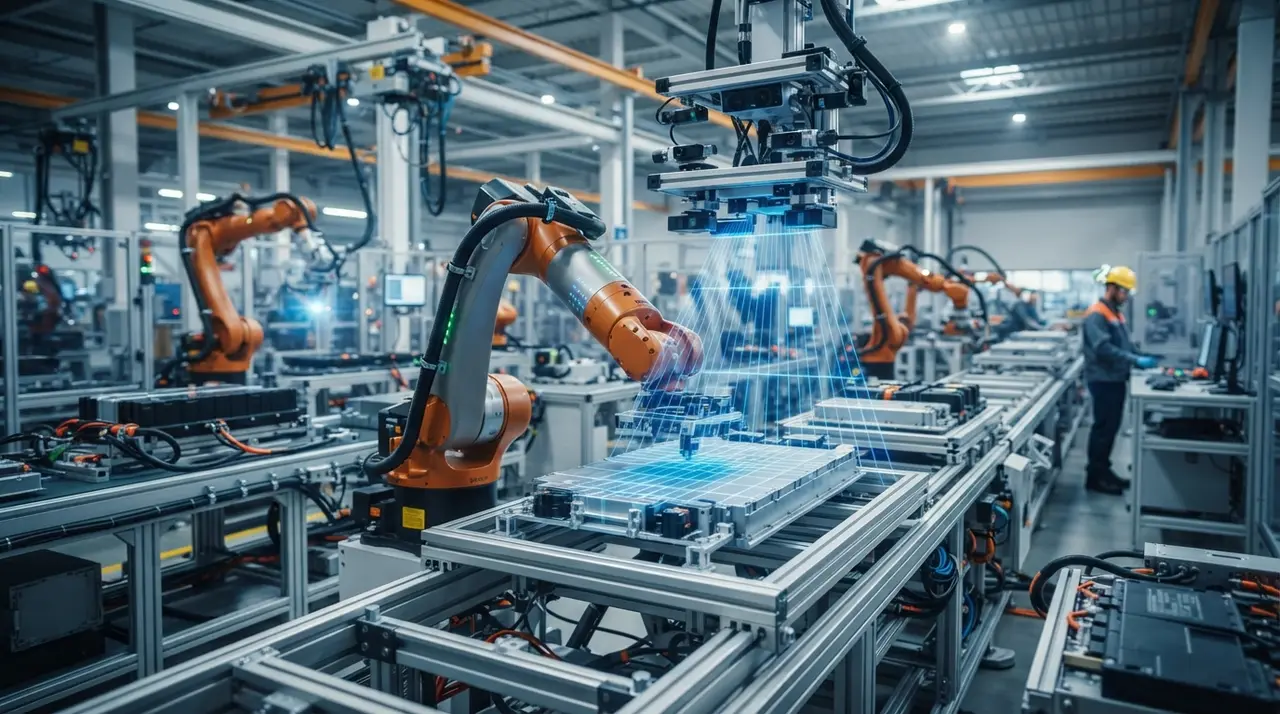
AI agents for automotive industry operations automate end-to-end quality control, component traceability, and just-in-time supply chain synchronization across complex plant operations. By combining computer vision data, ERP records, and manufacturing execution systems (MES) in real time, autonomous agents eliminate part defects and guarantee IATF 16949 compliance without replacing legacy manufacturing infrastructure.
IATF 16949 Compliance Demands Automated Defect Containment
Meeting automotive quality standards requires continuous verification at every stage of the assembly line. Traditional manual quality audits and reactive sampling methods allow defective parts per million (PPM) to escape into final assembly, triggering costly plant shutdowns or OEM line stoppages.
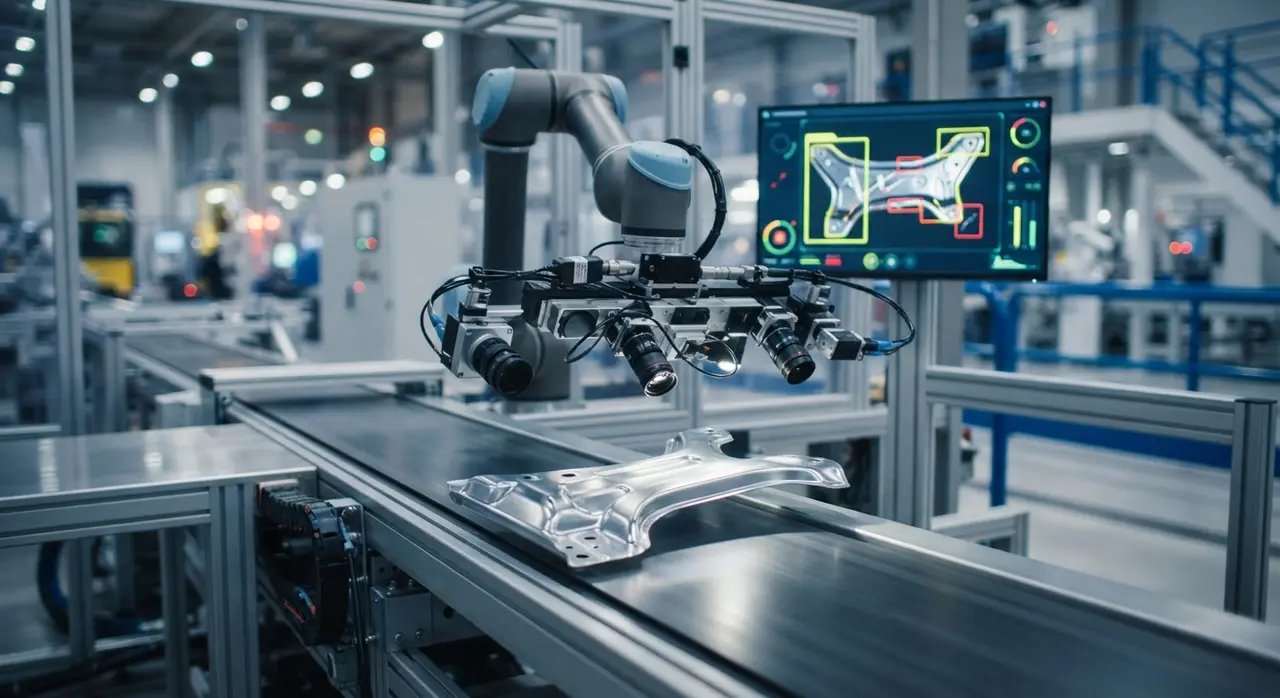
Autonomous agents systematically bridge the gap between quality inspection and operational workflows. When vision inspection hardware flags a surface scratch or dimensional flaw on a machined component, the AI agent instantly acts.
- Instant Quarantine: Triggers PLC signals to divert defective parts to holding bins before entering assembly.
- Automated NCR Creation: Generates non-conformance reports directly in SAP or Oracle ERP with image proof and camera metadata.
- Root-Cause Notifications: Sends real-time WhatsApp alerts to shift supervisors and quality engineers detailing tooling wear trends.
By automating containment workflows, plants reduce human error, maintain audit-ready digital logs, and preserve zero-defect output guarantees required by tier-1 original equipment manufacturers (OEMs).
Computer Vision and Autonomous Inspection in Automotive Assembly
Modern quality inspection relies on high-resolution computer vision paired with autonomous decision engines. High-speed assembly lines require instant analysis to verify geometric tolerances, weld integrity, and component presence.
AI agents process camera streams on edge computing devices directly adjacent to production lines. Instead of merely alerting operators, these agents orchestrate automated corrective workflows.
For complex sub-assemblies—such as engine blocks, transmissions, and electronic control units (ECUs)—agents cross-check dimensional measurements against digital blueprints in real time. If a bolt torque or seal alignment falls outside specs, the system pauses the downstream conveyor station and prompts immediate technician intervention.
To explore how tailored automation transforms manufacturing workflows, review our specialized soluções de agentes autônomos designed for industrial applications.
Part-by-Part Traceability Mitigates Recall Risks
Component traceability is mandatory under automotive regulations to protect brands against catastrophic recall expenses. When a safety defect occurs in the field, manufacturers must isolate affected vehicle VIN batches within minutes rather than weeks.
AI agents automate complete product genealogy tracking from raw material intake to final delivery. Every cast part, stamped panel, and electronic component is linked to its unique laser-etched matrix code, heat lot, machine operator, and torque log.
When an upstream supplier notifies the plant of a defective raw material batch, the AI agent performs instant impact analysis:
- Queries MES databases to map every serial number tied to the contaminated material lot.
- Identifies precisely which finished assemblies contain affected parts and where they are located in shipping centers.
- Automates customer quarantine notices and place hold statuses on inventory in the ERP system.
This granular control shrinks potential recall scopes by up to 90%, turning potential multi-million-dollar liabilities into controlled, targeted replacements.
Just-In-Time (JIT) Supply Chain Synchronization and Risk Mitigation
Automotive production relies on strict Just-In-Time (JIT) and Just-In-Sequence (JIS) logistics models where supplier delays halt entire vehicle assembly lines. Coordinating multi-tier suppliers across global trade lanes introduces significant vulnerability to shipping delays, port congestion, and material shortages.
Autonomous agents continually evaluate supplier lead times, customs status, and plant consumption rates. By integrating directly with supplier portals, freight systems, and logistics messaging channels, agents anticipate stockouts before lines go dark.
Understanding how dynamic decision engines manage enterprise complexity requires evaluating Agentic AI and its core capabilities in enterprise process management.
When a Tier-2 casting supplier experiences a production delay, the AI agent calculates the downstream assembly schedule impact. It automatically re-sequences job orders in the MES, orders safety stock from secondary suppliers, and notifies plant planners with updated schedule options.
Comparing Traditional Operations with Autonomous AI Agent Orchestration
Transitioning from manual, siloed operational management to autonomous agent coordination fundamentally upgrades plant throughput and response speeds.
| Operational Area | Traditional Automotive Process | Autonomous AI Agent Operations |
|---|---|---|
| Quality Inspection | Manual spot-checks, periodic dimensional sampling, disconnected vision logs. | 100% automated vision inspection with autonomous PLC interlocks and ERP tagging. |
| Batch Traceability | Manual serial scanning, spreadsheet tracking, delayed recall identification. | Instant digital genealogy mapping from raw material heat codes to delivered VINs. |
| JIT Supply Chain | Reactive phone/email updates, manual re-order points, unexpected line stoppages. | Predictive risk mitigation, automated cross-tier re-sequencing, automated ERP alerts. |
| Maintenance Management | Scheduled calendar maintenance, reactive repairs after machine breakdown. | Predictive health monitoring, automated spare parts ordering, shift auto-scheduling. |
Integrating AI Agents with Existing ERP, MES, and Plant Systems
Implementing advanced AI capabilities does not require replacing established core IT infrastructure. Modern industrial agents operate as an intelligent orchestration layer on top of existing SAP, Oracle, Siemens MindSphere, or proprietary MES installations.
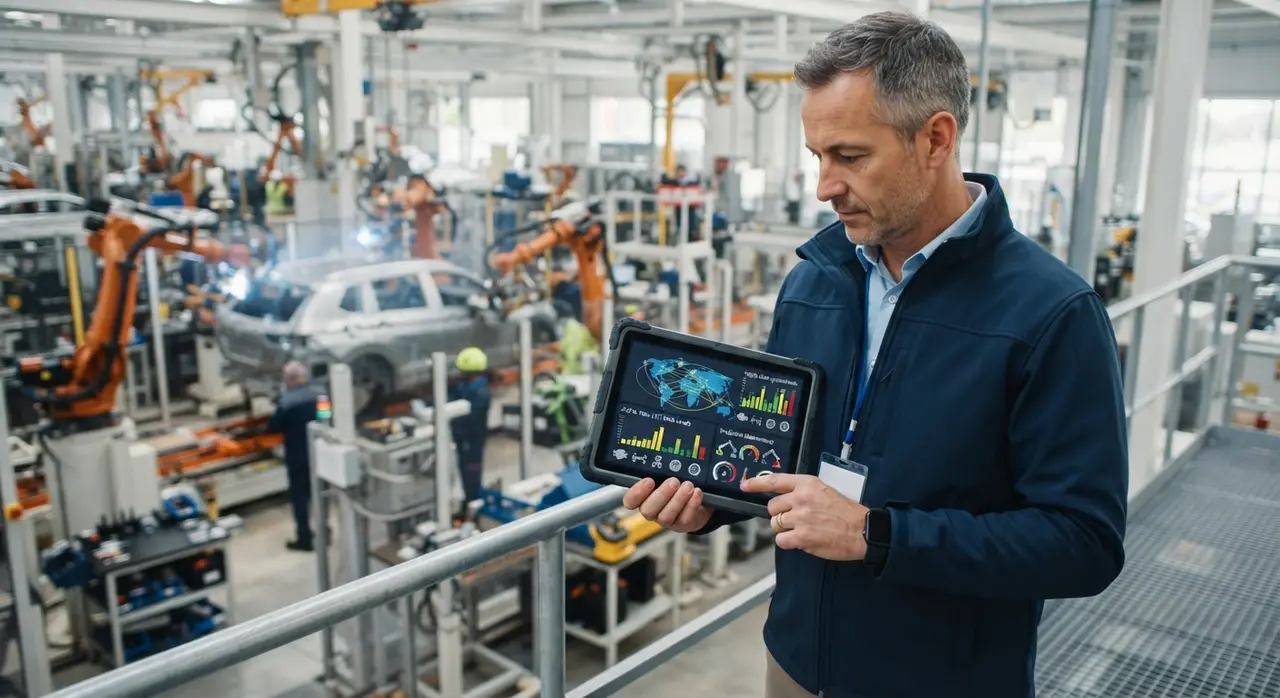
By utilizing REST APIs, database connectors, and industrial protocol adapters (such as OPC-UA and MQTT), agents read operational states and execute actions seamlessly. Front-line staff interact through natural interfaces like desktop dashboards or mobile messaging systems like WhatsApp and Microsoft Teams.
Human-in-the-loop governance guarantees safety and accountability. While agents handle routine containment, schedule balancing, and logging automatically, high-impact decisions—such as stopping a main assembly line or approving major vendor purchase orders—are routed to plant leadership for one-click authorization.
Real-World Case Study: Eliminating Line Stoppages at a Tier-1 Auto Parts Supplier
A major Tier-1 powertrain component supplier faced recurring assembly delays due to minor defect escapes and erratic delivery schedules from sub-tier suppliers. The company integrated Agentes Autônomos intelligent agent solutions directly with their line-side vision cameras and SAP enterprise platform.
Within 90 days of deployment, the AI agent ecosystem achieved clear qualitative milestones across manufacturing operations:
- Eliminated manual non-conformance paperwork by auto-generating digital quality certificates for incoming raw shipments.
- Reduced scrap rates by catching tool wear trends 12 hours before dimensional tolerances exceeded threshold limits.
- Prevented potential JIT line shutdowns by automatically detecting transit delays and triggering localized inventory buffers.
Plant managers gained total operational visibility while operational staff focused on high-value continuous improvement initiatives instead of chasing documentation across disparate systems.
Frequently Asked Questions
How do AI agents integrate with legacy manufacturing systems?
AI agents connect directly via industrial APIs, OPC-UA protocols, and database connectors to systems like SAP, Oracle, and Siemens MES without replacing legacy infrastructure. They read data from existing visual cameras, sensors, and ERP records, executing workflows automatically across platforms while keeping existing infrastructure intact.
What is the difference between standard computer vision and AI agents in quality control?
Standard computer vision only detects and flags visual anomalies on an inspection monitor. AI agents take immediate action based on those visual detections, such as signaling industrial PLCs to divert defective parts, logging non-conformance reports in ERP, and alerting shift supervisors via mobile channels.
How do AI agents assist with IATF 16949 audit compliance?
AI agents automatically log every inspection result, operator action, dimensional measurement, and component serial number into tamper-proof digital records. During audits, quality managers generate full batch genealogy logs and corrective action histories instantly, eliminating manual record collecting.
Can AI agents prevent supply chain disruptions in Just-In-Time production?
Yes, AI agents continuously monitor logistics updates, supplier production speeds, and plant material consumption. When potential delivery delays are detected, agents automatically recalculate buffer stock demands, re-sequence MES job orders, and trigger contingency alerts to planners before a line stoppage occurs.