AI Agents for Agribusiness: Quality & Traceability
Discover how AI agents for agribusiness enhance processing quality control and full end-to-end traceability from raw farm origin to final packaging.
- Agribusiness AI
- Quality Control
- Supply Chain Traceability
- Food Processing
- Process Automation
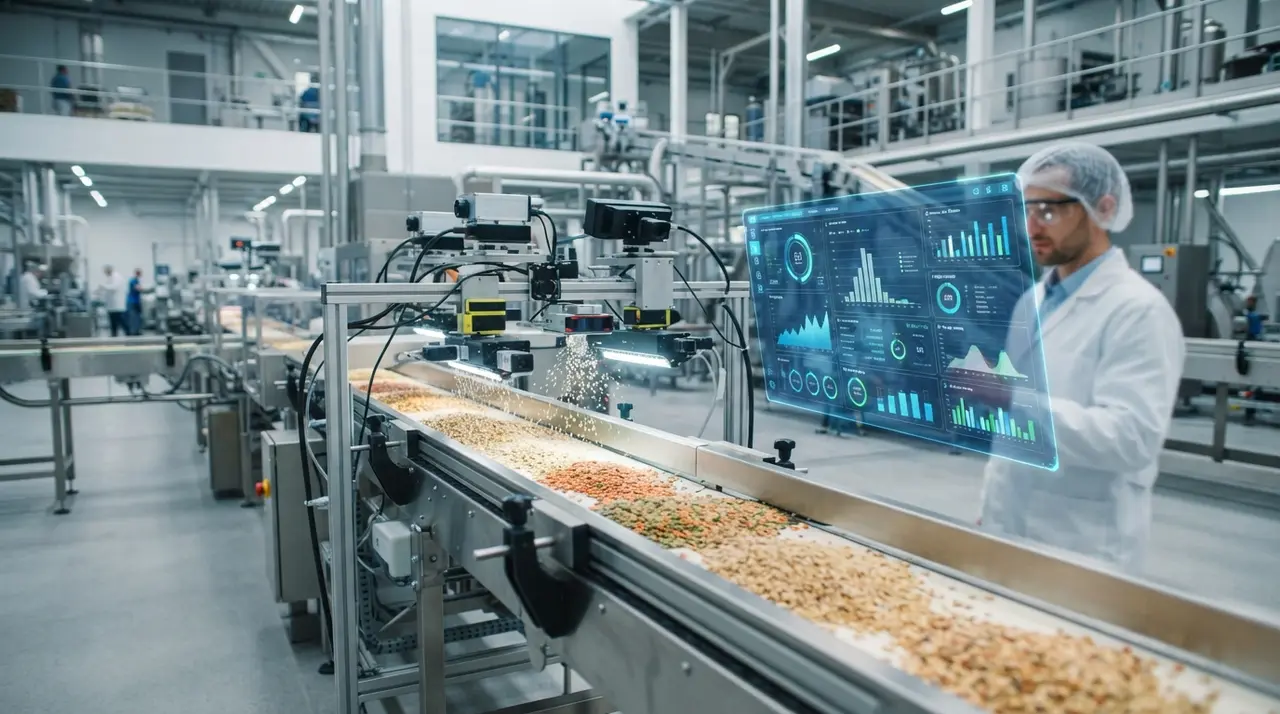
AI agents for agribusiness processing automate continuous quality control and ensure complete end-to-end traceability from raw material origin to final product delivery. By integrating real-time sensor streams, computer vision, and enterprise ERP systems, these intelligent agents detect process deviations early and execute corrective workflows without replacing existing factory infrastructure.
Agricultural Processing Demands Continuous Real-Time Oversight
Agricultural raw materials arrive with high natural variability in moisture, size, grade, and chemical composition that directly impacts finished product yield. Traditional batch sampling leaves large operational blind spots, allowing off-spec lots to progress deep into production lines before human operators detect deviations.
When defective batches reach final packaging, processors face severe financial margin erosion, regulatory fines, and potential brand damage from product recalls. Autonomous AI agents eliminate these blind spots by continuously monitoring inline sensors, optical scanners, and weigh scales across every processing stage.
Instead of relying on retrospective laboratory tests, production managers gain continuous process control where corrective actions occur automatically or through rapid human supervisor verification.
Computer Vision and IoT Sensors Power Autonomous Quality Control
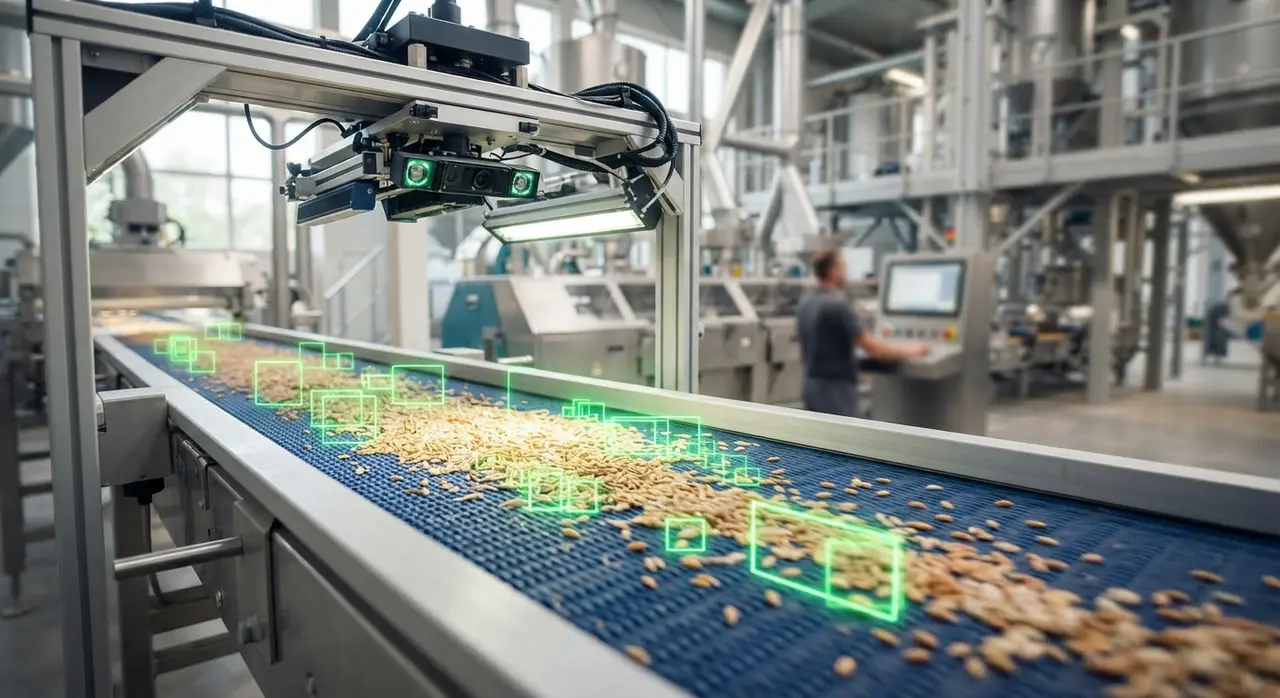
Automated visual inspection paired with Internet of Things (IoT) telemetry provides the core data foundation for real-time line auditing. AI agents analyze high-speed video feeds to evaluate grain discoloration, meat marbling, fruit blemish ratios, or package seal integrity at thousands of units per minute.
When continuous sensors register thermal spikes, pressure drops, or visual defects exceeding target thresholds, the AI agent instantly flags the specific sub-lot. It can automatically adjust downstream machinery parameters—such as sorter rejection thresholds or dryer temperatures—or generate urgent alerts to field operators.
This continuous automated auditing reduces rework, prevents mass product scrap, and preserves consistent quality metrics across shifts and multi-site facilities.
End-to-End Traceability Connects Farm Origin to Final Packaging
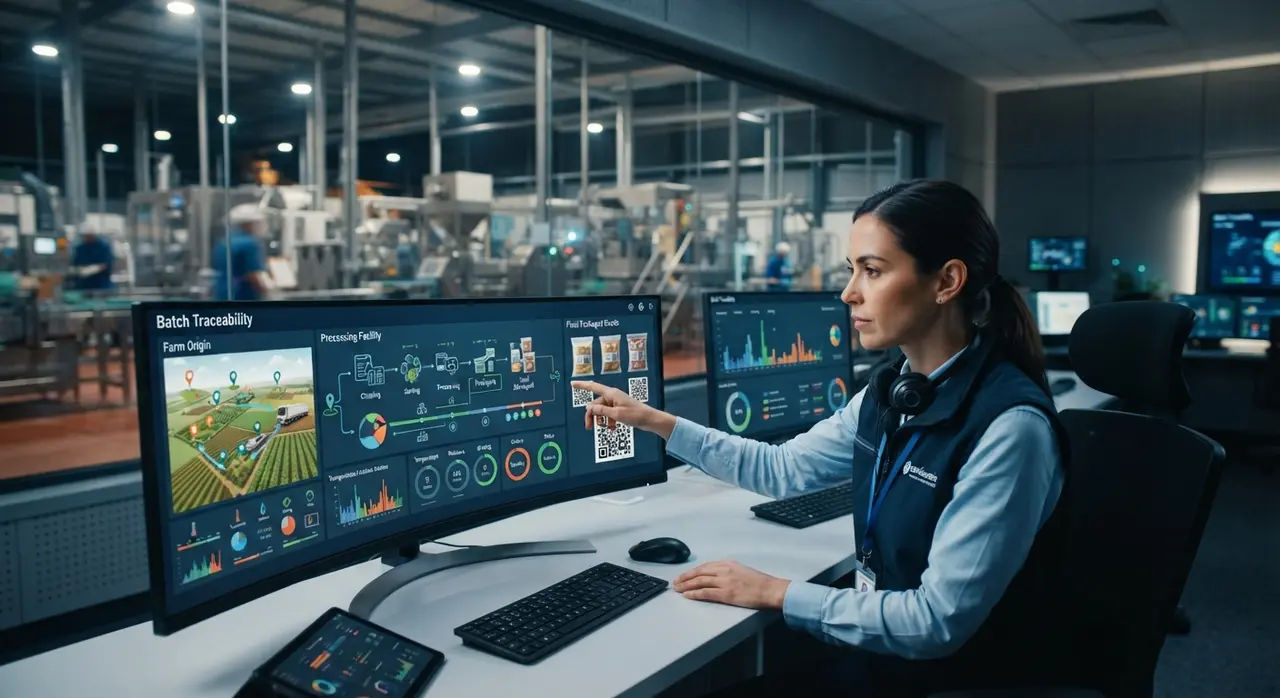
Complete traceability requires connecting field-level harvest metadata with every industrial transformation step up to final retail palletizing. AI agents systematically aggregate batch numbers, supplier certificates, storage silo humidity records, processing timestamps, and lab analysis logs into a unified digital chain.
If a food safety audit or customer inquiry occurs, operational teams no longer spend days cross-referencing paper logs or disparate spreadsheets across multiple departments. The AI agent compiles complete origin-to-shelf audit trails in seconds, validating compliance with phytosanitary regulations and international export mandates.
To explore how automated tracking simplifies export compliance, read our guide on AI Agents for Agricultural Export & Shipping Logistics.
| Operational Aspect | Traditional Manual Operations | Autonomous AI Agent Operations |
|---|---|---|
| Quality Inspection | Periodic manual sampling with delayed lab testing. | Continuous 100% inline vision and sensor monitoring. |
| Traceability Audits | Days spent searching paper logs and silo spreadsheets. | Instant digital audit trails from origin to final lot. |
| Deviation Response | Reactive adjustments after off-spec product is made. | Proactive automated machine tuning or instant alert. |
| ERP & CRM Integration | Manual data entry leading to errors and delays. | Real-time autonomous data sync across enterprise systems. |
| Compliance Management | High administrative burden prior to certification audits. | Automated continuous audit readiness (MAPA, FDA, ISO). |
Automated Regulatory Compliance Prevents Costly Sanitary Recalls
Strict sanitary norms from agencies like MAPA, FDA, and ANVISA demand rigorous batch tracking and immediate isolation capabilities during contamination risks. AI agents enforce continuous compliance by verifying that critical control points (HACCP) remain within legal parameters during every operating hour.
When non-conformities emerge, the agent automatically triggers containment protocols: isolating affected lots in the ERP, blocking inventory movement, and notifying quality assurance directors via WhatsApp or email. This rapid execution prevents contaminated products from reaching distribution channels, protecting both consumer safety and corporate liability.
For more details on deploying robust digital workflows across manufacturing plants, check our insights on AI Agents for Manufacturing.
Yield Prediction Maximizes Value From Varying Raw Materials
Predictive yield modeling allows plant directors to adjust intake recipes dynamically based on incoming raw material attributes. AI agents process historical yield patterns, protein counts, and moisture levels to calculate the optimal blending formulas for maximum output efficiency.
By anticipating mass balance loss during crushing, cooking, or cutting processes, the agent advises floor managers on precise parameter adjustments before processing begins. This minimizes raw material waste and ensures consistent margins even during seasonal supply volatility.
Mini Case Study: Protein Processing Plant Achieves Zero Recall Claims
A multi-unit protein processing enterprise faced recurring yield loss and lengthy audit preparation times due to fragmented batch logs across three regional facilities. They deployed custom agents configured by Agentes Autônomos to link their vision inspection lines directly with SAP ERP and plant floor messaging systems.
Within four months, the AI agents reduced off-spec product volume by 28% and cut audit log generation time from three days to under two minutes. The plant maintained 100% sanitary compliance with zero batch recalls, without replacing its existing PLC hardware or database infrastructure.
For additional real-world applications across corporate operations, explore our library of process automation examples.
Integrating AI Agents with ERPs, SCADA, and Enterprise WhatsApp
Agribusiness leaders cannot afford long, disruptive IT implementation cycles that require overhaul of legacy infrastructure. AI agents act as an orchestration layer, connecting existing SCADA controllers, legacy ERPs (SAP, TOTVS, Oracle), laboratory databases (LIMS), and messaging tools like WhatsApp.
Shift leaders receive real-time alert digests on WhatsApp, allowing them to approve process parameter overrides with a single tap. Meanwhile, the agent automatically updates the ERP inventory ledgers and quality certificates, maintaining accurate data flow across corporate offices and regional plants.
Governance and Human-in-the-Loop Safeguards for Agribusiness
Autonomous operation requires strict boundary limits to preserve operational control and prevent unverified process adjustments. AI agents operate within defined policy thresholds set by plant engineering and quality managers.
If a recommended process change exceeds safe operating parameters, the agent escalates the decision to human supervisors with full contextual data. This human-in-the-loop design maintains absolute governance, ensuring enterprise control while capturing the efficiency of automated execution.
Frequently asked questions
How do AI agents integrate with existing factory hardware?
AI agents connect directly to existing SCADA systems, PLC controllers, optical cameras, and ERP databases via standard APIs and middleware protocols. They operate as an intelligent software layer, eliminating the need to discard existing factory infrastructure.
What happens if an AI agent detects a critical quality defect?
The AI agent instantly flags the sub-lot, triggers inline rejection mechanisms if configured, and sends an urgent notification to plant supervisors via WhatsApp or system alerts. It also automatically places a temporary hold on the affected batch within the ERP to prevent shipment.
Can AI agents help with international export compliance?
Yes, AI agents compile accurate, audit-ready digital documentation tracking raw material origin, treatment logs, and sanitary test results required for export approval. This dramatically speeds up customs clearance and reduces regulatory documentation errors.
How long does it take to implement quality control AI agents?
Initial pilot deployment typically takes between four to eight weeks, focusing on integrating core sensor feeds and setup of validation logic. Full multi-unit enterprise scaling follows once baseline accuracy and user workflows are confirmed.