AI Agents for Foreign Trade: Automated Customs Compliance
Deploy AI agents for foreign trade to automate document validation, NCM classification, and customs compliance while integrating with your ERP.
- AI Agents for Foreign Trade
- Document Automation
- International Customs Compliance
- Supply Chain AI
- Siscomex Integration
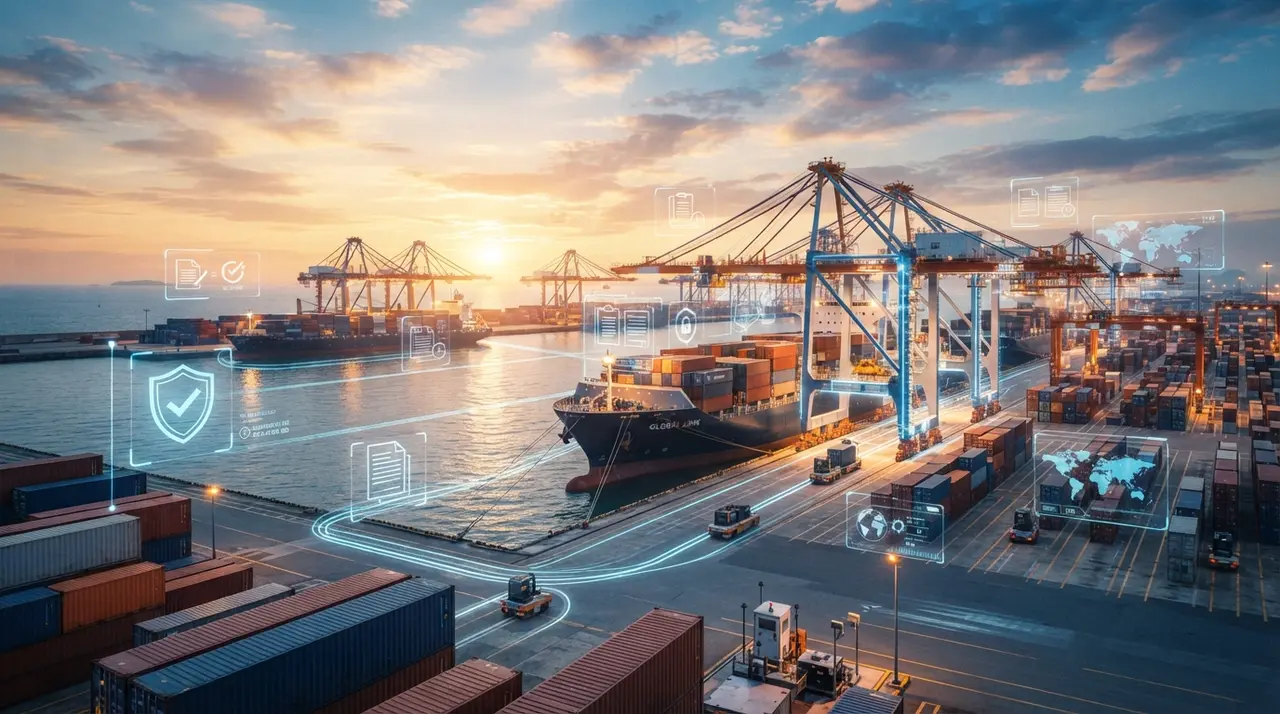
AI agents for foreign trade automate cross-border documentation, fiscal classification, and real-time customs compliance monitoring across global supply chains. By integrating directly with ERPs, single-window systems like Siscomex, and freight platforms, these autonomous systems eliminate manual verification and prevent customs clearance delays. Businesses can scale their import and export operations without increasing operational headcount or risking severe regulatory penalties.
Managing global trade requires navigating intricate regulatory frameworks, strict deadlines, and endless paperwork. When trade teams rely on manual data entry across disparate systems, simple human errors frequently result in costly vessel delays, cargo blocking, and heavy administrative fines.
Resolving Document Complexity in International Trade
Foreign trade operations suffer from costly delays due to inconsistent paperwork across commercial invoices, packing lists, and bills of lading. A single discrepancy between a bill of lading (BL) and an import declaration (DI or DUIMP) can halt cargo at customs for days, triggering compounding demurrage and storage costs.
Trade operations involve dozens of stakeholders, including freight forwarders, customs brokers, carrier lines, and regulatory agencies. Managing these interactions manually creates communication silos and increases compliance risks. Implementing targeted AI agent solutions for enterprise operations allows companies to bridge these silos by automatically processing incoming trade files in seconds.
- Eliminate repetitive data re-entry across SAP, Oracle, and local customs portals.
- Prevent customs holds caused by mismatched product descriptions, net weights, or unit values.
- Streamline cross-border communication between internal procurement teams and external dispatchers.
Automated Cross-Document Validation and NCM Classification
Autonomous AI agents eliminate compliance errors by automatically reconciling multi-document data and suggesting precise NCM fiscal classifications. Instead of manually inspecting every line item on a 50-page packing list, logistics managers rely on AI agents to parse PDF invoices, extract critical metadata, and cross-reference values across all shipping manifests.
Proper fiscal classification (NCM / HS Code) is critical for calculated import duties and regulatory approvals. AI agents analyze product descriptions against historical customs rulings and official tariff tables to suggest the correct NCM classification. Furthermore, human experts remain in the loop, validating edge cases directly within familiar channels like WhatsApp or email.

| Operational Metric | Manual Trade Operations | AI Agent Automation |
|---|---|---|
| Document Consistency Validation | 30 to 60 minutes per shipment | Under 30 seconds automatically |
| HS Code / NCM Classification | Manual catalog lookup (error-prone) | Context-aware AI suggestion & verification |
| Regulatory Agency Tracking | Manual portal checks across agencies | Automated API monitoring & instant alerts |
| Demurrage & Fine Risk | High due to document discrepancies | Near-zero due to proactive pre-clearance checks |
Seamless Integration with ERPs and Customs Portals
Modern AI agents interface directly with legacy ERPs, customs broker systems, and government portals without requiring infrastructure overhauls. They act as an intelligent orchestration layer, extracting data from inbound emails or vendor portals and pushing structured payload data into platforms like Siscomex (Portal Único de Comércio Exterior).
By operating directly within your existing architecture, AI agents preserve auditability and maintain strict governance standards. Operations teams do not need to learn complex new software interface tools; they receive clear exception alerts and approve tasks through standard workflows. You can review several real-world process automation examples to see how enterprise platforms integrate non-invasively.
Case Study: Reducing Customs Clearance Delays for an Industrial Importer
A mid-sized machinery importer reduced customs clearance hold-ups by 70% within three months of implementing Agentes Autônomos. The company struggled with persistent customs clearance delays caused by mismatched NCM codes and incorrect weight declarations across imported component batches.
By deploying autonomous AI agents to audit commercial invoices against purchase orders and packing lists before vessel arrival, the company achieved immediate improvements. Agentes Autônomos flagged multi-currency inconsistencies and missing import license (LI) requirements automatically, saving the firm over $85,000 in avoided demurrage fees and administrative penalties during the first quarter alone.

Continuous Shipment Tracking and Customs Risk Management
Real-time international shipment tracking enables AI agents to proactively detect regulatory bottlenecks and missing customs authorizations. AI agents continuously poll carrier APIs, terminal status pages, and regulatory agency portals (such as Anvisa, Vigiagro, or Inmetro) to track cargo milestones.
When an unexpected delay or document pendency arises, the AI agent instantly calculates the impact on downstream warehouse schedules and notifies the designated supply chain manager. This end-to-end operational visibility transforms international logistics from a reactive firefighting department into a predictable, strategic asset.
Frequently asked questions
How do AI agents handle incorrect NCM or HS Code classifications?
AI agents analyze product descriptions and technical specification sheets against historical tariff databases to suggest the precise NCM code. If confidence falls below a set threshold, the agent flags the item for human supervisor review before submitting customs declarations.
Does implementing AI agents require replacing our legacy ERP or customs software?
No, AI agents integrate directly with your existing ERPs, TMS systems, and government portals like Siscomex via standard APIs or secure automated connectors. Your existing IT infrastructure remains entirely intact while gaining intelligent automation capabilities.
Where does human review fit into automated customs compliance workflows?
Human expertise is embedded through a human-in-the-loop architecture where AI agents handle routine data extraction and cross-validation, but escalate regulatory discrepancies, high-value threshold exceptions, or ambiguous tax codes to human managers for final sign-off.