Private AI On-Premises vs Private Cloud: Which Model to Choose
Compare private AI on-premises vs private cloud infrastructure models to optimize cost, security, compliance, and enterprise performance for your business.
- Private AI
- On-Premises AI
- Private Cloud
- Enterprise AI Governance
- AI Infrastructure
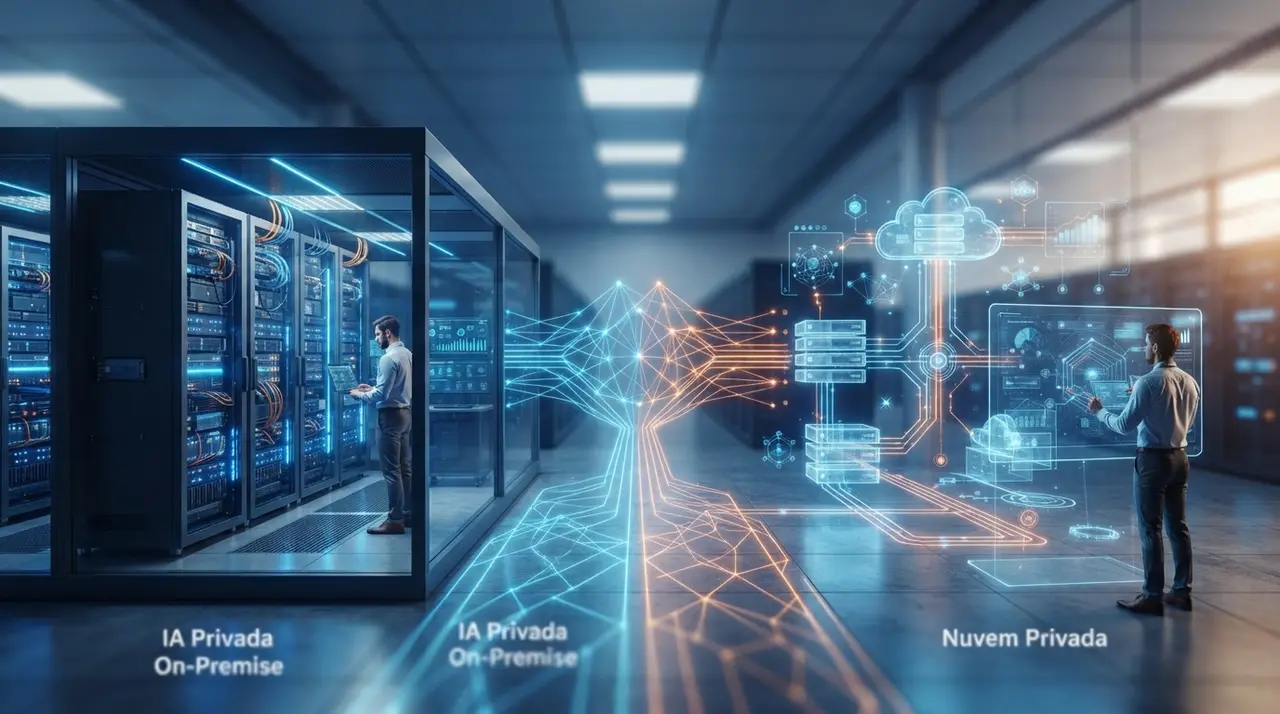
Private AI on-premises vs private cloud represents the core architectural decision enterprises face when deploying sovereign artificial intelligence without exposing sensitive corporate data to public APIs. Determining which infrastructure model to choose for your business depends on balancing capital expenditure, regulatory compliance mandates, latency tolerances, and internal technical execution capabilities.
As organizations scale operational automation across sales, finance, customer support, and supply chain management, public AI models present growing data sovereignty and governance risks. Enterprise leaders are increasingly adopting self-hosted open-weights models integrated with existing CRMs, ERPs, and communications channels like WhatsApp. Understanding the trade-offs between physical hardware ownership and dedicated cloud environments is vital to maintaining control, predictability, and efficiency without breaking existing infrastructure.
Data Sovereignty and Regulatory Compliance Drive Private AI Adoption
Enterprise data sovereignty requires complete physical or logical isolation of AI workloads to meet stringent compliance mandates and protect core intellectual property. When business processes interact with proprietary financial records, personal identification data, or confidential supply chain logistics, sending unencrypted inputs to multi-tenant public AI platforms creates acceptable legal and operational exposure.
Private AI environments guarantee that customer interactions, operational metrics, and internal knowledge bases remain strictly within defined corporate boundaries. This isolation ensures strict adherence to regulations such as LGPD, GDPR, and HIPAA, while preventing proprietary enterprise context from being used in public model retraining cycles. Integrating agentic AI systems into enterprise operations requires an infrastructure foundation where human oversight and strict data governance can be enforced programmatically.
On-Premises Private AI: Complete Control with High Capital Commitment
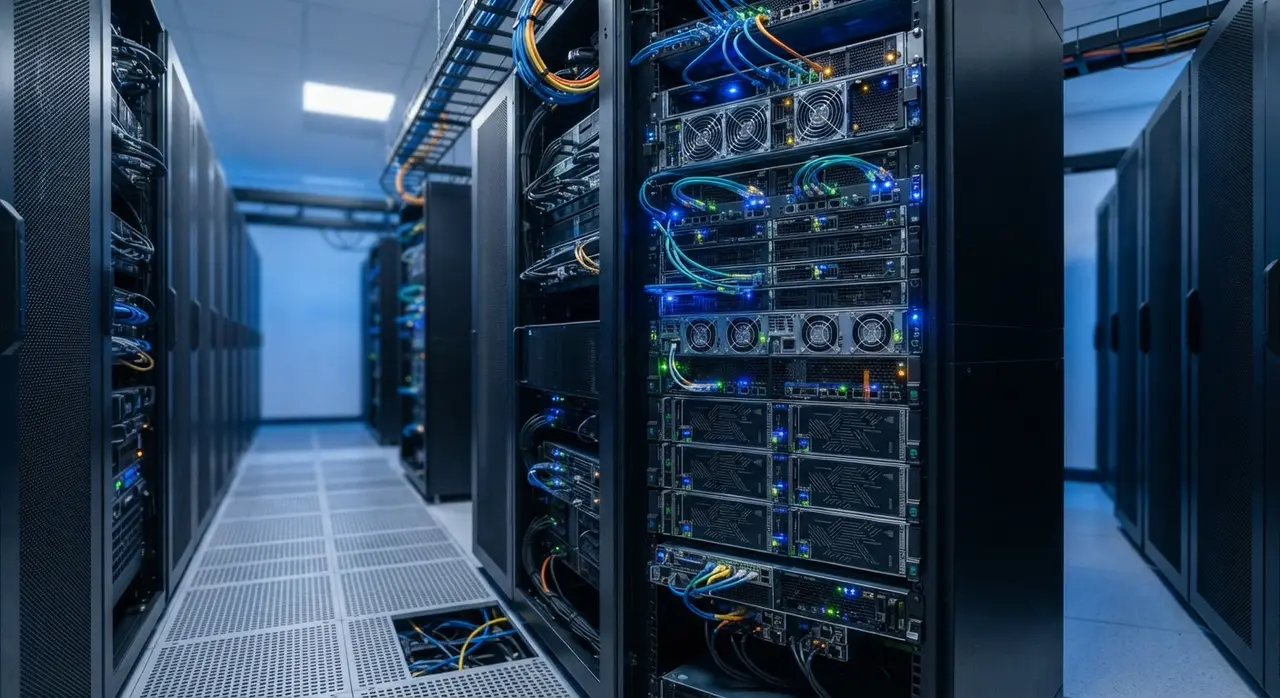
On-premises private AI delivers maximum security and total hardware control, but requires substantial initial CAPEX and dedicated infrastructure engineering teams. Under this model, your organization purchases, installs, and manages GPU-accelerated server hardware within your own physical data centers.
The primary advantage of on-premises infrastructure is absolute data sovereignty. Information never crosses physical corporate boundaries, eliminating reliance on third-party uptime or network connectivity. Furthermore, for predictable, round-the-clock heavy inference workloads, owned hardware offers lower long-term per-query processing costs after capital expenditure amortization.
However, this model demands significant upfront capital for enterprise-grade GPUs, specialized cooling, backup power, and continuous security patching. Scaling operational capacity requires hardware procurement cycles, making rapid scaling during unexpected workload spikes challenging.
Private Cloud AI: Elasticity and Lower Initial Cost with Managed Reliance
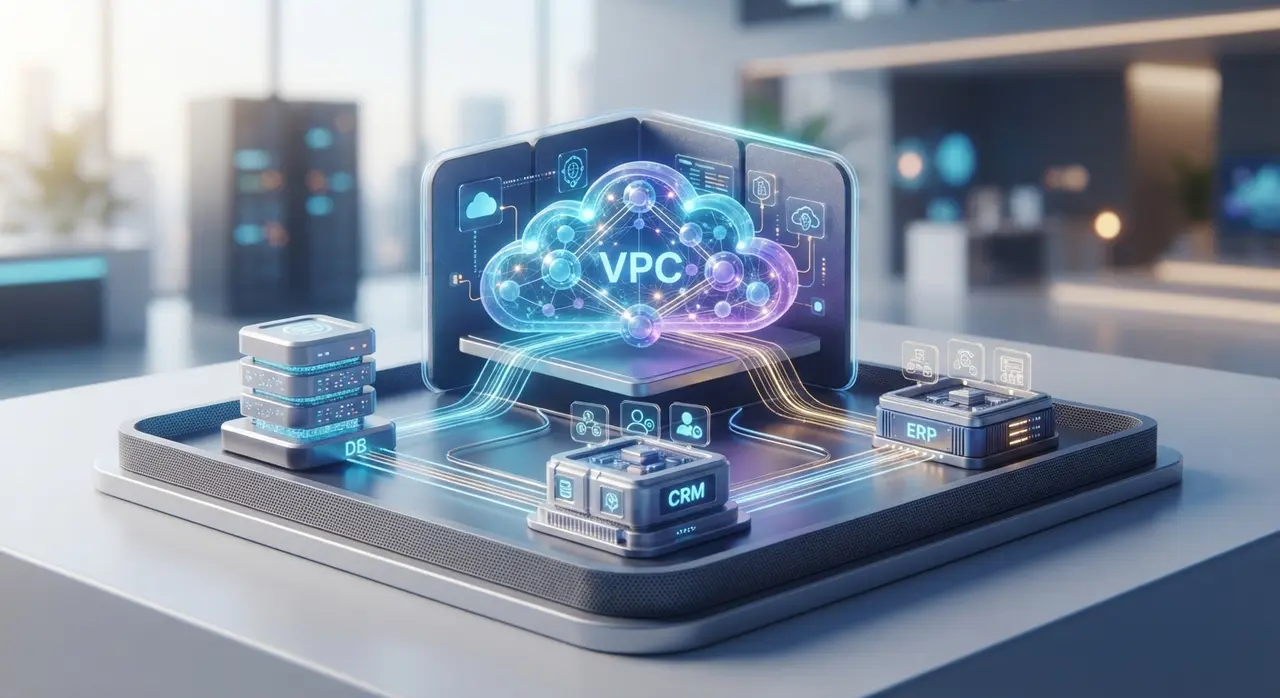
Private cloud AI provides scalable dedicated compute environments with operational expenditure flexibility, reducing hardware management complexity while maintaining data privacy. In a private cloud model, your company utilizes isolated, single-tenant cloud resources hosted by enterprise cloud providers or specialized data centers.
This approach transforms high initial hardware investments into predictable operational expenditure (OPEX). Organizations gain instant access to high-performance GPU clusters, elastic scaling for peak operational hours, and managed disaster recovery protocols. Security is maintained through dedicated Virtual Private Clouds (VPC), private network endpoints, and hardware-level isolation.
The main trade-off is long-term operational cost dependency. Continuous high-volume AI inference running 24/7 on private cloud instances can accumulate substantial monthly subscription fees. Additionally, your operation relies on the cloud provider’s underlying infrastructure stability and connectivity SLAs.
Infrastructure Decision Matrix: Comparing Key Architectural Criteria
Selecting the right infrastructure model requires systematically evaluating data sensitivity, workload predictability, latency requirements, and total cost of ownership over a 3- to 5-year horizon. Both deployment models offer distinct advantages depending on operational priorities.
The comparison matrix below outlines the fundamental differences between on-premises private AI and private cloud deployment models:
| Evaluation Criterion | On-Premises Private AI | Private Cloud AI |
|---|---|---|
| Financial Model | High Initial CAPEX (Hardware/Facilities) | Flexible OPEX (Recurring Compute Billing) |
| Data Sovereignty | Absolute (Physical On-Site Boundary) | High (Logical Isolation / Virtual Private Cloud) |
| Scalability & Elasticity | Manual (Procurement & Physical Provisioning) | Instant Elastic Scaling (On-Demand Compute) |
| Maintenance Overhead | Internal Infrastructure & Hardware Team | Managed Cloud Operations & Provider Support |
| Processing Latency | Ultra-Low for Internal Network Operations | Low (Dependent on Network Connectivity) |
Hybrid Architectures and Model Portability
Hybrid private AI architectures allow enterprises to run high-security inference on-premises while leveraging private cloud elasticity for burst workloads and heavy model retraining. By utilizing containerized deployments with Docker and Kubernetes, organizations avoid vendor lock-in and keep their AI infrastructure flexible.
In a hybrid setup, sensitive transactional validation—such as processing customer documents or executing automated financial entries inside ERPs—runs locally. Meanwhile, non-sensitive batch tasks or temporary heavy analytics scale into private cloud instances. Open-weights foundation models (such as Llama or Mistral) can be fine-tuned in the cloud and deployed back on-premises, combining model sophistication with local governance.
This flexible architecture seamlessly integrates with legacy business systems. For instance, executing AI agent integration with Microsoft Dynamics 365 allows automated workflows to trigger directly across sales, purchasing, and finance modules while keeping core processing within governed private networks.
Practical Case Study: Automating Operations Without Sacrificing Governance
A regional multi-unit logistics and wholesale operator streamlined inventory reconciliation across 14 distribution centers by deploying private AI agents integrated directly into their ERP. Facing mounting manual entry backlogs and frequent inventory discrepancies between warehouse updates and central finance, management required an automated solution that strictly preserved sensitive commercial data.
Partnering with Agentes Autônomos, the company implemented private AI infrastructure connected directly to their operational database and WhatsApp dispatcher channels. Instead of sending unstructured logistics invoices to public third-party APIs, specialized local AI agents parsed supplier receipts, verified inventory counts, and flagged discrepancies for human manager approval.
By establishing clear human-in-the-loop review thresholds, the company reduced manual document processing time by over 70% while maintaining absolute data privacy. Following an established AI vendor evaluation framework, management scaled the deployment across all operational units without replacing their existing legacy ERP software.
How to Design an AI Infrastructure Roadmap Based on Enterprise Risk
Building a resilient enterprise AI roadmap begins with auditing current data security risks, mapping operational workflows, and pilot testing agent execution within isolated environments. Business leaders must focus on process accuracy and governance before making heavy infrastructure investments.
- Data Sensitivity Audit: Classify operational processes by regulatory risk and confidentiality. Identify workflows that strictly require physical on-premises processing versus those suitable for isolated private cloud environments.
- Workload Pattern Mapping: Measure daily transaction volume and latency sensitivity. Determine whether your compute demands are steady and predictable (favoring on-premises economics) or subject to sharp seasonal spikes (favoring private cloud elasticity).
- Total Cost of Ownership (TCO) Analysis: Calculate 3-year hardware depreciation, power, cooling, and staff overhead against projected recurring private cloud compute expenses.
- Pilot Implementation with Human-in-the-Loop: Deploy AI agents on a targeted operational use case—such as purchase order verification or customer service routing. Establish mandatory human approval rules for high-value transactions before scaling across multi-unit operations. Vernacular deployment ensures minimal operational friction while guaranteeing high workflow reliability.
Final Thoughts: Choosing the Model to Power Enterprise Autonomy
Choosing between private on-premises and private cloud AI ultimately comes down to balancing strict regulatory control with long-term operational agility. Organizations with established data centers and stringent physical sovereignty mandates will thrive on dedicated on-premises hardware, while companies seeking rapid deployment and elastic growth benefit from private cloud environments.
Regardless of the underlying hardware choice, the true value of enterprise AI lies in autonomous execution inside existing software stacks. By integrating secure private AI models into your ERP, CRM, and communication channels, your business can eliminate operational bottlenecks, reduce rework, and scale daily capacity without compromising data security.
Frequently asked questions
What is the main difference between public AI APIs and private AI infrastructure?
Public AI APIs process enterprise data on shared multi-tenant infrastructure where inputs may be stored, logged, or processed outside your geographic boundary. Private AI infrastructure ensures complete data isolation by running open-weights models on dedicated on-premises hardware or single-tenant private cloud environments.
Is on-premises private AI always more secure than private cloud AI?
On-premises infrastructure provides total physical ownership and hardware boundary control, but security depends heavily on internal IT security protocols. Private cloud providers offer specialized enterprise security layers, physical data center protection, and automated disaster recovery, making both models highly secure when configured correctly.
How do autonomous AI agents integrate with existing enterprise software like ERPs and CRMs?
Autonomous AI agents connect to existing software via secure REST APIs, webhooks, or direct database integrations within your private network. They read context, process complex business logic, and trigger actions directly inside your current ERP, CRM, or WhatsApp tools without requiring infrastructure replacement.
Can a business start with a private cloud AI model and migrate to on-premises later?
Yes, by utilizing containerized architectures like Docker and Kubernetes along with open-weights foundation models, enterprises can seamlessly migrate workloads between private cloud and on-premises environments without rewriting underlying business logic or operational agent workflows.