AI Agents for Textile Industry: Quality, Forecasting & ERP
Deploy AI agents for textile industry operations to automate computer vision quality control, accurate demand forecasting, and seamless ERP integration.
- AI Agents for Textile Industry
- Quality Control Forecasting
- ERP Integration
- Supply Chain Automation
- Industrial AI
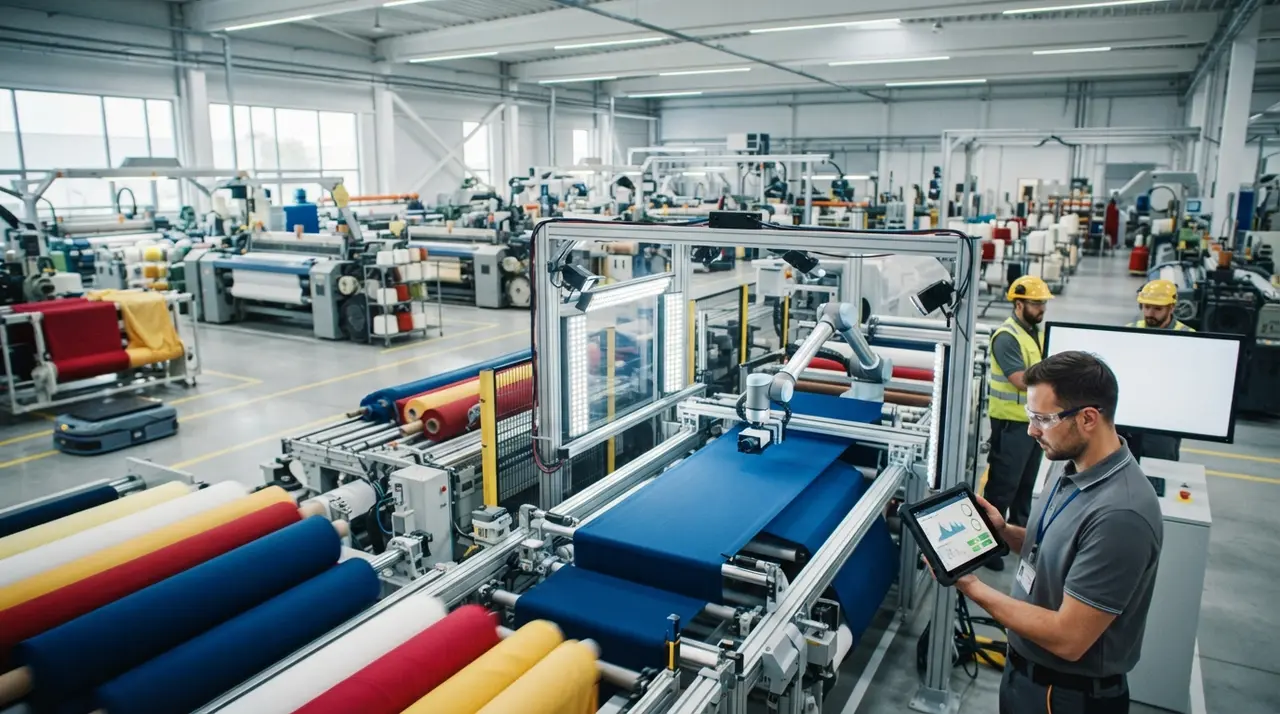
Deploying AI agents for textile industry operations bridges high-speed computer vision quality inspection with predictive demand forecasting inside existing ERP systems. These autonomous software agents automate defect detection, optimize raw material stock, and re-sequence production schedules without requiring plant managers to rip and replace legacy infrastructure.
Large-scale textile manufacturing operates on ultra-thin margins and hyper-compressed fashion cycles. Managing fabric defects across weaving, dyeing, and printing while balancing volatile demand requires real-time orchestration that traditional manual processes or static ERP modules simply cannot deliver.
Computer vision AI agents automate high-speed defect detection
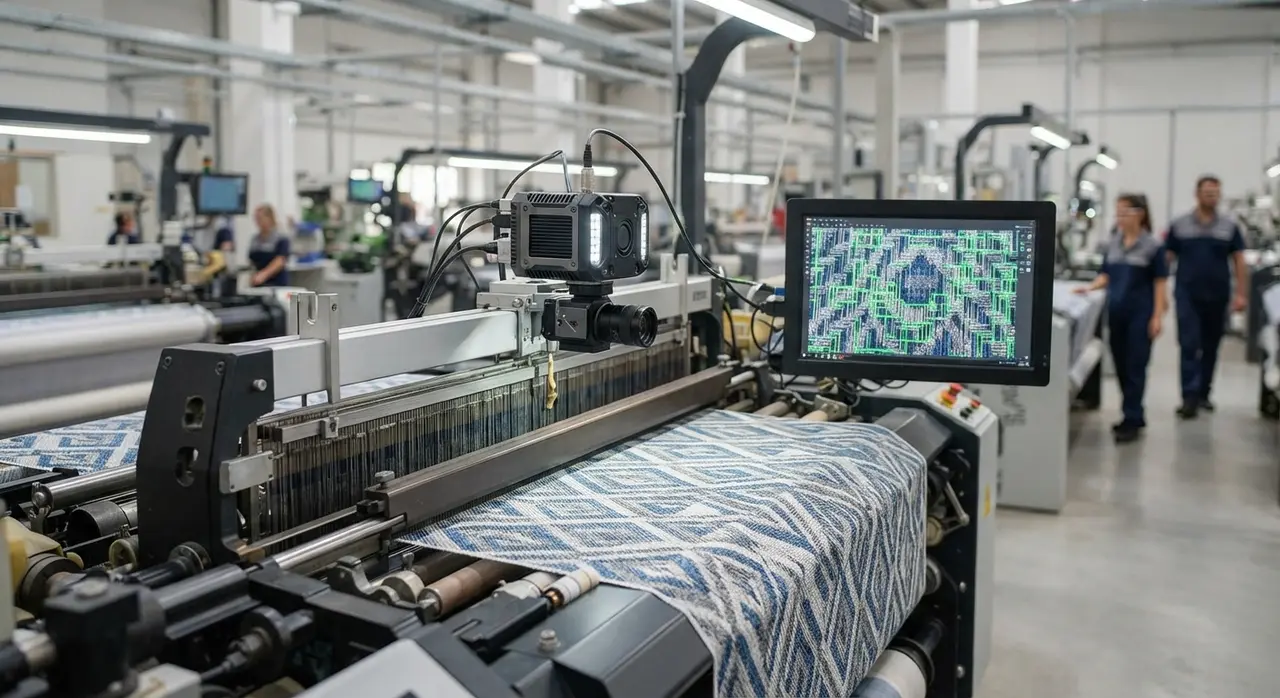
Computer vision AI agents inspect running fabric rolls at full line speeds to catch weaving, dyeing, and printing flaws before materials reach the cutting table. By analyzing high-resolution optical camera feeds instantly, the agent flags warp breaks, uneven dye shading, and misaligned prints in milliseconds.
Unlike traditional human inspection—which typically catches less than 70% of flaws due to visual fatigue—autonomous vision agents maintain 99%+ accuracy regardless of shift duration. When a defect occurs, the agent automatically logs the precise yardage coordinate, flags the severity, and triggers an alert in the plant's operational workflow.
Integrating these findings directly into operational planning allows managers to review flagged defects digitally. You can explore real-world automation examples to see how vision-assisted workflows prevent non-conforming yards from causing massive customer rejections down the line.
Demand forecasting agents stabilize raw material and yarn inventory
AI agents for quality control forecasting correlate historical sales data, seasonal shifts, macroeconomic trends, and lead times to calculate precise material requirements. Traditional spreadsheet forecasts struggle with sudden market shifts, leading either to stockouts of critical yarns or excess warehouse holdings of obsolete fabric.
Autonomous forecasting agents continually refresh purchase recommendations based on real-time order ingest rates and supplier lead times. The agent evaluates thousands of SKU variables simultaneously, calculating exact safety stock levels for raw cotton, synthetic yarns, and specialized dyes.
- Eliminate bullwhip effects: Adjust raw material orders dynamically based on actual point-of-sale data rather than delayed monthly forecasts.
- Reduce holding costs: Minimize capital tied up in slow-moving finished goods and unallocated greige fabric.
- Prevent production stalls: Receive proactive alerts when supplier delivery delays threaten upcoming loom schedules.
Comparative analysis: Traditional operations vs. AI agent orchestration
Modern industrial plants require proactive orchestration rather than reactive firefighting. The matrix below compares standard textile management approaches against autonomous agent integration.
| Operational Area | Traditional / Manual Process | AI Agent Orchestrated Process |
|---|---|---|
| Fabric Quality Inspection | Manual human review; slow line speeds; misses subtle dye shade variations. | Real-time computer vision at full line speed; automated yardage flaw mapping. |
| Demand Forecasting | Historical spreadsheets; updated monthly; high vulnerability to fashion trend swings. | Multi-variable dynamic models; updated continuously; accounts for market velocity. |
| ERP Inventory Sync | Manual batch entries; delayed stock balances; frequent stock count discrepancies. | Bi-directional real-time sync; automated purchase order drafts and lot tracing. |
| Production Scheduling | Static daily schedules; costly re-setups when rush orders or fabric defects happen. | Dynamic loom and dye-vat sequencing; minimizes setup times and dye waste. |
Production sequencing agents optimize dye vats and loom setups
Production sequencing agents eliminate operational bottlenecks by grouping orders based on shade progression, fabric weight, and yarn specifications. Transitioning dye vats from dark shades to light shades requires extensive chemical cleaning, wasting hours of uptime and thousands of gallons of water.
An autonomous sequencing agent scans incoming work orders from the ERP and arranges production lots to move smoothly from light to dark tones. This intelligent grouping maximizes loom yield and slashes machine changeover downtime.
By leveraging autonomous agentic AI systems, production supervisors no longer waste hours manually building dispatch lists. The AI agent recalculates optimal sequences in seconds whenever an urgent order arrives or a loom requires unexpected maintenance.

Bi-directional ERP integration ensures batch traceability and compliance
AI agents seamlessly integrate with legacy and enterprise ERPs—such as SAP, Oracle, and Totvs—without breaking core database rules. They act as intelligent execution layers that read inventory statuses, post material consumption records, and generate lot traceability reports automatically.
Complete batch traceability is essential for meeting international sustainability standards and customer audit requirements. If a dye lot exhibits color fastness issues during post-production testing, the AI agent instantly traces every affected roll back to the specific dye batch, raw yarn shipment, and supplier shipment ID.
- Automated PO Generation: Automatically draft purchase requisitions in your ERP when yarn stocks hit calculated reorder thresholds.
- Human-in-the-Loop Control: Operations managers retain full governance to review and approve purchasing actions before execution.
- Audit-Ready Logs: Every action taken by the AI agent is recorded with full time-stamped logs for strict compliance auditing.
Case study: Multi-unit textile manufacturer cuts scrap by 28%
A large-scale regional textile manufacturer operating three spinning mills and two printing plants faced escalating scrap rates and chronic stock imbalances between units. Manual quality audits failed to detect printing misalignment quickly enough, resulting in hundreds of discarded meters per shift.
By deploying Agentes Autônomos AI agents across their production lines, the company integrated computer vision vision nodes with their enterprise SAP ERP system. The agents continuously monitored line runs, dynamically adjusted dye-lot grouping schedules, and automated raw cotton replenishment requests.
Within six months of implementation, the company realized tangible gains across all operational units:
- 28% reduction in fabric scrap: Instant defect detection halted faulty printing runs within seconds rather than hours.
- 19% reduction in inventory carrying costs: Optimized demand forecasting stabilized raw yarn safety stock levels.
- 100% batch traceability: Operations teams achieved complete digital lineage tracking from raw fiber to final shipped roll.
Discover how your enterprise can achieve similar operational leverage by exploring our comprehensive enterprise automation benefits framework.
Operational resilience starts with autonomous AI execution
Scaling a modern textile mill requires overcoming supply chain friction, rising raw material costs, and strict customer delivery deadlines. Implementing task-oriented AI agents empowers your existing team to control quality, maintain lean inventories, and protect operating margins.
Instead of undertaking risky multi-year IT overhauls, enterprise leaders can layer AI agents directly over their existing machinery and ERP infrastructure. This practical, modular approach guarantees fast time-to-value while keeping your human management team firmly in control of strategic decisions.
Frequently asked questions
How do AI agents integrate with our existing textile machinery and ERP system?
AI agents connect via standard industrial protocols (like OPC-UA or MQTT) and REST APIs or direct database connectors for legacy ERP systems. They read live production data and camera streams, processing information off-machine or on edge servers without requiring you to replace your current machinery or ERP core.
Do computer vision AI agents work on complex printed patterns and dark fabrics?
Yes, computer vision AI agents utilize deep learning models specifically trained on complex textile patterns, high-density weaves, and dark dye shades. They automatically differentiate intentional pattern design elements from genuine defects like streaks, slubs, or misaligned screens.
How much human supervision is required when AI agents run production forecasting?
Human management maintains complete authority over final operational execution through predefined approval workflows. The AI agent generates precise demand calculations and drafts purchase orders inside your ERP, leaving plant managers to review and confirm high-value actions with a single click.
Can these AI agents help with sustainability and environmental auditing?
By optimizing chemical dye consumption, reducing scrap fabric waste, and decreasing water consumption during machine re-setups, AI agents directly improve sustainability metrics. They also automatically maintain digital logs needed for ISO, OEKO-TEX, and ESG compliance reporting.