
AI Agents for Manufacturing: Packaging Quality at Scale
Deploy AI agents in packaging plants to automate production, integrate computer vision for quality control, reduce scrap, and connect MES to ERP.
- AI Agents for Manufacturing
- Production Automation
- Large-Scale Quality Control
- Packaging Industry AI
- Computer Vision Inspection
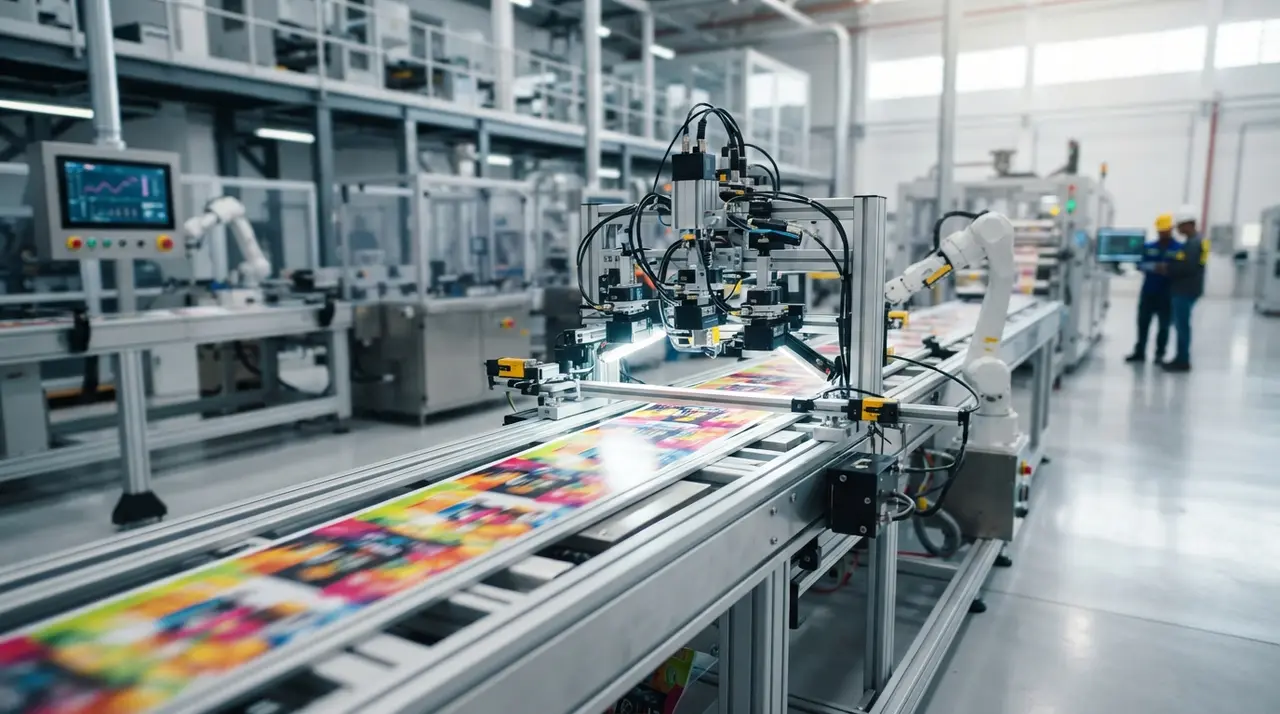
AI agents for manufacturing execute real-time quality control, automated machine predictive maintenance, and line scheduling across high-speed packaging operations. By linking high-resolution computer vision directly to existing MES and ERP infrastructure, these autonomous systems eliminate inspection bottlenecks and guarantee large-scale quality control without replacing core factory machinery.
High-Speed Packaging Lines Require Automated Real-Time Quality Control
Visual inspections on high-speed lines fail at scale without automated computer vision agents. In high-cadence packaging operations where presses run thousands of units per minute, human inspectors can only sample a fraction of the total output. Micro-defects in print registration, die-cutting alignment, creasing depth, and heat sealing easily slip past manual checks, resulting in costly product recalls and massive material waste.
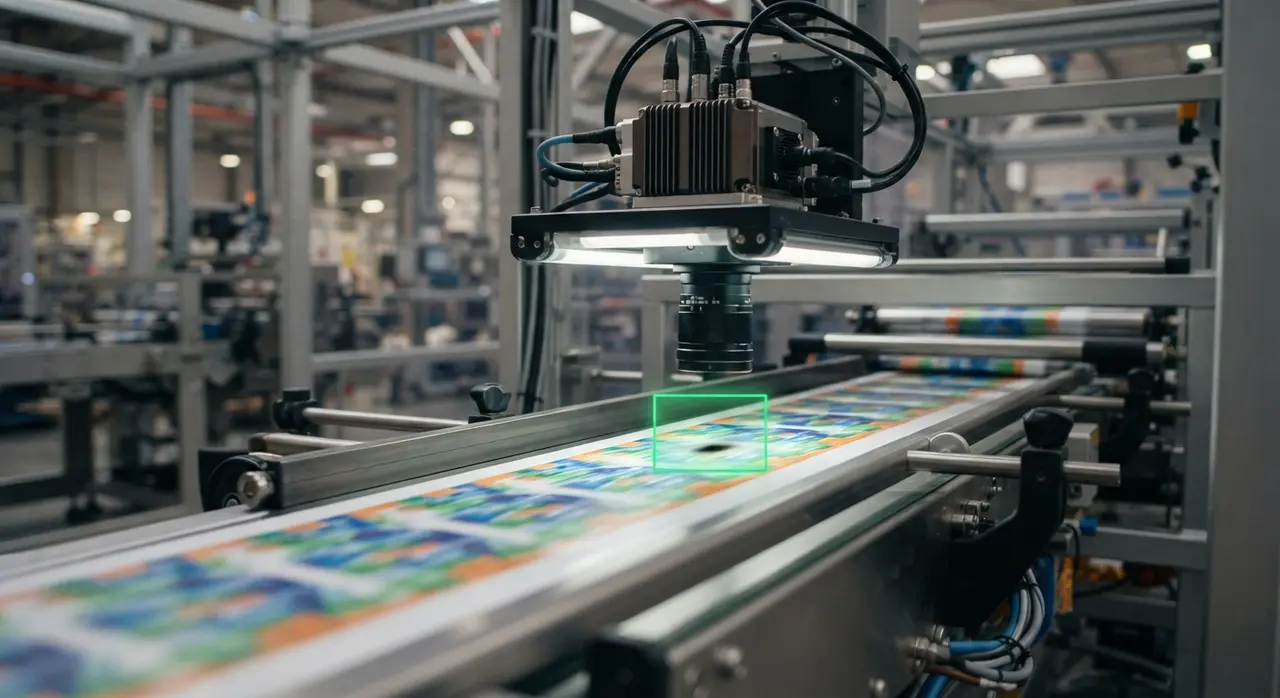
Autonomous AI agents eliminate sampling limitations by inspecting 100% of production in real time. Operating directly at the edge, these agents process high-frame-rate video streams to detect substrate variations, smudged inks, structural tears, and seal gaps within milliseconds. By catching defect patterns at the immediate point of occurrence, the system alerts line operators or automatically triggers equipment adjustments before hundreds of defective units are produced.
Autonomous AI Agents Bridge Shop Floor Vision with Enterprise ERP Systems
Autonomous AI agents connect shop floor computer vision sensors directly to MES and ERP databases to record batch traceability without manual data entry. Traditionally, quality logs and defect counts reside in disconnected spreadsheets or isolated vision controllers. AI agents act as an intelligent orchestration layer that normalizes vision data and transmits continuous telemetry into enterprise systems like SAP, Oracle, or TOTVS.
This real-time data bridge transforms quality management from a reactive accounting task into an automated workflow. When an AI agent identifies a recurring print defect on a specific substrate batch, it automatically flags the corresponding lot number in the MES, updates inventory raw material records in the ERP, and notifies quality engineering teams via automated workflows. Adopting these connected systems enables seamless process standardization across multi-unit operations across all manufacturing plants.
Predictive Machine Maintenance Keeps Extruders and Printing Presses Running
AI agents continuously evaluate vibration, thermal, and pressure telemetry from extruders and flexographic printing presses to prevent unplanned downtime. Unscheduled machine downtime in packaging plants halts multi-stage production lines, leading to wasted polymer melt, setup delays, and missed delivery schedules. Standard preventative maintenance schedules often miss subtle mechanical degradation caused by changing substrate friction or temperature fluctuations.
Autonomous predictive agents analyze continuous telemetry streams from press rollers, extruder barrels, and die-cutter hydraulics. By correlating subtle micro-vibrations and temperature anomalies with historical failure modes, the agent predicts component wear long before catastrophic breakdown occurs. The agent then autonomously drafts a work order in the ERP system, reserves the necessary spare parts from inventory, and schedules maintenance during planned batch changeovers.
Automated Batch Setup and Substrate Optimization Minimize Scrap Rates
Automated setup parameter adjustments reduce material waste during batch changeovers across varied packaging substrates. Transitioning a printing press or box folder-gluer between different paper weights, corrugated densities, or polymer films requires precise machine tuning. Manual setup relies heavily on operator intuition, leading to extended trial runs and significant material scrap before reaching acceptable quality thresholds.
AI agents streamline batch transitions by analyzing historical run data, ambient plant humidity, and raw material batch specifications. The agent calculates optimal machine parameters—such as roller pressure, ink viscosity, tension control, and heater temperatures—and pushes these settings directly to line controllers. This closed-loop calibration cuts setup scrap drastically while ensuring strict adherence to client specifications.
| Operational Metric | Manual Inspection & Legacy Setup | AI Agent & Computer Vision Automation |
|---|---|---|
| Defect Detection Coverage | Post-production sample checks (1% to 5% coverage) | Continuous inline real-time inspection (100% coverage) |
| Batch Setup Scrap Rate | 5% to 8% scrap per setup run | Under 1.5% scrap per setup run |
| Traceability & Logging | Manual paper logs / delayed spreadsheet entry | Instant automated sync to ERP and MES per lot |
| Downtime Prevention | Reactive repairs after mechanical breakdown | Predictive maintenance alerts based on sensor telemetry |
| Operator Feedback Loop | Delayed shift-end quality reporting | Instant dashboard alerts and targeted escalation workflows |
Operational Case Study: Eliminating Packaging Defect Leaks in Multi-Unit Plants
A regional flexible packaging manufacturer operating four production facilities faced rising scrap rates and customer complaints regarding heat-seal integrity and flexographic print misalignment. Their legacy vision sensors generated frequent false alarms, leading floor managers to disable automated line stops. Manual sampling was unable to capture intermittent sealing glitches on fast-moving pouch lines.
By deploying specialized autonomous agents developed in partnership with Agentes Autônomos, the manufacturer connected high-resolution edge cameras to their central MES without changing their existing machinery PLCs. The AI agent learned to differentiate genuine structural seal voids from acceptable film reflections, reducing false alerts by over 80%. When true seal anomalies occurred, the agent automatically signaled the line diverter to reject single defective pouches while sending real-time alerts to the machine operator.
Within ninety days of implementation, the multi-plant operation achieved a 34% overall reduction in material scrap and completely eliminated customer returns related to seal leaks. The automated integration with their enterprise ERP provided complete lot-level traceability across all four facilities. Plant management gained full operational visibility into defect trends without imposing additional administrative work on machine operators.
Human-in-the-Loop Governance Protects Quality Standards Without Slowing Production
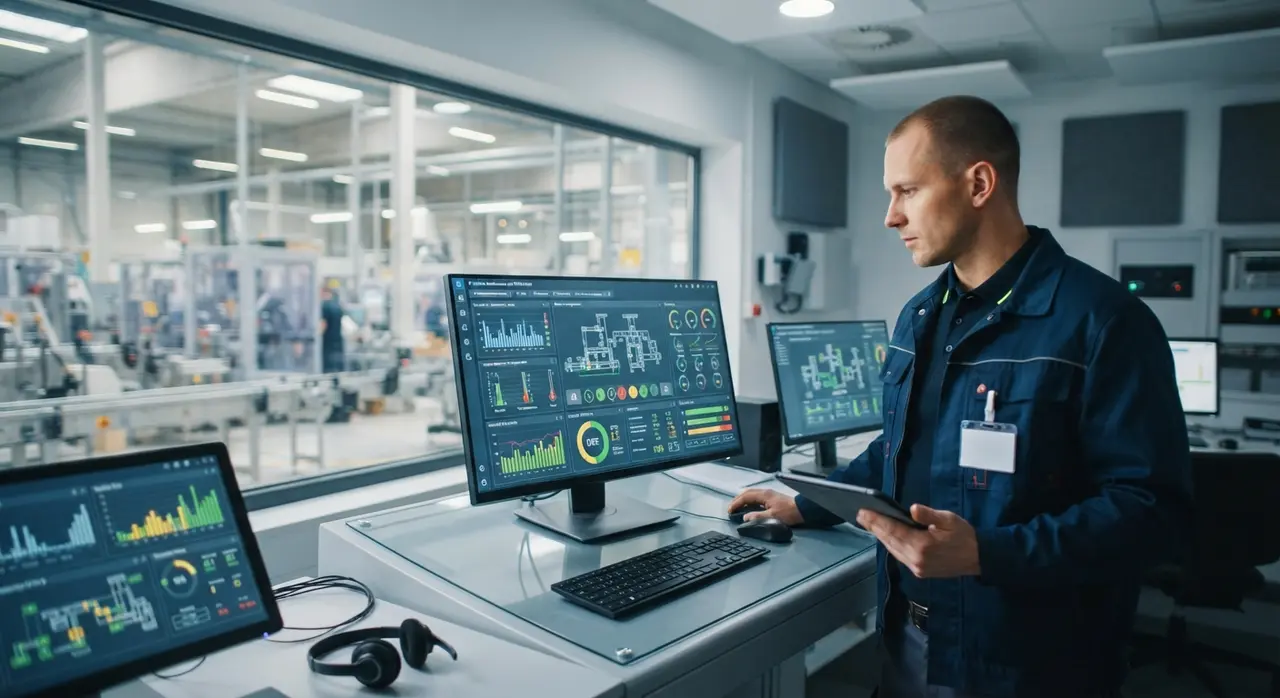
Human-in-the-loop governance workflows ensure edge-case defect escalations maintain strict client specifications without stopping the line. Industrial AI solutions must accommodate operational realities where substrate imperfections or custom client specs fall outside standard training models. Blindly allowing an automated model to halt production creates costly line disruptions, while ignoring uncertain defects risks shipping bad product.
Autonomous agents handle this challenge by using confidence-score thresholds. When an agent detects a visual anomaly with low confidence, it logs high-resolution images and routes them to an operator dashboard or supervisor mobile interface for instant review. The human decision instantly resolves the edge case while simultaneously retraining the local AI agent model. Organizations evaluating this transition can begin by conducting a thorough AI automation ROI and risk mapping diagnosis to identify high-value inspection nodes.
Implementation Roadmap: Integrating AI Agents Into Legacy Industrial Stack
Deploying AI agents on existing packaging lines requires zero hardware overhaul when connecting via standard industrial protocols. Industrial leadership teams often worry that implementing modern AI requires tearing out existing PLCs, extruders, and printing presses. In reality, autonomous agents operate as an overlay system, communicating smoothly through industrial communication protocols like OPC-UA, Modbus, and MQTT.
- Diagnostic Mapping: Map key high-waste operational nodes across printing, cutting, and sealing operations to prioritize agent placement.
- Sensor and Camera Overlay: Install high-speed industrial vision hardware and vibration sensors at designated line checkpoints without altering core control circuits.
- Edge Agent Integration: Deploy localized AI agents on edge compute modules to process high-throughput camera feeds with near-zero latency.
- ERP & MES Synchronization: Connect the agent output layer to enterprise systems via secure REST APIs to automate lot logging and inventory adjustments.
- Human-in-the-Loop Refinement: Train plant personnel on real-time decision dashboards and configure automated escalation paths for low-confidence alerts.
To explore how these scalable architectures fit into your existing plant infrastructure, explore our suite of intelligent process solutions tailored for multi-unit industrial operations.
Frequently asked questions
How do AI agents integrate with our existing packaging machinery and MES?
AI agents connect to existing plant equipment via standard industrial protocols such as OPC-UA, Modbus, and MQTT, alongside REST APIs for MES and ERP integration. They read camera feeds and sensor data directly without requiring you to replace existing PLCs or industrial control systems.
Can AI vision agents detect minor printing and sealing defects at high line speeds?
Yes, AI vision agents utilize high-speed industrial cameras combined with edge-processed deep learning models to analyze thousands of packaging units per minute. They reliably flag micro-defects in print registration, color variance, die-cutting, creasing, and heat sealing in real time.
What happens when the AI agent encounters an ambiguous or edge-case defect?
When confidence scores fall below a pre-configured threshold, the AI agent triggers a human-in-the-loop workflow. The flagged item or image is immediately sent to a plant operator or supervisor dashboard for manual review, ensuring quality standards are upheld without false downtime.
How long does it take to implement AI agents on a packaging production line?
A standard deployment typically takes between four to eight weeks from initial data mapping to full pilot operation. The process involves calibrating vision sensors, connecting data connectors to your ERP/MES, and training localized AI models on your specific substrate defects.