AI Agents for Distribution Centers: Smart Picking & Shipping
Discover how AI agents for distribution centers transform smart picking, inventory control, and automated shipping with seamless WMS and ERP integration.
- Supply Chain AI
- Warehouse Automation
- Smart Picking
- Inventory Control
- Automated Shipping
- Enterprise AI
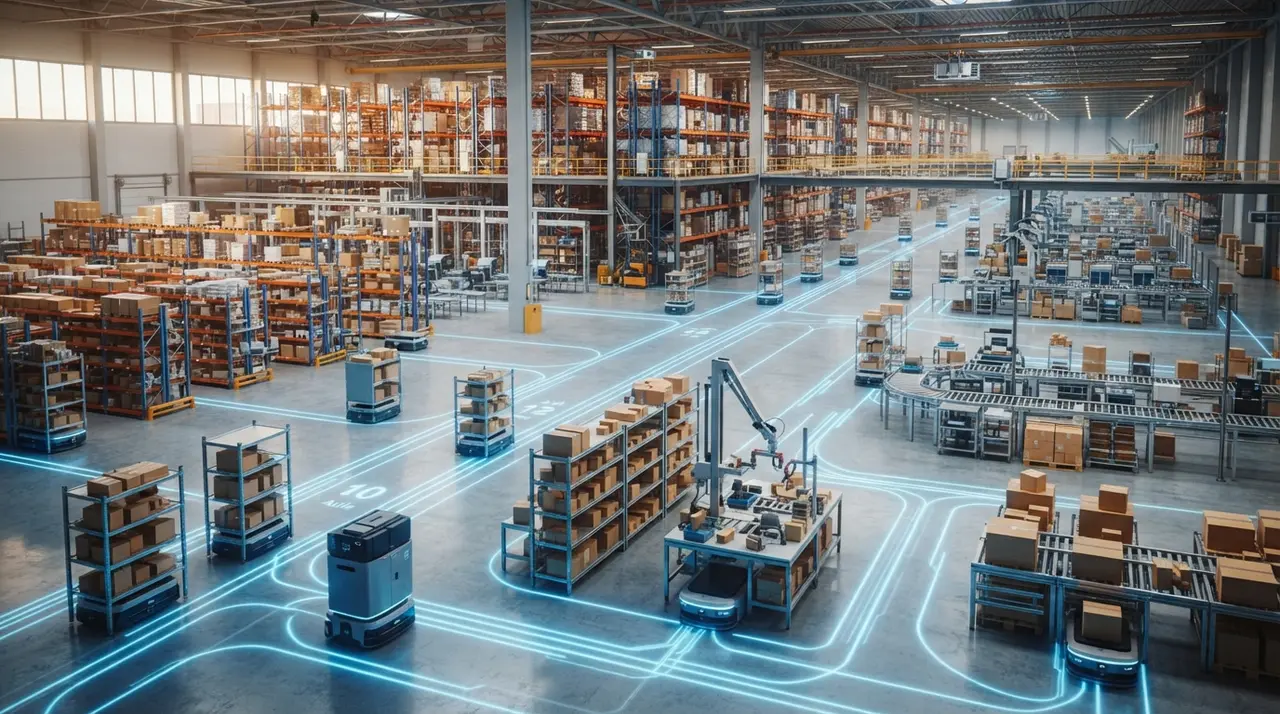
AI agents for distribution centers are intelligent software systems that orchestrate warehouse workflows by coordinating smart picking, dynamic inventory control, and automated shipping in real time. Operating as an autonomous layer above existing legacy Warehouse Management Systems (WMS) and Enterprise Resource Planning (ERP) platforms, these agents eliminate operational bottlenecks and human error without requiring costly IT overhauls.
Legacy Warehouse Management Systems Leave Critical Operational Gaps in Intralogistics
Traditional WMS and ERP software rely on static batch rules that fail to respond to dynamic aisle congestion, rush orders, and unexpected inventory stockouts. When order volumes spike, operators face severe picking inefficiencies, travel fatigue, and incorrect batch allocations that lead to delayed dispatches.
Furthermore, traditional automation solutions like scripted rules cannot evaluate multi-variable operational scenarios. Understanding the key differences between AI agents and traditional RPA highlights why static rule scripts break when faced with sudden supply chain variances. AI agents continuously reason through floor updates, worker locations, and delivery SLAs to make real-time decisions.
- Unnecessary travel distance: Static picking lists force operators to crisscross large distribution centers repeatedly.
- Inventory phantom stockouts: Systems show items on shelves that were misplaced or damaged, halting order fulfillment.
- Dispatch audit errors: Manual box checking at shipping docks slows down staging and allows mispicks to reach customers.
Smart Picking Optimization Reduces Picker Travel Time and Fulfillment Bottlenecks
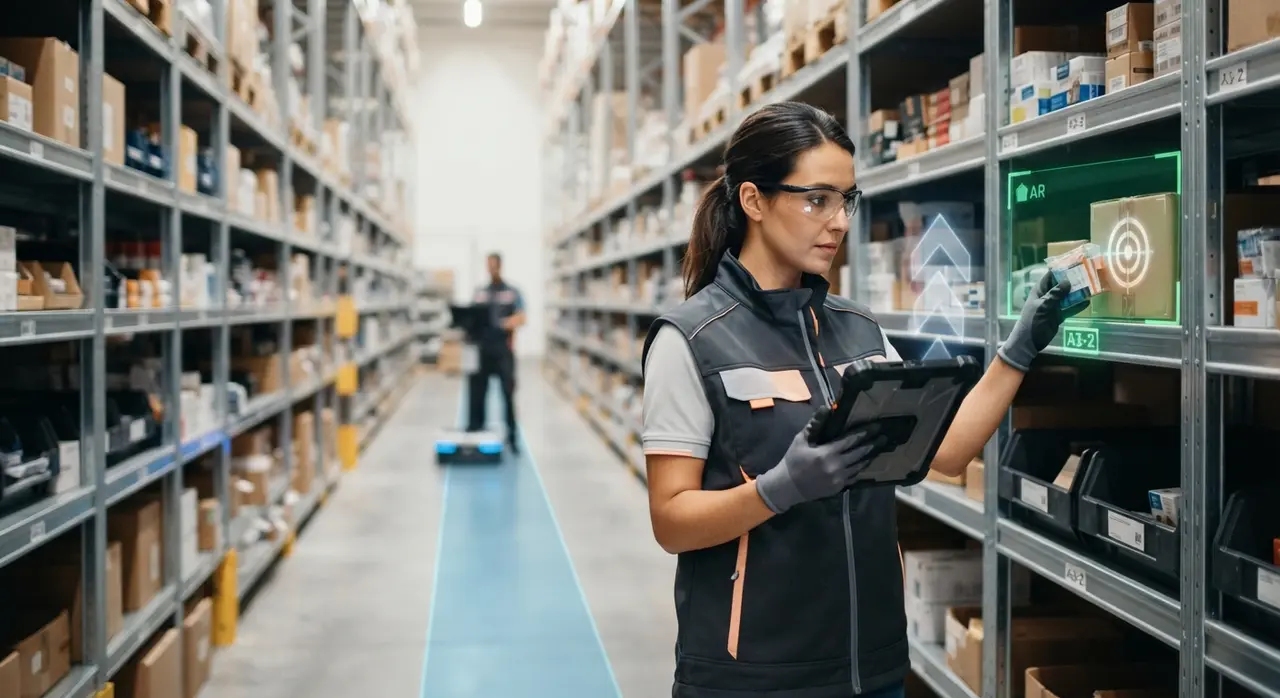
AI agents dynamically optimize picking paths and order batches by analyzing SKU locations, order urgency, and real-time floor congestion. Instead of generating rigid, once-a-day pick lists, the agent continuously reorganizes picking waves based on live incoming demand and carrier cutoff schedules.
Through dynamic slotting algorithms, the AI agent evaluates velocity patterns and seasonality to recommend item relocation. Fast-moving items are prioritized near packing stations, while heavy or paired items are automatically clustered to maximize picking density.
- Dynamic wave batching: Orders are grouped automatically by destination, delivery SLA, and physical zone density.
- Intelligent route calculation: Pickers receive optimized, step-by-step pick paths on mobile handhelds to minimize back-tracking.
- Human-in-the-loop validation: When an item is missing, the agent immediately re-routes the worker while flagging the discrepancy to inventory controllers.
Predictive Inventory Control Prevents Stockouts and Overstock Accumulation
Automated inventory management agents continuously recalculate safety stock thresholds and reorder points based on real-time consumption and predictive demand models. Rather than relying on static monthly safety stock levels, the agent factors in supplier lead times, seasonal surges, and active sales promotions.
By integrating predictive intelligence into everyday inventory control, logistics leaders avoid both tied-up capital in excess stock and costly stockouts that hurt customer trust.
| Operational Metric | Traditional WMS & Manual Process | AI Agent-Driven Intralogistics |
|---|---|---|
| Picking Route Planning | Static, pre-printed or fixed batch lists | Dynamic, real-time recalculation based on aisle density |
| Safety Stock Adjustments | Manual quarterly or monthly reviews | Autonomous daily updates based on demand predictive signals |
| Outbound Dispatch Audit | Manual spot-checks or barcode scanning | Automated computer vision and weight-check integration |
| Exception Handling | Supervisor intervention required for every delay | Autonomous agent re-routing with targeted escalation |
| ERP/WMS Integration | Siloed data exports and manual CSV uploads | Bi-directional API orchestration and automated triggers |
Automated Shipping Verification Eliminates Dispatch Errors with Computer Vision
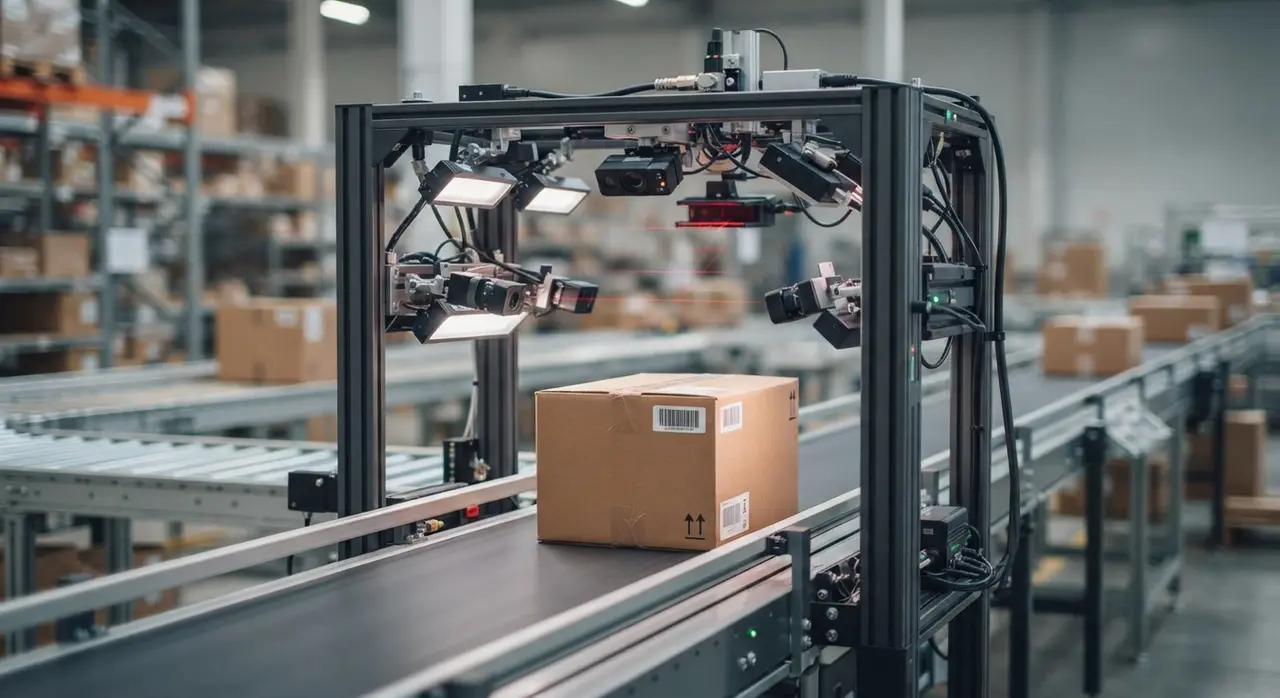
Computer vision integrated with shipping agents checks parcel contents and shipping labels before dispatch to ensure zero-defect order fulfillment. By comparing live camera feed captures against original purchase orders, the shipping agent catches mispicks before boxes are sealed.
Similar to advanced implementations in computer vision quality inspection in production, computer vision at shipping docks acts as an indefatigable quality control check. It cross-references weight, volume, barcoding, and carrier label compliance in fractions of a second.
When an error occurs, the shipping agent automatically alerts dock supervisors via WhatsApp or team communication channels, stopping the non-compliant pallet from boarding the truck.
Non-Invasive Architecture Connects AI Agents to Existing Enterprise Systems
Modern AI agents interface directly with legacy WMS, SAP ERP, and messaging platforms via secure APIs without interrupting daily warehouse operations. Logistics managers do not need to replace their existing infrastructure; instead, the AI agent serves as an intelligent orchestration system sitting above existing databases.
In a recent deployment for a regional multi-unit retail operator, legacy WMS friction caused high error rates and an 18% inventory variance. By deploying custom autonomous AI agent solutions from Agentes Autônomos, the company integrated automated wave management and vision-assisted dispatch audits. Within 90 days, the operation achieved 99.8% inventory accuracy, a 35% reduction in picker travel time, and eliminated shipping errors entirely across three fulfillment hubs.
- No enterprise replacement: Integrates seamlessly with SAP, Oracle, TOTVS, HighJump, and Manhattan.
- Multi-channel alerts: Dispatch exceptions and stock anomalies are routed instantly to managers via WhatsApp or email.
- Enterprise governance: Granular permission control ensures human authorization is required for high-value stock adjustments.
Frequently asked questions
How do AI agents integrate with legacy WMS and ERP systems?
AI agents connect to existing software through standard REST APIs, database webhooks, or safe robotic interface layers. They read live order and stock data, perform cognitive calculations, and write back optimized commands without disrupting underlying database structures.
Will implementing AI agents require replacing our warehouse software or hardware?
No, AI agents are designed to sit on top of your current WMS, ERP, and physical warehouse infrastructure. They enhance your existing tech stack by adding real-time reasoning and automated orchestration without requiring hardware overhauls.
How does AI smart picking improve worker productivity?
Smart picking algorithms calculate the shortest travel paths and group orders into optimal waves based on item locations and order priority. This significantly reduces idle walking time and aisle congestion, allowing operators to pick more items per hour with lower fatigue.
What is the role of human supervisors when deploying autonomous AI agents in logistics?
Human supervisors retain full operational control through human-in-the-loop governance frameworks. While AI agents handle routine optimization and automatic monitoring, supervisors receive instant alerts for complex exceptions, stock discrepancies, or high-value override approvals.