AI Agent Support & Maintenance: Roles & Expectations
Learn what to expect from your vendor and how to divide responsibilities for AI agent support and maintenance to ensure long-term operational success.
- AI Agent Support
- Post Implementation
- AI Governance
- Vendor Management
- Process Automation
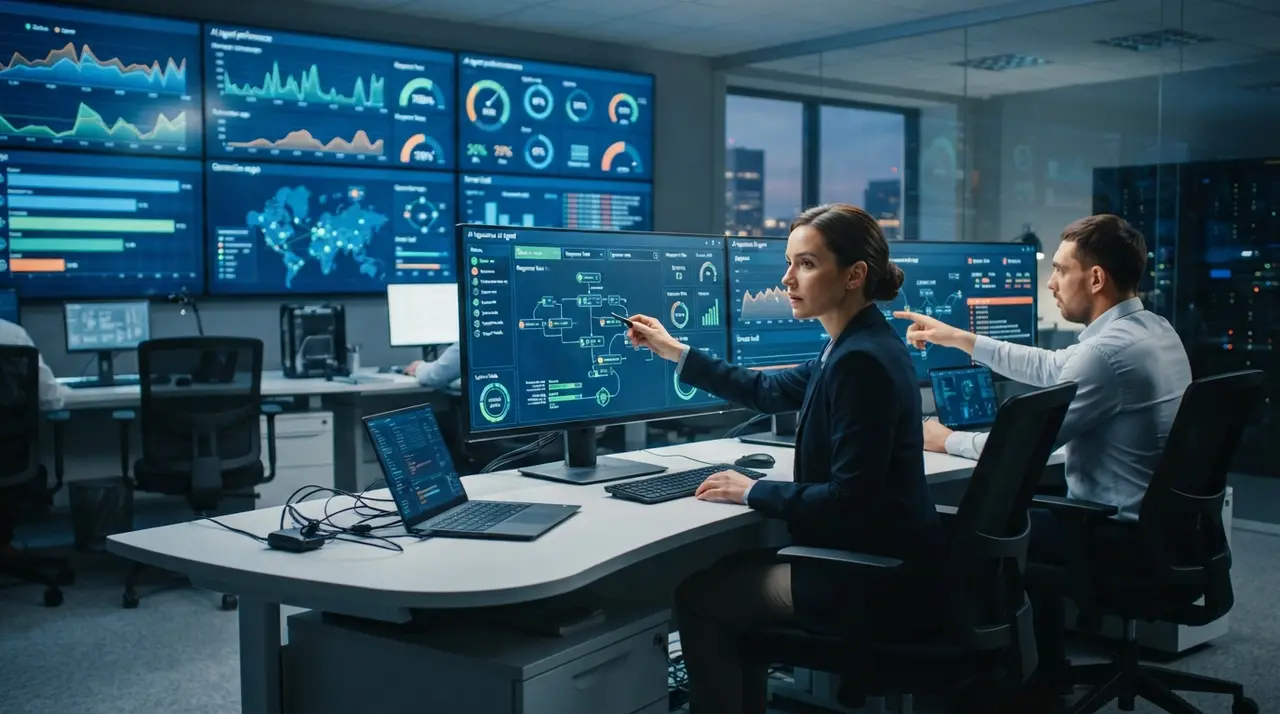
Post-implementation AI Agent Support and Maintenance is an ongoing operational discipline required to keep autonomous agents aligned with evolving business rules, software APIs, and user behaviors. Unlike legacy software, autonomous artificial intelligence models degrade if left unmonitored due to data drift, third-party system updates, and edge-case exceptions in workflow integrations.
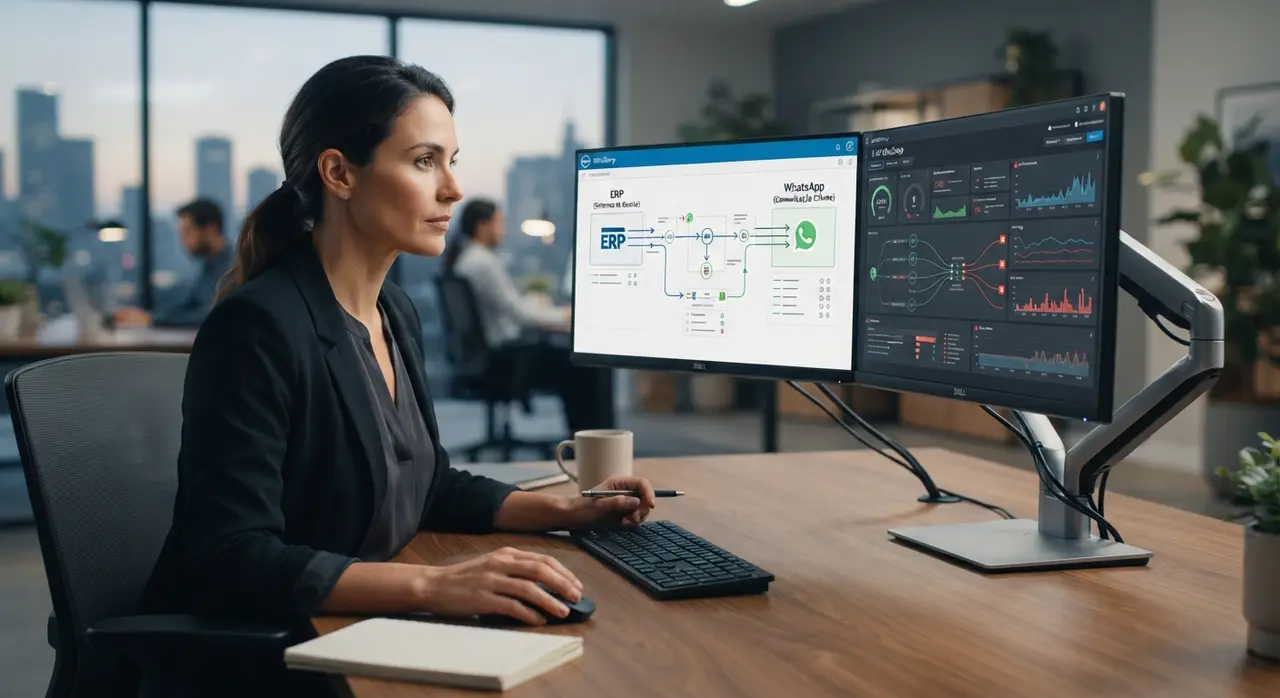
When companies integrate AI agents into CRM systems, ERP platforms, and customer channels like WhatsApp, initial deployment is only the first milestone. Ensuring long-term return on investment requires a structured post-launch framework that clearly defines technical boundaries, response times, and ongoing optimization responsibilities.
AI Agents Require Continuous Maintenance Unlike Legacy Software
Autonomous AI agents require continuous post-launch governance because they operate dynamically within changing data environments rather than following static, hardcoded rules. When CRM schemas shift, product catalogs expand, or vendor APIs update, the agent’s execution accuracy depends directly on proactive maintenance.
Without structured oversight, organizations experience silent failures—such as outdated inventory responses or incorrect order routing—which erode trust and increase manual workload. To maintain peak performance, business leaders must treat AI deployment as a continuous partnership rather than a one-off software installation.
Four Core Pillars of Post-Implementation AI Support
A robust support model covers four essential operational dimensions to protect your technical ecosystem and guarantee continuous business continuity. Partnering with specialized providers offering tailored autonomous AI solutions ensures each pillar is proactively managed.
- Corrective Support: Rapid identification and resolution of system bugs, broken webhook integrations, or hallucination loops in production.
- Evolutive Support: Implementing new workflow business rules, adding conversational paths, and updating knowledge bases as business priorities shift.
- Preventive Support: Monitoring accuracy metrics, prompt drift, and token consumption to catch bottlenecks before they impact end users.
- Infrastructure Maintenance: Managing API key updates, CRM/ERP connector stability, rate limits, and language model platform upgrades.

How to Divide Responsibilities Between Vendor and Internal Teams
Clear boundary mapping between the external vendor and internal business units prevents operational bottlenecks and eliminates accountability gaps. While the software provider maintains system health and technical connectors, internal operational teams must own business rules and escalation management.
To ensure smooth collaboration, organizations should establish a clear framework to divide responsibilities across daily operational domains:
| Operational Area | Vendor Responsibility | Internal Team Responsibility |
|---|---|---|
| Bug Resolution | Fixing code errors, LLM integration failures, and connector bugs. | Flagging anomalies and providing context-rich conversation logs. |
| Knowledge & Rules | Optimizing system prompts and adjusting vector database retrieval. | Providing updated policy documents, pricing lists, and SOPs. |
| Human Escalations | Ensuring clean handoffs to WhatsApp, CRM, or ticketing queues. | Manning human queues and resolving complex edge cases promptly. |
| Performance Tracking | Delivering latency, token cost, and resolution rate analytics. | Reviewing operational KPIs and setting quarterly improvement goals. |
SLA Expectations and Health Metrics What to Expect From Your Vendor
A reliable enterprise AI vendor must provide explicit Service Level Agreements (SLAs) tailored to severity levels and business impact. Response times should be tiered based on whether an outage stops core sales channels or simply involves minor text updates.
When evaluating what to expect from vendor support contracts, insist on tracking three fundamental health metrics in production:
- Task Completion Rate: The percentage of workflows completed end-to-end without failing or stalling.
- Human Escalation Rate: The ratio of interactions requiring manual intervention—a spike usually signals changed customer behavior or missing knowledge.
- Average Handling Latency: The speed at which agents process API requests, fetch database records, and deliver responses to users.
Leveraging these metrics reveals the true benefits of automated workflows while identifying operational drift early.
Case Study: Sustaining AI Automation in Multi-Unit Logistics
A regional logistics operator managing 14 distribution hubs partnered with Agentes Autônomos to automate freight tracking and delivery dispatching across WhatsApp and ERP systems. Post-launch, the company experienced a 35% growth in daily queries alongside frequent ERP updates, which initially caused API timing timeouts.
Through structured monthly preventive maintenance and automated error logging, Agentes Autônomos adjusted prompt parameters and API re-try logic without interrupting daily operations. This proactive approach maintained a 94% autonomous resolution rate while reducing human dispatcher workload by over 60 hours per week.
Conducting an initial AI Automation Diagnosis allows business leaders to model operational risks before launch and establish tailored post-implementation support structures.
Signs of Technical Abandonment and How to Avoid Them
Technical abandonment occurs when an AI solution vendor delivers code but fails to provide continuous tuning, leading to deteriorating resolution rates and frustrated staff. Common warning signs include unmonitored prompt drift, unannounced API deprecations, and rising human escalation rates without vendor intervention.
To avoid technical abandonment, demand clear contractual commitments regarding ongoing prompt engineering, connector updates, and monthly performance reviews before signing your implementation agreement.
Conclusion: Securing Long-Term AI Value
Sustainable enterprise AI deployment requires a disciplined approach to post-implementation support, clear division of responsibilities, and transparent SLAs. By partnering with dedicated specialists who manage technical maintenance while your team owns business rules, your company ensures long-term operational efficiency and scalable ROI.
Frequently asked questions
What is the difference between corrective and evolutive AI support?
Corrective support focuses on fixing existing bugs, broken integrations, or unexpected system errors in production. Evolutive support involves enhancing the AI agent by building new conversational flows, updating business logic, or integrating additional software tools.
Why can't internal IT teams manage AI agent maintenance alone?
Internal IT teams often lack specialized expertise in prompt drift, vector database optimization, and LLM API monitoring. Partnering with a dedicated vendor ensures continuous performance tuning while freeing internal IT to focus on core infrastructure.
How frequently should AI agent prompts and knowledge bases be updated?
Knowledge bases should be updated immediately whenever business policies, pricing, or product catalogs change. System prompts and conversation paths should be reviewed monthly based on user interaction logs and escalation metrics.
What happens when a third-party API like CRM or WhatsApp updates?
A managed AI support provider continuously monitors connector health and updates API hooks proactively when third-party software releases updates. This prevents unexpected outages and maintains uninterrupted workflow automation.